


The car title is the most important document related to your vehicle. It establishes car ownership, which you will need a title to buy a car or sell a vehicle. Basically, the title is like a vehicle’s birth certificate, Social Security number, and passport rolled into one document. Car titles may be physical, printed documents, or electronic, depending on the state. Beware! They are also commonly forged.
This guide will take you through all the title essentials you need to know to buy or sell a car, along with how to transfer one and what to do if your title goes missing or is damaged.
- What Is a Car Title?
- What Does a Car Title Look Like?
- What Are the Types of Car Titles?
- Buying a New Car: What Happens to the Title?
- Selling or Trading a Car: What Do You Need to Know?
- How to Transfer a Title
- Title Copies and Replacements
What Is a Car Title?
A car title is a legal document that proves ownership of a vehicle. Issued by the state where the car, truck, or SUV was purchased, the title accompanies the vehicle throughout its life.
It’s reissued with each new owner and when the vehicle moves to a new state.
What Does a Car Title Look Like?
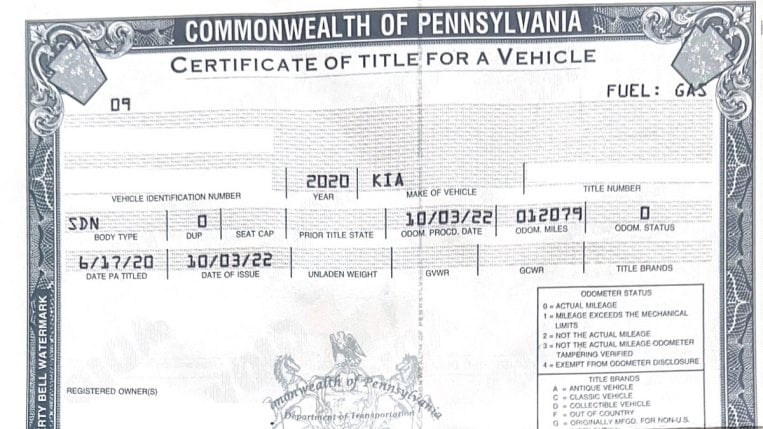
The title, looking every bit like a car’s birth certificate, will include the seal of the issuing state. Although the information displayed on a title varies by state, most titles include:
- Identifying information: Vehicle identification number (VIN), make, model, year, and color
- Owner’s name and address
- Title issue date: The date the vehicle was purchased
- Odometer: Reading and when it took place
- Outstanding liens: Usually, the financing lender
- Signatures: Buyer, seller, and representative of the state
Unfortunately, title fraud is not uncommon, and titles can be faked. For an in-depth look at the risks of title scams and advice on how to better recognize and protect yourself from fraud, see: What Are the Risks of a Fake Title?
Car Titles vs. Vehicle Registration
The difference between a car title and a vehicle registration is that a title proves ownership, while registration shows a vehicle can be legally driven.
Unless either is lost, you only need to update them under certain circumstances. You must update your registration if you change addresses. On the other hand, you need to update your vehicle’s title if ownership is transferred. In some states, a vehicle’s registration is updated annually in connection with certain fees or taxes.
You can obtain both documents from your state’s DMV or other agency that handles titling.
What Are the Types of Car Titles?
There are at least 18 types of car titles. As a private-party car owner, you’ll probably never come in contact with most of them. The four types of car titles that you will likely encounter are clear/clean, branded, lienholder, and electronic.
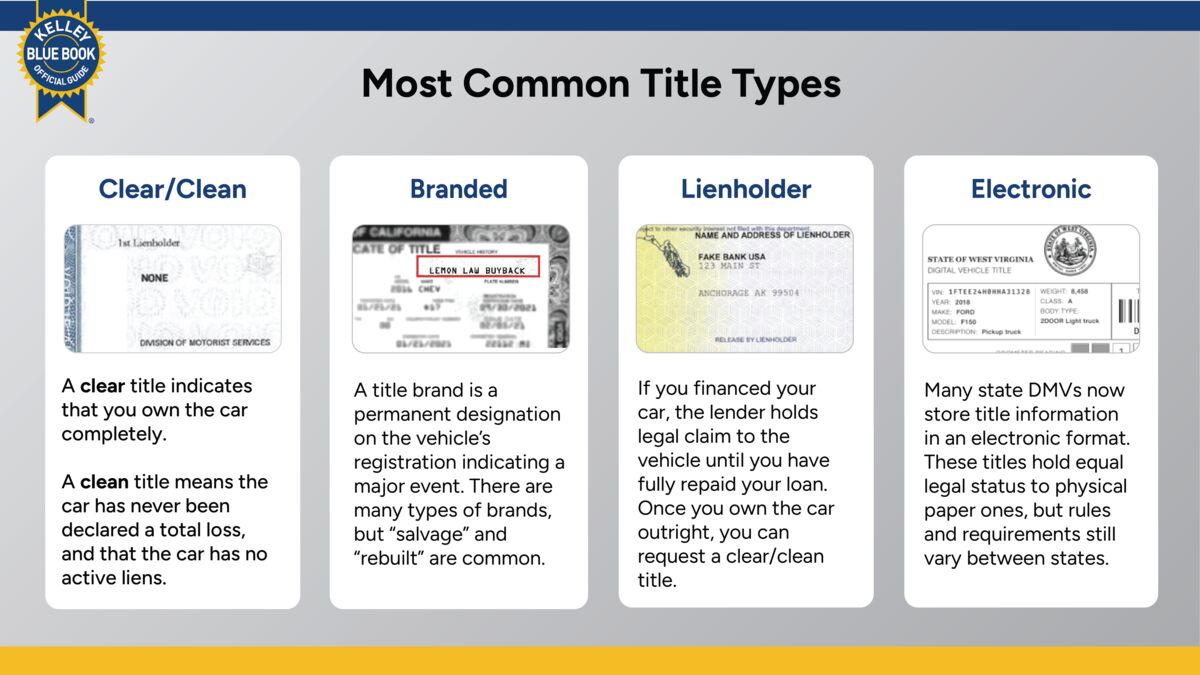
To explore all the different title types, see: What Are the Different Types of Car Titles?
What to Know About Electronic Titles
Many states have transitioned to Electronic Lien and Titling (ELT) systems. Electronic titles hold the same legal status as physical titles. Lienholders either become an ELT service provider or enroll with a DMV-approved service provider to transmit the vehicle information and title data. The documents and information are then held by the state DMV.
Electronic titles have some benefits, including easing concerns about keeping a paper title safe and reducing fraud. When a lien is satisfied, the lienholder can release it electronically through their service provider, and the vehicle owner can access the clear title.
Many states are slowly adopting ELT systems, but the status of these transitions varies across the country. Some use electronic titles exclusively, some still use a mix of electronic and paper titles, and some continue to use physical titles by default. Check with your state DMV to understand how it uses electronic titles.
MORE: How to Sell a Car: 10 Steps for Success
New Car Titles
Titles are simple when buying a new car. The dealer takes care of the title paperwork. You will pay any necessary fees, but the dealer handles the paperwork.
When buying a car, you can pay cash, lease, or finance. Only when you pay cash will you receive the original title. Processing can take up to 30 days. Leasing a car is essentially renting a vehicle — you never receive the actual title because the car never belongs to you.
When you finance a vehicle, you will receive a copy of the title within 90 days. It will identify the lender as a lienholder. When you’ve paid the loan in full, you will receive the actual title, which reflects you as the owner, free and clear.
Titles for Sales or Trade-Ins
You don’t need to do anything other than provide your title when selling a car to a dealership or trading it in for another vehicle. Whether you have a clear title or a lienholder on your title, the dealership will handle title issues.
Selling your car to another private individual, however, requires some effort from you. If you’ve satisfied the vehicle loan and have a free-and-clear title, you only need to fill in the transfer information. This includes both you and the buyer signing in the appropriate places. Both parties should keep a copy.

KBB PRO TIP: Some states require notarized signatures. You will also need a bill of sale. You and the buyer should keep copies with both parties’ signatures. Unless you know the buyer, accept only cash or a cashier’s check as payment.
If you still owe money on the vehicle and the title has a lien, things get more complicated. The lender will want the loan paid off to release the lien. At this point, the easiest way forward is to complete the entire transaction at the lender’s office. If it’s a local bank or credit union, everything can be done right then and there.
If completing the transfer at the lender’s location isn’t possible, the lender will still need the loan paid in full before transferring the vehicle. You will have to hammer this out with the buyer. The best way forward, in this case, is for the buyer to pay your lender. The lender will issue you a clear title, and you can proceed with the transfer.
MORE: 7 Ways to Protect Yourself When Selling a Car Privately
Transferring a Car Title
Every state has its own rules concerning car titles. Keeping your title current can make things easier. Get an updated title when relocating to a new state or when the vehicle changes hands. That’s true even when the vehicle moves from one family member to another.
How to Transfer a Car Title to a New State
As if you don’t have enough on your plate when moving to a new state, add registering and retitling your car to the mix. States have their own timetables for making your car legal in its new home, but many require you to act within a set number of days.
Some states require an emissions test, a safety inspection, or both, to title and register an out-of-state vehicle. Many require a physical vehicle identification number verification, as well. It’s up to you to determine what is necessary in your new home state.
If you come from a state that issues titles, take your current title to the local DMV or Department of Transportation office. Additionally, you’ll need your driver’s license, the current odometer reading, proof of residence (such as a utility bill or lease), and a form of payment. If your new state requires any of the tests mentioned above, you’ll need proof of passing them.
Some states, such as Vermont, don’t require titles for cars more than 15 years old. If you are coming from a state that doesn’t issue titles, you will need your current registration, financing paperwork, and the other documentation listed above.
How to Transfer a Car Title to a Family Member
When transferring a title to a family member, the process is the same as with an outside buyer. This is true whether the title is clear or if there is a lienholder.
If the title is clear, fill out the required information on the current title and sign where appropriate. If the state requires a bill of sale, it must be completed, even in the case of a gift to someone in the family. In that instance, the family member then applies for a new title.
If there is a lien, the lender will require payment before releasing the title.
RELATED: Gifting a Car: Learn What To Do
How to Transfer a Car Title with Two Owners
The title transfer process is the same for two owners as it is for one, with one possible exception: the difference between “or” and “and.”
If “or” separates the two owners’ names, either owner can legally sign the title transfer. If “and” separates the two names, the transfer requires the signatures of both owners for the title transfer.
Title Copies and Replacements
Don’t panic if your title goes missing. There are plenty of reasons this might happen.
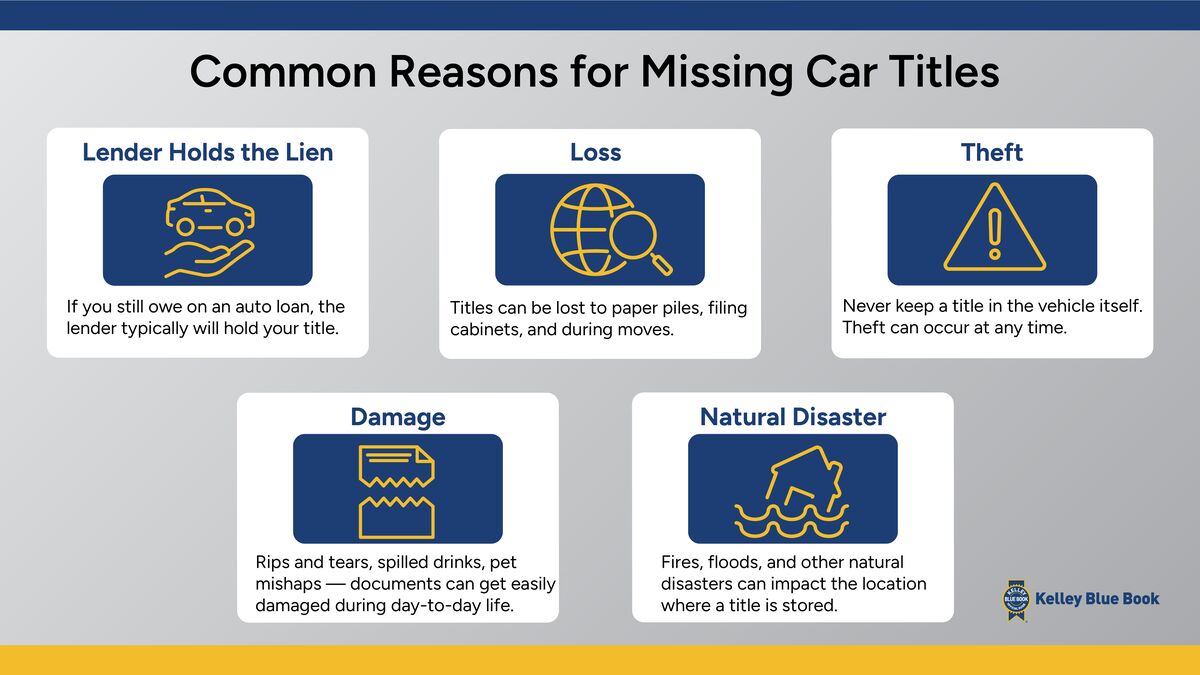
There will be a fee, but you can replace it. You can apply for a replacement online, but we recommend visiting your local Department of Motor Vehicles (DMV) branch. In-person is better if you have questions or unusual circumstances.
What You Need to Get a New Car Title or Copy
First, go to your state’s DMV website to see what information and documents you need to provide. Every state and government agency is different, but the most common items you’ll need to get a new title or a replacement title include:
- Make, model, and year of the vehicle
- Current odometer reading
- The VIN
- Financing information
- Your driver’s license
- Cash, debit card, or check for the reissuing fee
To obtain a copy of your car title, bring this same information to your local DMV and apply for a replacement title.
RELATED: How to Sell a Car Without a Title
Editor’s Note: This article has been updated since its initial publication. Russ Heaps contributed to this report.
