


The original engine line-up was ditched, too, with the new range going fully four-cylinder; things kicked off with a 769cc unit with 34bhp, while the range topped out with the new 999cc FIRE engine – one which, as we’ll see shortly, continued into the next chapter of the Panda’s history, too.
A new rear suspension design and a stronger bodyshell were also introduced. Adding to the Panda’s already rugged appeal, Fiat toughened things up further with the 4×4. This version gained higher ground clearance, a tougher bodyshell and a manually selectable four-wheel drive system. It also gained an extra gear ratio to the standard Panda’s four; an ultra-short first gear was slipped in beneath the existing quartet of gears, and was designed to help the plucky Panda scrabble up steep off-road inclines.
There were 4×4 versions of the generations that followed, too, and each is known for its plucky, giant-killing ability in the rough stuff. As such, the Panda is a popular choice for those who do trials and other off-roading events, with the aftermarket rife with modifications to make an already formidable mud-plugger into something even more rugged.
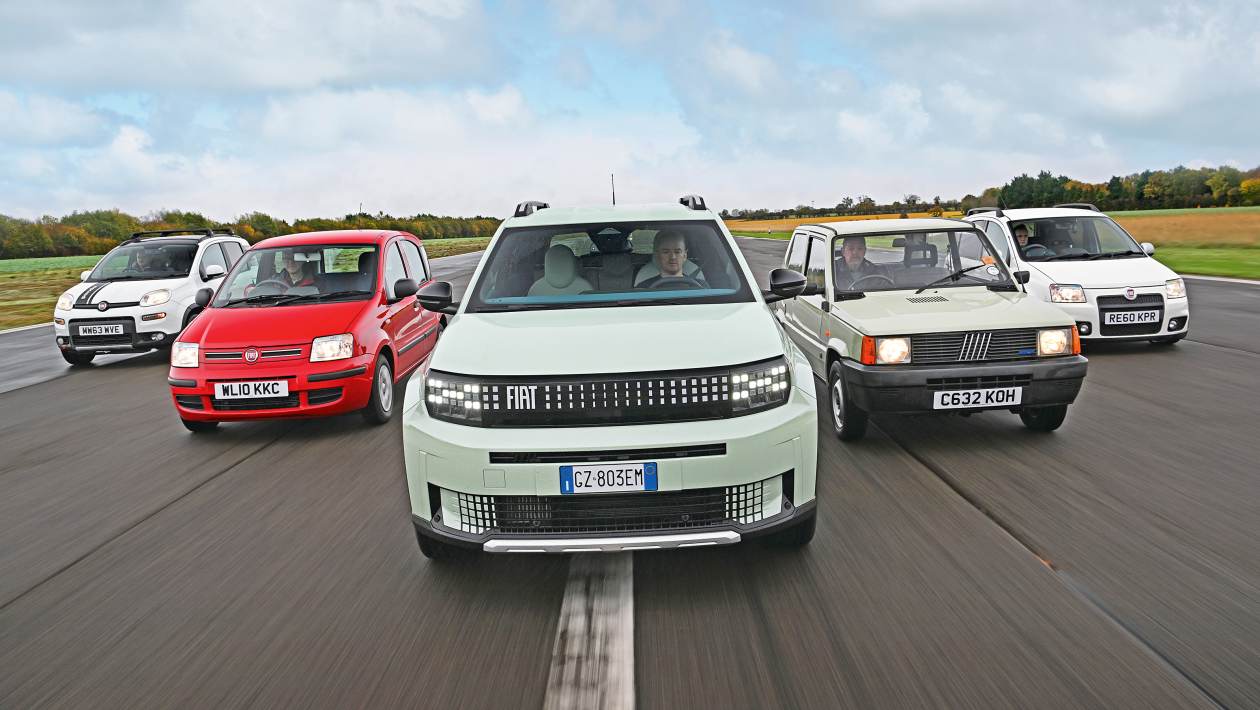
With Mk1 examples incredibly rare in the UK, we’re driving a Mk2 today. It’s in immaculate condition, transporting us right back to the mid-eighties with its pale green paint and its bare steel wheels. Hop inside, and the Mk2 maintains the wonderful simplicity of the original. Stripey fabric trims the dash, while a small pod houses the ventilation controls and switchgear such as the rear window heater and wash/wipe. Modern touchscreen-obsessed car designers, take note. The ventilation is gloriously simple: the side vents are just a flap in the windscreen frame, which the driver can open and shut to let fresh air in.
Much of the door skin is bare paint, but the panel is ribbed and has an embossed Fiat logo. Just above that panel, the door release is neatly integrated into the slim door pull/armrest.
