


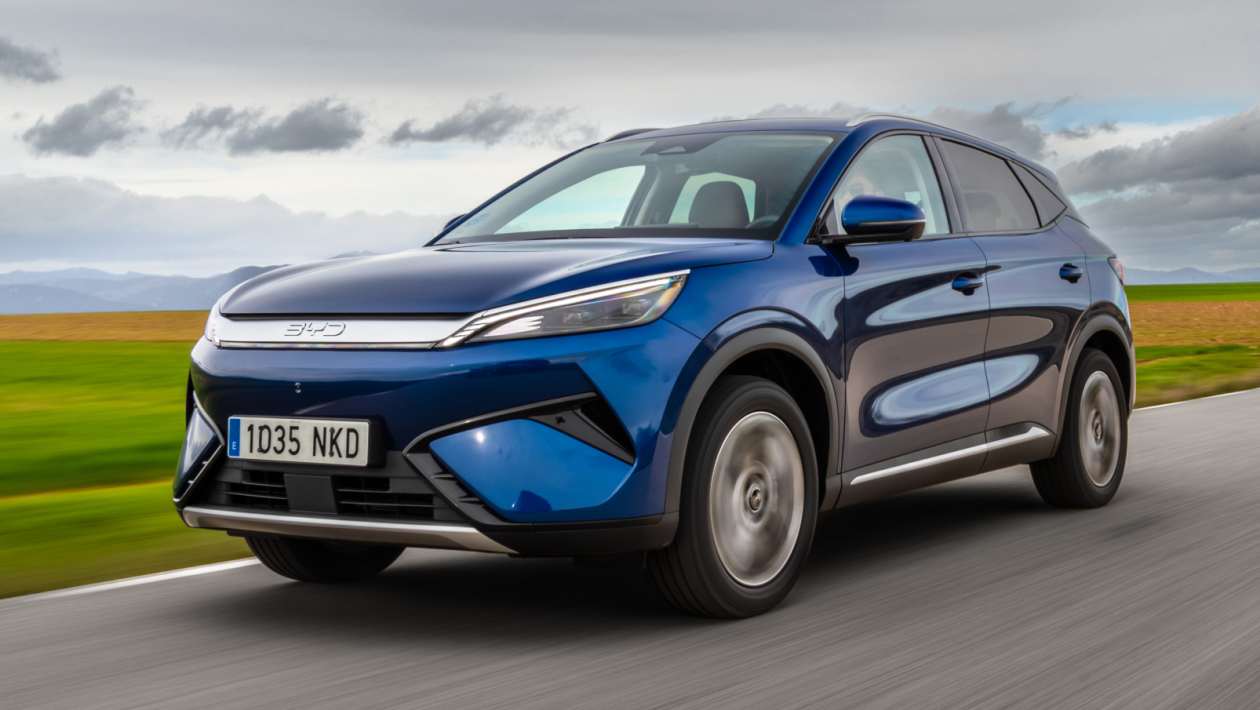
Yet the new dual-motor version boasts the most arresting numbers. This top-spec model bumps power up to a colossal 442bhp and drops the 0-62mph time down to 3.9 seconds.
Beyond the powertrain improvements, BYD’s also given the Atto 3 EVO a new set of digital interfaces, with sharper, larger screens, and re-arranged the cabin layout. There’s some new colour and trim options inside, plus several simplified panels on the exterior that give the fairly anodyne design a cleaner look. Amongst urban traffic, the Atto 3 completely blends into the background, so depending on your preferences this is either a good or bad thing.
Precise UK pricing hasn’t been announced, but it’ll be more expensive than the £37,000 starting price of the current car. The dual-motor version will be in the low £40,000s.
There are other manufacturers out there with impressive models at this price point. Rivals such as the former Auto Express Car of the Year Skoda Elroq, Kia EV3 and new Nissan Leaf impress at the smaller end of the C-segment, with larger but no more expensive rivals like the Citroen e-C5 Aircross and Vauxhall Grandland improving the value-for-money proposition yet further.
For now, we’re only driving the entry-level rear-drive car that should make up a majority of UK sales. And given the level of technical change compared with the previous Atto 3, it’s not surprising to note that it drives quite differently, if not in a particularly positive sense.
At low speeds the steering feels a little bit rubbery, and has a tendency to hobble over speed humps. A collection of inconsistent bumps can rock the body side to side in quite an unpleasant way. It is quiet in general, but we found that – particularly under regen – the e-motor emits a very high-frequency whine. It’s not loud, but it is persistent; we’ll have to verify if this is still an issue on cars when they arrive in the UK.
