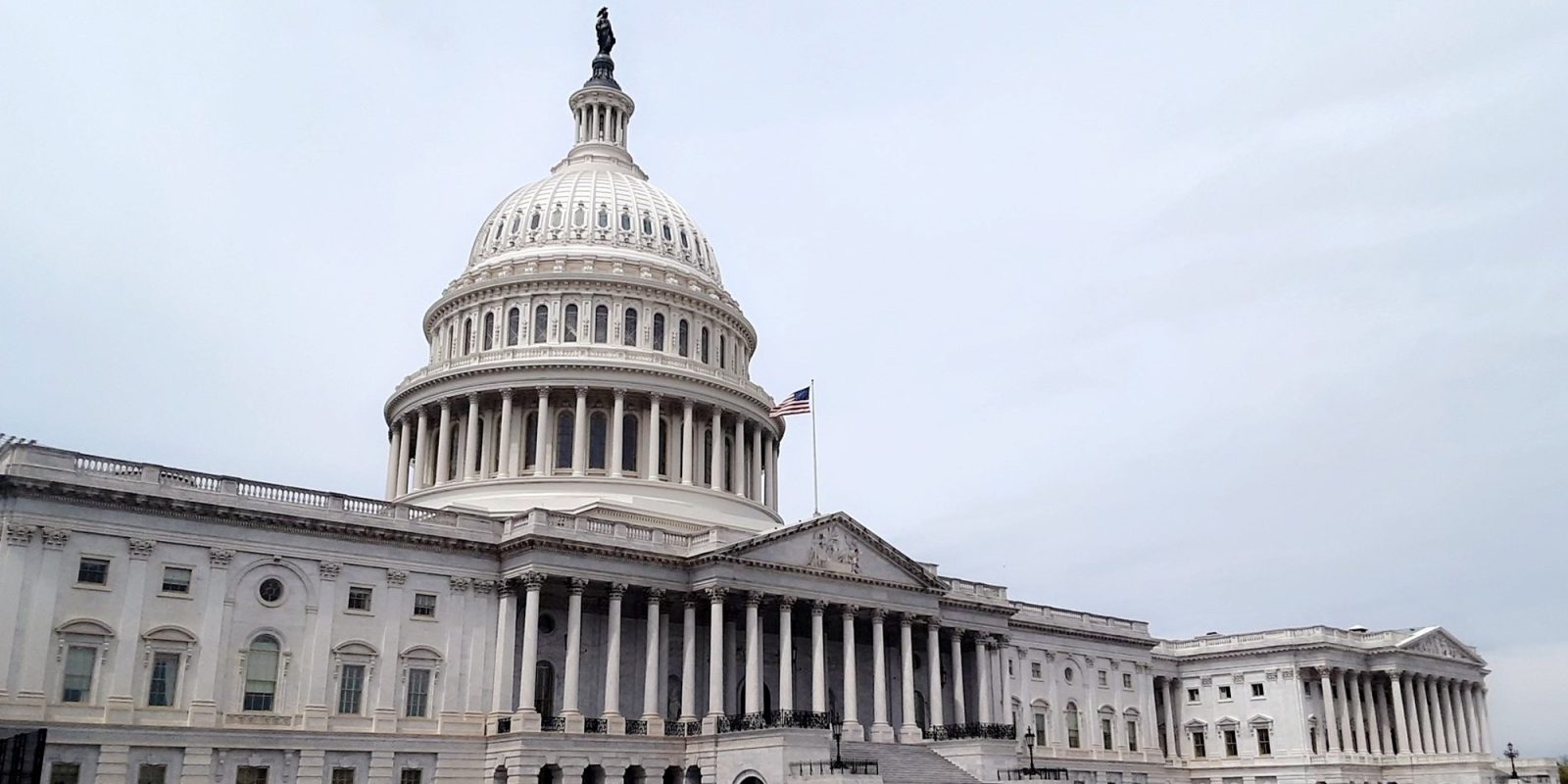

The entire US auto industry is back at it again, lobbying Congress to stifle competition and ensure that Americans remain stuck with overpriced, second-rate, highly-polluting vehicles.
The auto industry is rapidly moving towards electrification, and everyone knows it. This has been the case for more than a decade now, and smart countries and companies have worked to get themselves prepared for the future.
China is in this category, having prepared its auto industry for this moment by securing raw materials partnerships, supply agreements, production capacity, and a thriving EV startup culture – and contrary to the common story we’re told in the US, much of this preparation was bottom-up, rather than top-down. As a result, Chinese automakers are making some of the best, most affordable cars in the world right now, and the world is taking notice.
Then, there are the companies that seem desperate to lose, to sit on their laurels in a shrinking market and pretend that nothing is changing, and to beg for government to coddle them into feeling better about their poor decisions.
The US auto industry fits into the latter category, and John Bozzella, head of the main US auto lobby group the Alliance for Automotive Innovation (formerly known as Global Automakers), is king of the babies.
Chinese cars are already blocked, we need to block them again?
He pleaded with Congress on Thursday to pass multiple proposed bills banning Chinese vehicles from operating in the United States, despite that Chinese vehicles are already functionally banned from the US, in two different ways.
Not only is there a “connected car rule” (which Polestar just fell victim to), but there’s also a 100%+ tariff on Chinese EVs, making them simply uneconomical to sell in the US.
So as of yet, there has been little attempt to bring Chinese EVs to the US. Besides, why bother when the rest of the world wants them so badly, leading China to rapidly become the world’s #1 auto exporter, leapfrogging the US and 4 other nations that had held the top 5 for decades until the 2020s.
But that’s not enough protectionism for the free market capitalists in America, they must beg for government to coddle them further.
So Bozzella has now targeted the cowardly new effort in Congress that wouldn’t just ban the sale of Chinese EVs, it would ban Chinese EVs from even driving on American roads at all (e.g. if driven in from Canada or Mexico, two countries whose citizens are allowed to purchase these affordable, advanced vehicles).
In current form, it could also apply to companies with partial Chinese ownership, which would mean that Mercedes and Volvo would both be disallowed from operating in the US, though those and other provisions of the bills are subject to change.
Weren’t we told freedom and competition conquered all?
It’s an interesting strategy in a country whose mythos has always suggested that restrictive authoritarian regimes can be defeated by displays of “freedom.”
A common story in America goes that Soviets attempted to show American films to their people to highlight the depravity of American culture, but that the people instead saw the abundance of American life and were made jealous. The story is meant to show that freedom and cultural exchange can beat propaganda, and will lead to better outcomes for a populace.
Apocryphal or not, America is now on the other side of that story. At this very moment, Chinese cities are the most advanced in the world. Due to the abundance of cheap, clean electric transportation options, their air is clean and their streets are quiet. And their people have been the least negatively affected by the world’s oil-conflict-du-jour.
This lobbying only harms Americans’ health and pocketbooks
But John Bozzella and basically the entire US auto industry simply can’t have that. They’ve had it too good for too long, shoving gas-guzzling, child-killing SUVs down the throats of Americans, saddling everyone with more auto debt than ever, and ensuring skyrocketing war profits for their partner industry, oil.
All along, the auto industry has lobbied for more pollution. It does this even when it knows its a bad idea. It simply can’t help itself, it must try to harm the planet and even its own business prospects, as long as it will result in more gas being burned in America in the short term.
It’s a strange message coming from the “Alliance for Automotive Innovation,” where Bozzella has never found an opportunity to fight against innovation that he didn’t jump at.
The companies providing innovation in EVs, at this moment, are mostly focused in China. Automakers outside of China are stumbling all over themselves to cancel EV projects and push back targets, while China is just getting on with improving transportation.
They said Americans didn’t want EVs, now Americans want EVs too much?
After spending years pretending that Americans don’t want EVs and that government needs to roll back EV targets, and even losing themselves $70 billion seemingly for no other reason than to spite their face, Bozzella and the auto lobby are changing their tune.
Now they’re telling government that, no, Americans probably want EVs too much, well, at least Chinese EVs, and it’s totally not fair that China’s actually trying to make good EVs and we’re not and can you please ban them so we don’t have to try very hard pretty please?
Even the EVs that the US auto industry does make are overly large, overly expensive, and generally retrofit onto gas-vehicle designs that don’t properly leverage the advantages of EV powertrain packaging.
This is why the only EVs that sell well in America are those that were designed from the ground up to be electric, by a company that isn’t saddled with a century of combustible baggage.
Incidentally, these are the type of EVs coming out of China right now – clean sheet designs from startups that develop cars quickly and don’t have a parts bin of full of pistons and spark plugs they need to justify the existence of.
US automakers feel the need to stop Americans from even knowing that these cars exist. The entire rest of the world gets access to the best EVs out there, saving them money and saving their lungs, but you can’t have them.
We’ve been through this before. It didn’t work.
But protectionism hasn’t worked before, and it won’t work now. In the 1970s, the US saw an ascendant Japanese auto industry, with better processes and higher quality material inputs, and tried to stop it with tariffs. It failed to do so, but at least it bought itself some time to sit on its laurels and let Japan continue to improve, cementing them as a top auto exporter for the next half century.
The same story is playing out now, with China in the place of Japan. American Luddites like Bozzella are desperately trying to dig their heels into the ground and force a nation of 350 million people, who all have access to the internet, to close their eyes and stick their fingers in their ears and refuse to see what the rest of the world has access to.
The US will not compete, and will not win, by refusing to act. It will lose, more miserably than any other national auto industry (except, perhaps, Japan), if it does not immediately shape up and knock it off with this idiotic rent-seeking behavior, begging to be declared the winner by government without even putting in an effort.
And as long as John “I can’t do math” Bozzella is making a plea to Congress, you might as well too.
Find your members of Congress and give them a ring, and let them know whether you think the defenders of capitalism and innovation in the auto industry should have to compete with the world’s state of the art vehicles, or whether you prefer to have the overpriced, second-rate crap they keep shoveling down your throat. You can guess where I stand on the topic.
Charge your electric vehicle at home using rooftop solar panels. Find a reliable and competitively priced solar installer near you on EnergySage, for free. They have pre-vetted installers competing for your business, ensuring high-quality solutions and 20-30% savings. It’s free, with no sales calls until you choose an installer. Compare personalized solar quotes online and receive guidance from unbiased Energy Advisers. Get started here. – ad*


FTC: We use income earning auto affiliate links. More.