


That said, the 19.8mpg of the original DBX, or the 19.9mpg of the 707 and the DBX S, will still cost you a few bob when there’s an 85-litre tank to fill. Match the official figures, and you’re looking at an absolute maximum of around 370 miles from a tank, though realistically you’ll be wanting to fill before that, and a full tank of super unleaded comes in at around £150 at summer 2026 prices.
| Model | MPG | CO2 | Insurance group |
| DBX S | 19.9mpg | 323g/km | 50 |
| DBX 707 | 19.9mpg | 323g/km | 50 |
There’s a definite theme to the ownership of an Aston Martin DBX – it’s expensive. The SUV sits in the highest group 50 for insurance, as do all of its rivals, so expect costly premiums.
Tax
While the prospect of paying £640 per year in vehicle excise duty (VED) from the second to sixth years of registration may not be especially appealing (£440 of that is a surcharge for the DBX costing over £40,000), it pales in comparison to the first-year rate of £5690 due to the high CO2 output.
BiK for company car users is similarly eye-opening: the DBX is inevitably in the very top 37 per cent bracket, so using a DBX 707 as an example, a 40 per cent taxpayer would pay in the region of £34,000 in the 2026/2027 tax year. A top-spec Bentley Bentayga with the hybrid V6, while not cheap itself being in the 22 per cent benefit-in-kind (BiK) band, would drop that figure to around £18,500. An all-electric Lotus Eletre, benefitting from 4 per cent BiK and a lower list price, would cost just £2,200.
Depreciation
As a fairly low-volume car, the DBX performs reasonably well on the used market in terms of resale values. The latest valuation figures we have suggest it’ll retain around 50 per cent of its original value after three years or 36,000 miles. For comparison, the Bentley Bentayga is predicted to be worth between 44 and 49 per cent of its original value over the same period.
Its worth remembering that the high list price of a car like the DBX encourages you to be blaise about adding options since, percentage wise, it doesn’t make a huge difference to the overall price of the car. However, in most cases optional extras will make you car more sellable rather than more valuable, so you’re unlikely to see a return on fancy exclusive paint colours or hugely expensive carbon fibre exterior trim come resale time.
Both inside and out, there’s no doubting that this is an Aston Martin
Pros |
|
Cons |
|
From the outside, it’s clear that the DBX is an Aston Martin. The familiar style and design flourishes are particularly evident through the front end, leaving a much more subtle impression than that conveyed by its shouty competitors. Aston’s design team wanted the DBX to look smaller than it actually is, and they appear to have succeeded with the SUV seeming relatively svelte and stylish compared to the big, brash nature of so many other high-end 4x4s.
Interior and dashboard design
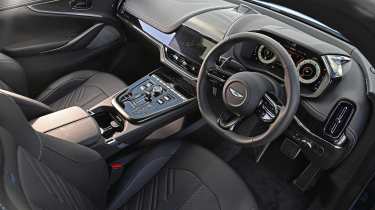
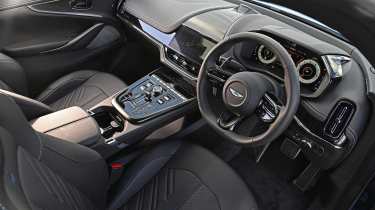
Inside, the full-length panoramic roof bathes the car in light, and you’ll find great swathes of leather across most of the cabin. The rest is a mix of metallic and piano black finishes, although you can have your DBX any way you fancy – at a cost. The engine start button sits at the top of the dash, flanked by P, R, N and D buttons to control the gearbox. A 10.25-inch full-colour TFT screen sits in front of the driver as the instrument binnacle.
