


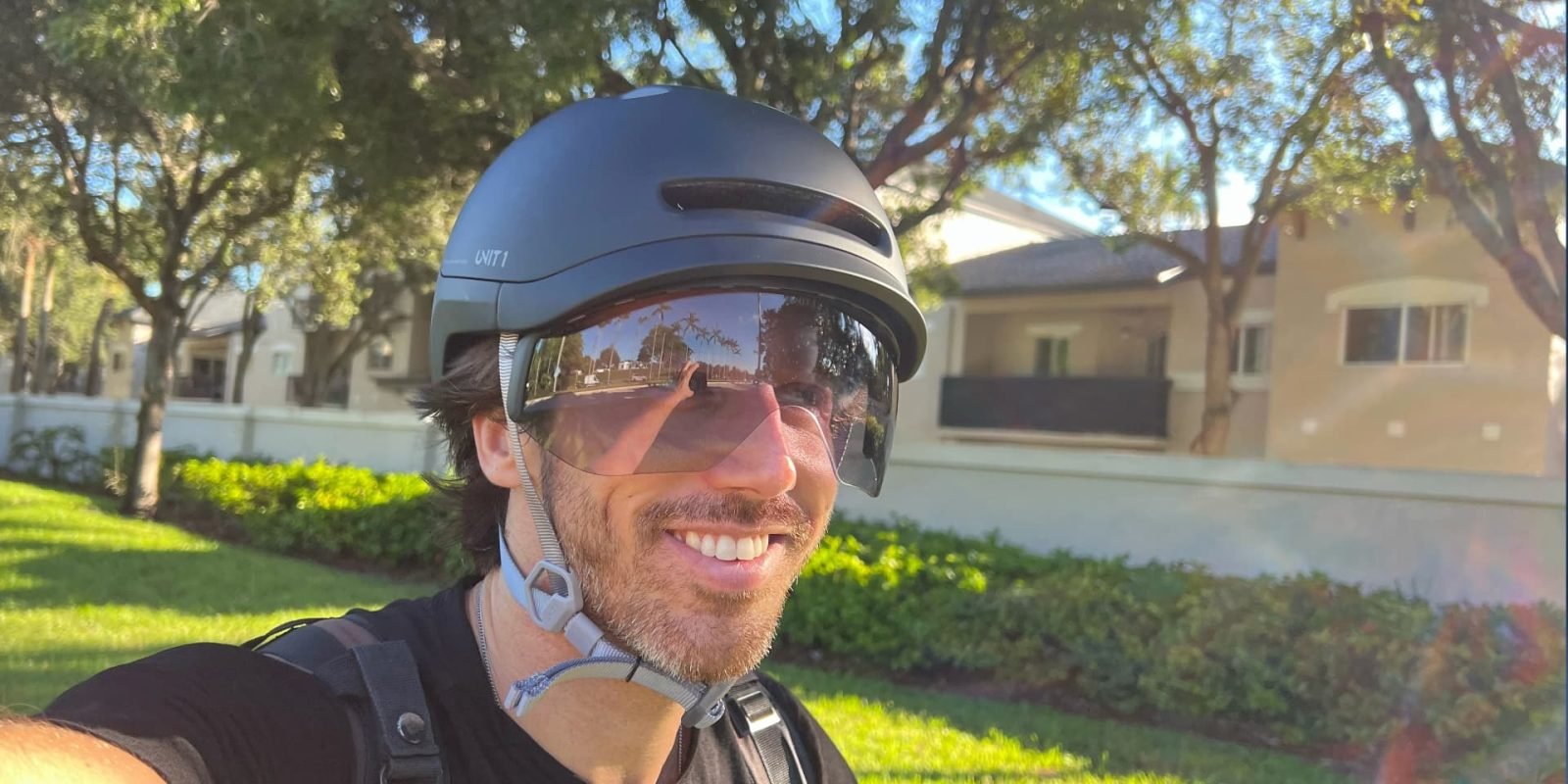

I test a lot of electric bikes, which means I also spend a lot of time wearing bicycle helmets. And while most helmets tend to fall into the decidedly unexciting category of “necessary safety equipment,” UNIT 1 has managed to make a couple that I actually get excited about wearing.
I’ve been using both the UNIT 1 FARO and the new NEON, and despite taking fairly different approaches, they’ve both become regular go-to helmets for me.
UNIT 1 FARO: High-tech safety with lights everywhere
The FARO is the more futuristic-looking of the two, and it’s also the one that really leans into the “smart helmet” concept.
The helmet includes MIPS protection to reduce rotational impact during a collision, as well as integrated lighting on both the front and rear, including a large customizable rear lighting area made up of dozens of LEDs.


That large rear LED array is a feature I particularly appreciate since visibility is such a major part of cycling safety.
A helmet obviously can’t force drivers to pay attention, but I’d rather give them as many opportunities as possible to see me. The hidden light area below the obvious LED light bar adds a lot of extra visibility.
You can see just how vivid it is in the GIF below, though in real life it looks even better!

The FARO’s lighting system works with UNIT 1’s handlebar remote, which adds turn signals controlled right from the bars.
The system can also provide automatic brake-light functionality, giving you another way to communicate with traffic around you.
I’ll admit that turn signals on bicycles can sometimes feel a bit gimmicky, especially when they’re so close together that drivers can’t really tell which direction is flashing. But putting them high up on the helmet makes them considerably more visible, and the little wireless handlebar remote makes operating them incredibly easy.

The rechargeable lighting is also convenient. I’ve topped up the helmet from a power bank while out and about, meaning you don’t necessarily need to find a wall outlet if you realize your helmet is running low. The rear LED light bar also turns green and illuminates along the length of the bar to let you know what percentage of charge the battery has reached. The only way it could be clearer would be with a screen, but we’re still talking about a helmet here, not a phone.
There are other smart features packed in too, including crash detection and app-based customization.
The tradeoff is weight. At around 640 grams for a medium, the FARO is noticeably heavier than a conventional bicycle helmet. It doesn’t bother me much once I’m riding, and I’ve found the helmet comfortable, but you definitely know there’s more helmet up there. Each time I pick it up, I’m reminded that it’s not just the basic little foam shell that I’ve been wearing for the last few years.
Then there’s the price. At around $230 (or $195 during the current Black Friday sale period), this isn’t a cheap helmet. You’re paying for all of that technology, lighting, and design.

UNIT 1 NEON: Lighter and perhaps even more practical
As much as I like the FARO, I’ve also become a big fan of the UNIT 1 NEON.
At roughly 430 grams in a medium, it’s significantly lighter than the FARO, and that difference is immediately noticeable. It’s also a bit cheaper at around $210 (or $178 during the Black Friday sale period) while still packing several of the smart features that make UNIT 1’s helmets interesting.
You still get MIPS rotational protection, crash detection, integrated rear lighting, app connectivity, and compatibility with UNIT 1’s handlebar remote for turn signals and brake-light functionality.
I do wish the NEON had a front light like the FARO. That’s probably the biggest feature I miss when switching between the two. But the NEON makes up for it with one of my favorite features on either helmet: its magnetic face shield.

The shield is ridiculously easy to attach and remove. You don’t even need to carefully line it up. I just need to get it somewhere near the mounting points with one hand and the powerful magnets basically grab it out of the air and snap it into position.
That means I can easily add or remove it one-handed, even while riding.
The photochromic shield is clear enough for night riding but darkens when exposed to bright sunlight, giving you sun protection without requiring separate daytime and nighttime shields. I’ve found that incredibly convenient, especially on rides that transition from daylight into evening. I hate that I can’t wear my sunglasses for eye protection at night, and a lens like this solves that issue.
The NEON also gets something particularly important for faster e-bike riders: NTA 8776 certification. That’s the Dutch standard designed specifically around higher-speed e-bike uses at up to 45 km/h (28 mph). For the Class 3 e-bikes that have become increasingly common in the US, that’s a big distinction compared to helmets rated for crashes at slower speeds.

Which UNIT 1 helmet would I choose?
That’s actually difficult, because I regularly use both.
The FARO is the one I’d choose if maximum visibility and technology were my priorities. I love having LEDs both front and rear, the MIPS protection, and the handlebar-controlled turn signals. It’s comfortable, looks great, and has become one of my favorite urban riding helmets.
But the NEON may be the easier helmet to recommend to most e-bike riders.
It’s lighter, a little cheaper, still gives you a rear light and smart safety features, has that excellent magnetic photochromic face shield, and importantly carries NTA 8776 certification for faster e-bike riding.
Neither helmet is inexpensive, and the FARO in particular asks you to accept some extra weight in exchange for all that technology. But I’m used to wearing much heavier motorcycle helmets and ways.
Plus, it’s important to note that these aren’t helmets I tested for a few rides and then tossed onto a shelf. Both have stayed in my regular rotation, and I find myself reaching for them frequently when I head out on an e-bike. The fact that I not only enjoyed them during my testing but actually replaced my old helmets with them should speak for itself.
For someone who rides as much as I do, that’s probably the strongest endorsement I can give them.
Between solid helmets like these and safe riding clothing, it’s good to feel protected!

FTC: We use income earning auto affiliate links. More.
