For the last few years, it has felt like the electric bike industry has been engaged in a constant arms race.
Every new launch seems to promise more speed, more power, bigger batteries, and increasingly motorcycle-like styling. And every time a new model pushes the envelope, the comments inevitably fill with some people asking the same question: “Why not just make it faster?”
I think that’s the wrong question.
It’s also one side of a very controversial issue: e-bike speed. While some are trying to rein in speeds, others push for faster and faster bikes. But I’d say that instead of trying to stretch the definition of an e-bike until it snaps, maybe it’s time to admit that there is another category of vehicle waiting to emerge.
It’s not that we should be against speed; it’s that we need the right vehicles for higher speeds.
The current Class 3 e-bike framework in the US tops out at 28 mph with pedal assist. It’s actually quite a thoughtful and well-designed system that has done an immense amount of good, helping to accelerate e-bike adoption across the US. Those speeds are a reasonable limit for something that still behaves like a bicycle and often shares bike infrastructure. It’s not as draconian as Europe’s e-bike limits, but we’re also not talking about mini-motorcycles here, either.
But if we’re taking an honest look at the e-bike market in the US, it will quickly become apparent that there are plenty of riders who don’t actually want a bicycle. And yet, they also don’t want a 400-pound (180-kilogram) motorcycle capable of highway speeds.
They want something in between.
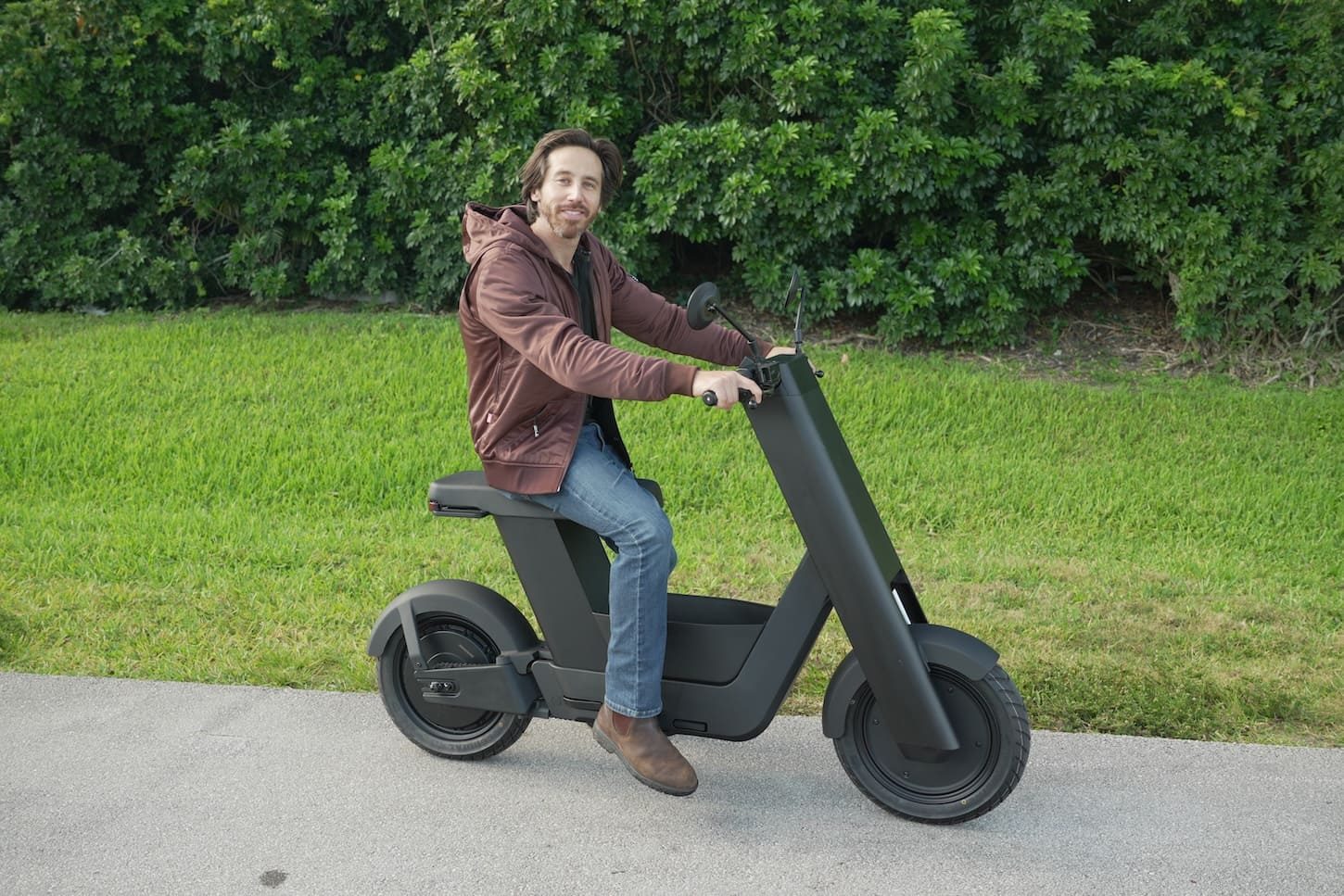
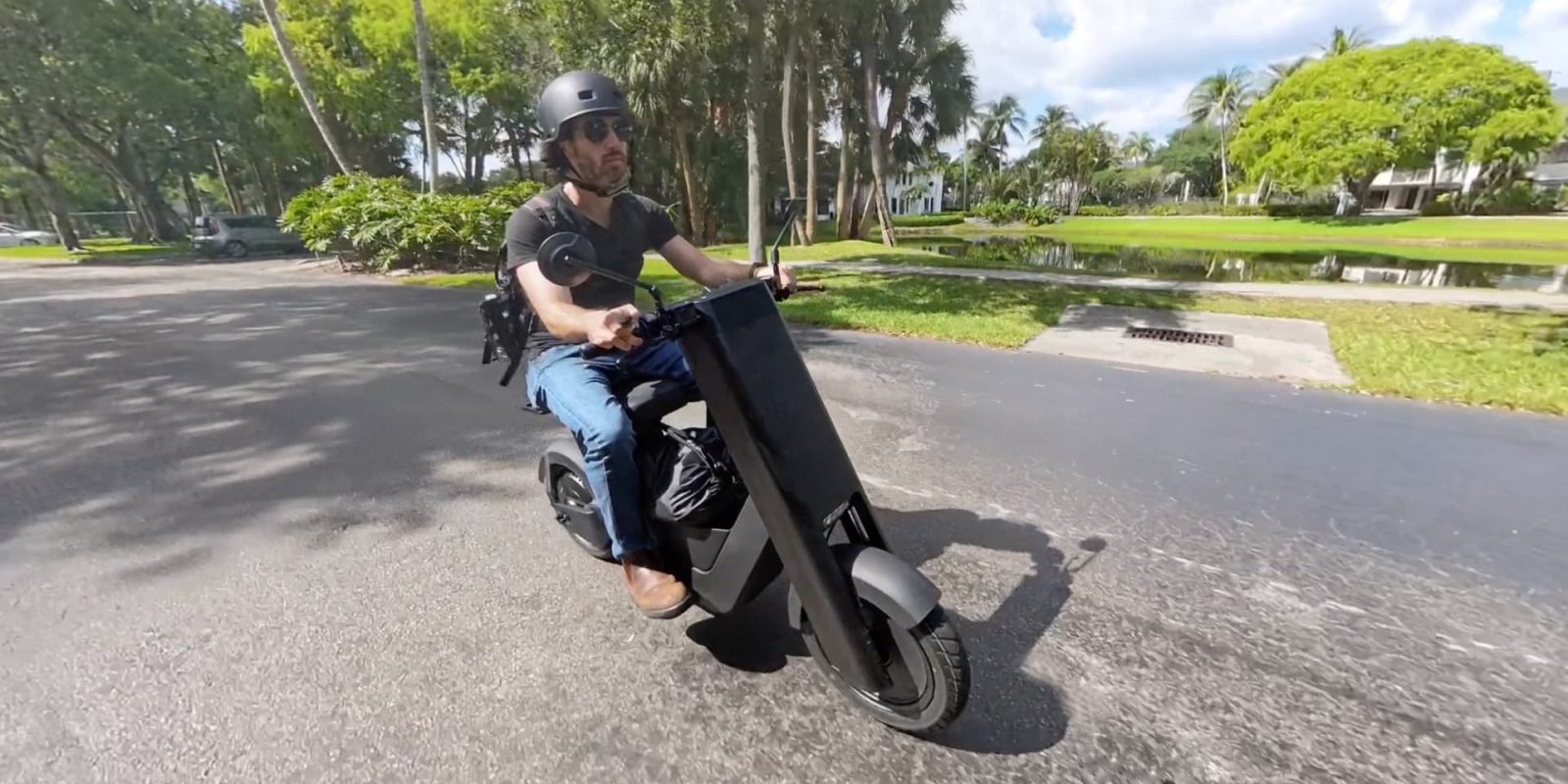
That’s why I’ve become increasingly interested in vehicles like the Infinite Machine Olto. Sure, it’s bigger and heavier than an e-bike, but it’s also dramatically smaller, lighter, quieter, and less intimidating than a traditional motorcycle. It cruises comfortably around town, carries two people, has useful cargo capacity, and reaches around 35 mph (56 km/h) in its unlocked moped mode. That mode removes the 20 mph (32 km/h) and 750W speed and power limit, boosting the velocity up to a still reasonable 35 mph and a 2,000W power limit.
In other words, bikes like these are built for the speeds that many city streets actually operate at. And that’s an important distinction.
For a surprising number of urban trips, the difference between 28 mph (45 km/h) and 35 mph (56 km/h) isn’t about getting somewhere dramatically faster. It’s about feeling like you belong in traffic instead of constantly feeling like you’re holding it up. On many neighborhood arterials and city streets, that extra handful of miles per hour can make a vehicle feel far more practical without turning it into something designed for highway use.
The answer, however, isn’t simply allowing e-bikes to go 35 mph (56 km/h).
Bicycles should remain bicycles. They’re lighter, more maneuverable, and better suited for bike lanes and multi-use paths. They also use bicycle components, like suspension, brakes, and lighting designed for bicycles. We shouldn’t keep asking more and more of the e-bike category until it encompasses everything from lightweight commuters to electric motorcycles with decorative pedals.
Instead, I think regulators should seriously consider creating a new class of modest-speed electric vehicles.
Imagine something limited to around 35 mph (56 km/h), with requirements for proper lighting, mirrors, scooter-level hydraulic brakes, turn signals, and perhaps registration and a helmet requirement. These vehicles wouldn’t belong on bike paths, but they also wouldn’t need to meet the same regulatory burden as a full-size motorcycle capable of 80 mph (130 km/h).
That’s what I’ve found in the Olto, which has scooter brakes more closely resembling those on my 59 mph (95 km/h) Gogoro electric scooter, for example. It also comes standard with good mirrors, broad lighting, and other features that feel more like motor vehicle equipment than bicycle components.
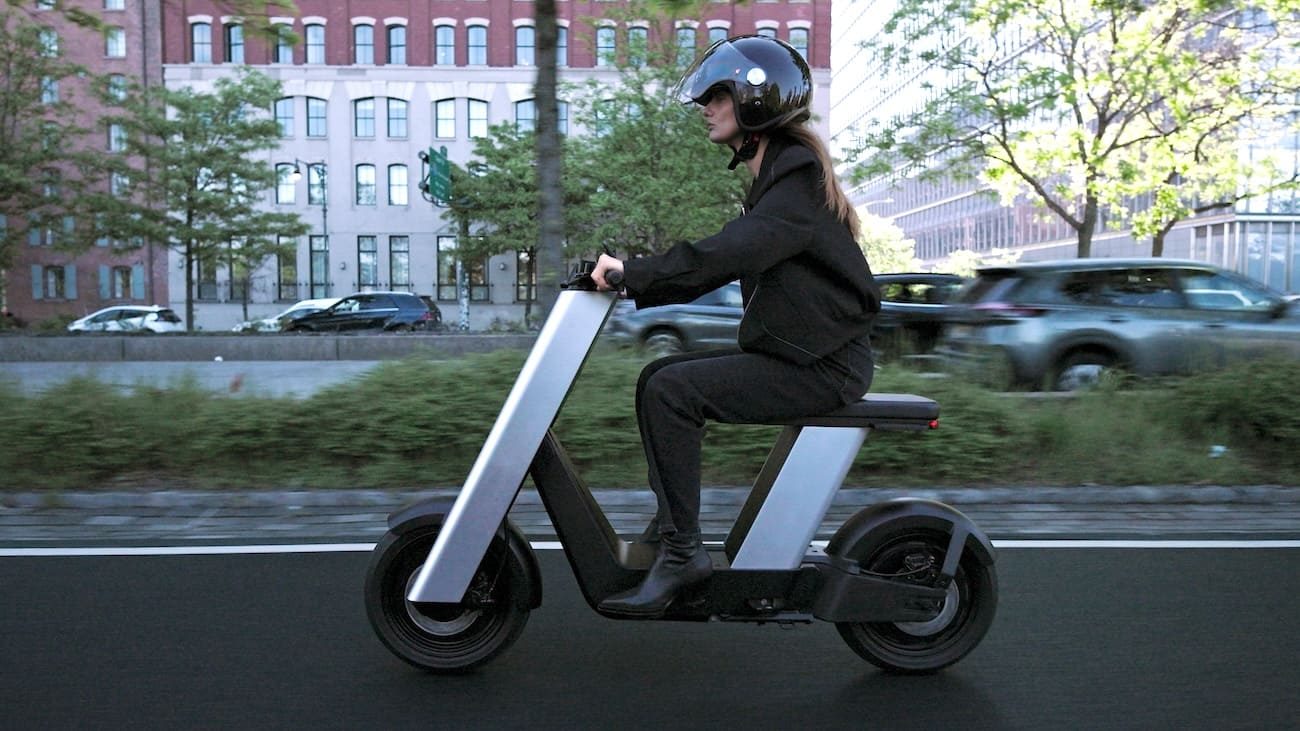
In many ways, much of the rest of the world already understands this concept. Electric scooters and mopeds dominate cities across Europe and Asia because they’re simply practical. They use a fraction of the energy of a car, take up almost no parking space, and are approachable enough that many people who would never consider owning a motorcycle happily ride them every day.
The US, meanwhile, often treats transportation as an all-or-nothing proposition. You’re either on a bicycle or you’re on a motorcycle. There isn’t much room in the middle. And it’s great that we’re getting more high-speed electric scooters in the 55-75 mph (88-120 km/h) ballpark, but those are still full-on motorcycles in the eyes of the law. And many people don’t want a full-on motorcycle; they just want a two-wheeled vehicle that’s a bit faster than an electric bicycle.
Again, Europe has figured this out with two classes of motorbikes, L1e and L3e, which basically split apart the 50cc bikes from the higher power models. Something similar for e-scooters in the US, though with marginally higher speed limits of around 35 mph to reflect our faster city streets, could be a great addition to the transportation landscape. Many cities in the US feature 25 mph (40 km/h) speed limits, meaning actual traffic flow can be around 10 mph (16 km/h) faster. That’s a bit much to ask from an electric bicycle, but fits perfectly with this proposed class of slightly faster electric mopeds and scooters.
As companies continue building machines like the Infinite Machine Olto, the Beachman Aviator, the Engwe M20 3.0, and other compact electric two-wheelers that exceed typical e-bike limits, I think that middle ground is only going to become more obvious. The demand is there. The technology is there.
Now we just need regulations that recognize not every practical urban vehicle has to fit into categories that were created decades before electric mobility started reshaping our streets.
Maybe America doesn’t need faster e-bikes after all. Maybe it just needs better small electric vehicles.


FTC: We use income earning auto affiliate links. More.