


Is it safe to charge an electric vehicle (EV) or plug-in hybrid (PHEV) using an extension cord? Carmakers say no, and we don’t recommend using one. Charging an electric car requires more electricity than common home appliances. Therefore, electric car chargers use thicker wires that can handle more power than the smaller-gauge wires in typical extension cords.
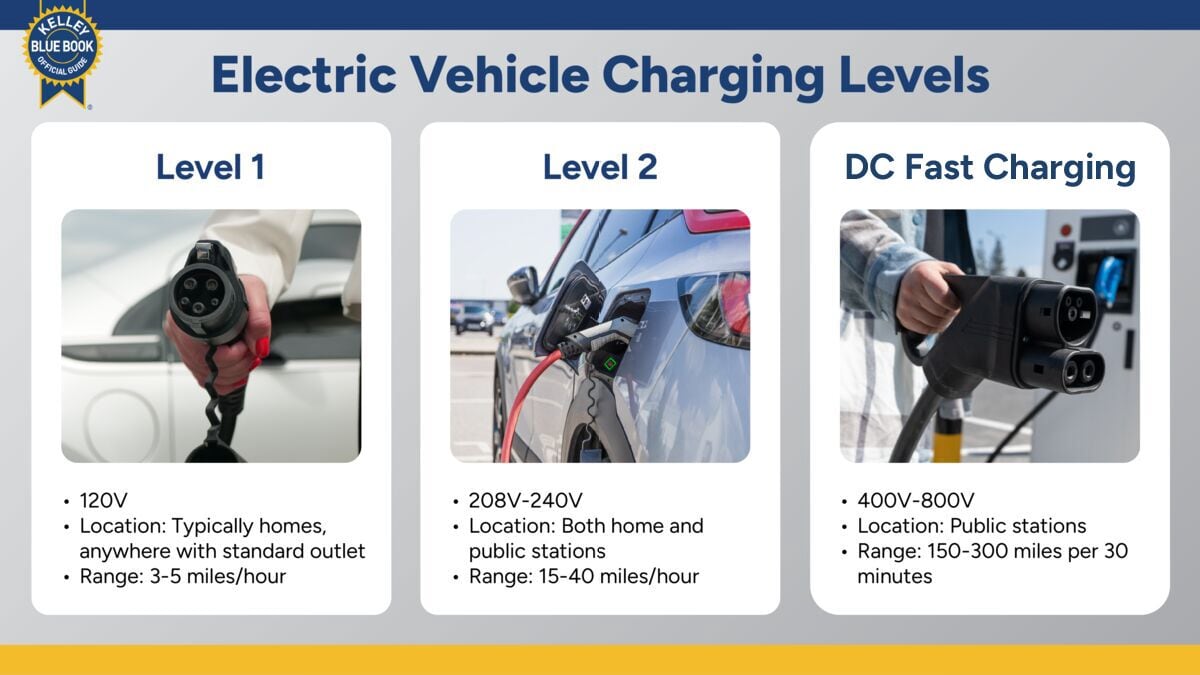
Many electric vehicle manufacturers provide a Level 1 charging cord when you buy an EV or a plug-in hybrid. These “trickle chargers” don’t require special equipment to use and connect to a standard 120-volt electrical outlet at home or elsewhere. Similarly, portable Level 2 chargers on the market plug into 240-volt receptacles — the type used for dryers. The cable length on these portable chargers can range from six to 20 feet or more, depending on the manufacturer.
If that charging cable isn’t long enough to plug into a nearby outlet and reach the car, you may be tempted to use an extension cord. Here’s why you shouldn’t.
Why You Shouldn’t Charge an EV With an Extension Cord
Automakers, including Chevrolet, Kia, Rivian, and Tesla, specifically warn against using extension cords. In fact, most EV owners’ manuals include a statement such as this one from Tesla: “Do not use an extension cord, power strip, multi-outlet adapter, multi-plugs, or conversion plugs to plug in the Corded Mobile Connector.”
Extension cords can cause voltage drop and additional heat during long, steady charging sessions, making charging slower and less reliable. With extension cords, there is an increased risk of overheating, fire, and shocks.
Vehicle warranties cover defects, not misuse. If you choose to use an extension cord, power strip, or multi-outlet adapter to charge your EV, you are taking a potentially expensive risk.
Restricted Voltage Transfer
A Level 1 cable offers a slower “trickle” charge. According to the U.S. Department of Energy, it adds about two to five miles of range per hour, which is suitable for many PHEV owners. Adding an extension cord can create a voltage drop over the extra length. This setup will take even longer to charge your battery and also creates safety concerns.
We suggest upgrading to Level 2 charging for regular home use, which is standard now for most EV drivers.
Dangers of Using an Extension Cord to Charge
So what happens if you charge with an extension cord? Since charging an electric vehicle draws a large amount of power, an extension cord may overheat if you connect it to the charging cable. The risk of fire increases because the extension cord attempts to carry more energy than it was designed to handle. Overheating cords can melt plugs and receptacles, and the fire danger is greater when left unattended overnight or while you’re not home.
Another safety risk is electric shock. An EV charging cable is more vulnerable when connected to an extension cord. Routing power from your outlet through an extension cord adds another connection that can loosen, overheat, or get wet. Inserting and removing the plug then become riskier tasks.
MORE: What EV Charging Apps Do I Need on My Phone?
How to Properly Connect a Level 1 Charger
Consult a licensed electrician if you’ll be connecting an EV or PHEV to a Level 1 charging cable for long-term, at-home charging. An electric vehicle supply equipment (EVSE) professional can ensure you have a dedicated circuit to support the power load.
- Ensure the parking brake is engaged before every charging session.
- Insert the charging cable into a GFCI-protected 120-volt AC receptacle on a dedicated circuit.
- Open the EV’s charging port door and connect the charger.
- Charging should begin when the cord is connected.
- Disconnect the charger from the vehicle when the charging session is finished.
- Coil the Level 1 charging cable neatly to protect it from damage.
- Store the cord in your vehicle for potential use away from home.
RELATED: How Much Does It Cost to Charge an Electric Car?
Safer Alternatives to Extension Cords
Using an extension cord when charging an EV at home is unsafe. Consider these solutions:
- Hire a qualified electrician to install a dedicated 240-volt outlet closer to the EV’s charging port.
- Install a hardwired unit with a longer cable. Hardwired chargers also avoid wear on the plug and outlet.
- Use cord management accessories, such as cable reels and wall mounts, to reduce strain and trip hazards.
Check for incentives and rebates from your electricity provider and state for installing home charging equipment. Note that the federal home charger tax credit (Section 30C), which covered up to 30% of costs (max $1,000), ended for equipment placed in service after June 30, 2026. Chargers installed by that date can still be claimed on IRS Form 8911.
Visit Kelley Blue Book’s Safety Hub page to learn more about vehicle safety features.
Editor’s Note: This article has been updated since its initial publication. Chantel Wakefield contributed to this report.
