


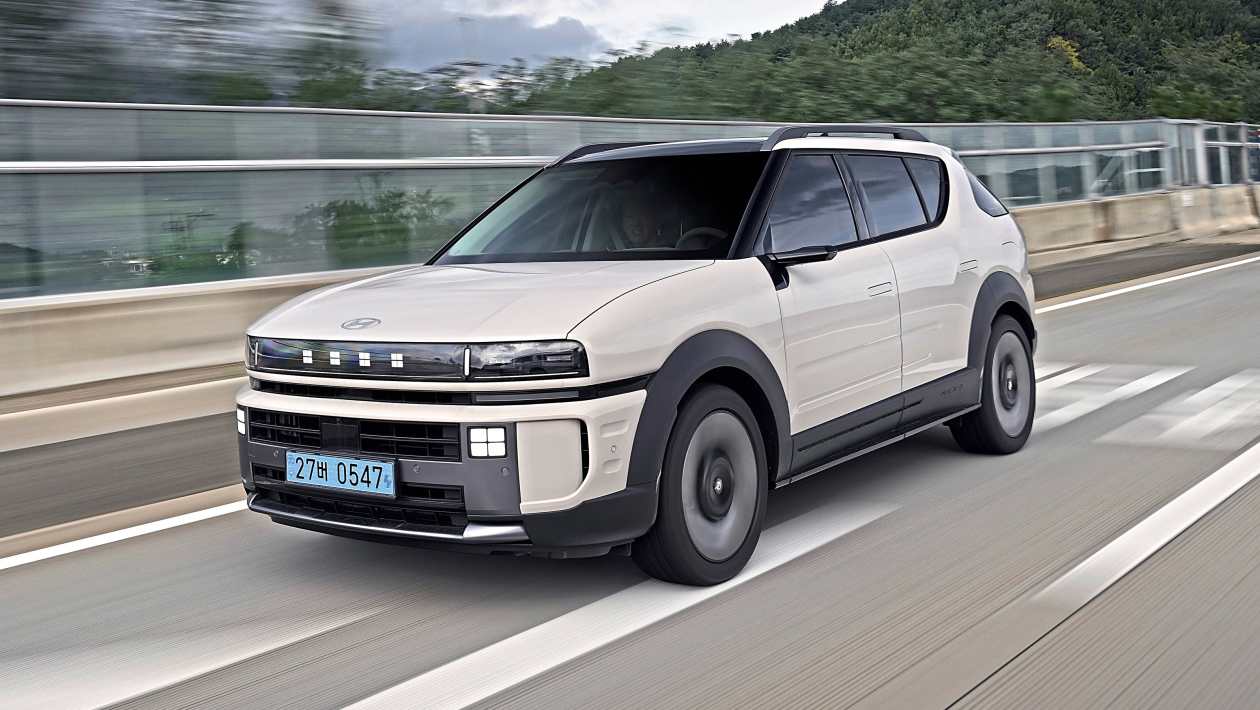
Under the skin, the Mk2 Nexo benefits has its own bespoke platform and a completely revamped fuel-cell powertrain, including a new electric motor that kicks out 201bhp. So it can go from 0-62mph in 7.8 seconds; much quicker than the 9.2 seconds the old car needed.
The fresh 2.64kWh battery is much bigger too (up from 1.56kWh in the previous Nexo), and the updated motor management system is now faster and more efficient. Plus, there are three new-material tanks that can store up to 6.69kg of hydrogen, which is more than the old model, and they can be refuelled quicker than before.
Power is sent exclusively to the front wheels via the e-motor. It’s energised by the fuel cell, which generates the necessary electricity by reacting hydrogen and oxygen. Fill up with green hydrogen from renewable sources, and the Nexo runs entirely CO2-free. The significantly improved maximum range of 513 miles is now comfortably on par with a diesel car, and it takes about the same time to fill up.
Hyundai invested a huge amount of effort to ensure the fuel cell is ready to go in a flash, even in freezing temperatures. That was always a major pain point with the previous Nexo.
Once you get going, the new Nexo is the epitome of calm; active noise cancellation (ANC-R) and all-round double glazing largely block out external irritations, and the ride is comfortable. Handling and dynamics aren’t the Nexo’s core strengths, but no noise comes from the drivetrain.
The fuel cell runs completely without vibration somewhere in the background, while the electric motor delivers linear acceleration that is quite powerful for a car weighing more than two tonnes. When hydrogen meets oxygen, the power flows smoothly and silently, and only water drips out the back.
This hydrogen SUV drives largely like a battery-electric vehicle. However, the comparison falls flat when you look at the cost analysis. Firstly, cars with a technically complex fuel cell are still noticeably more expensive than their electric rivals, where falling battery prices are making the purchase increasingly attractive.
Furthermore, the price of hydrogen is not competitive, because its production is extremely energy-intensive and involves high investment costs. It currently costs as much as £15 per kilogram, but that would realistically get the Nexo barely 60 miles. A fill-up would cost about £100. Ultimately, without more support, the hydrogen fuel cell remains a long way from being an attractive or cost-effective EV alternative.
| Model: | Hyundai Nexo |
| Price | €68,000 (est £59,000_) |
| On sale: | TBC |
| Powertrain: | 1x e-motor plus hydrogen fuel cell |
| Power/torque: | 201bhp/350Nm |
| Transmission: | Single-speed, front-wheel drive |
| 0-62mph: | 7.8 seconds |
| Top speed: | 111mph |
| Range: | 513 miles |
| L/W/H: | 4,750/1,865/1,640mm |
