


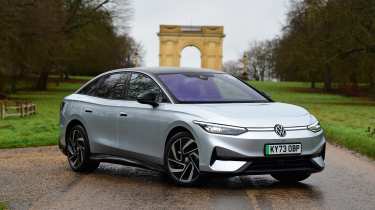
There is the Volkswagen ID.7 Tourer estate, which offers even more boot space, with 605 litres available with the seats up and 1,948 litres with the seats down – a figure even greater than that of a similarly configured Skoda Superb Estate or Mercedes E-Class Estate.
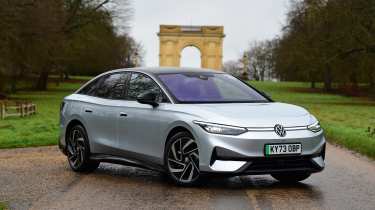
Despite the saloon shape being less practical than a traditional estate, the ID.7 still has a roof-hinged hatch, which works wonders for accessibility when loading bigger items. The boot opening in the ID.7 is significantly larger than the narrow, letterbox-like opening found in both the BYD Seal and Tesla Model 3.
Towing
With the introduction of the Pro S version, the Volkswagen ID.7 can be ordered with a tow bar (for just over £1,000) to complement this version’s 1,000kg braked towing capacity. Opting for the four-wheel-drive GTX model not only helps with traction on wet grass, but also increases the towing capability to 1,200kg.
Neither figure is a huge amount for a car of this size and weight. If you want more capacity and still need some electrified driving, the plug-in eHybrid versions of the Volkswagen Tiguan and Volkswagen Passat can both handle a 1,800 kg caravan or trailer.
“Its big-car space still delights. My five-person household does not pack light, but the ID.7 Tourer easily swallowed our Easter road trip’s suitcases, provisions and coats under the tonneau cover. And folding the seats creates a low-roof van that aces trips to the recycling centre.” – Phil McNamara, editor-at-large
With a five-star rating and fewer wear and tear parts, safety and reliability are unlikely to cause concern
| Pros |
|
| Cons |
|
The Volkswagen ID.7 is yet to appear in our Driver Power owner satisfaction survey. However, the Volkswagen brand has its work cut out because it hasn’t improved much over its 2024 score (29th out of 32), finishing in a disappointing 27th position out of 31 in our 2025 survey. That puts it ahead of BYD (30th) and MG (31st), but behind Hyundai (20th), Tesla (11th) and BMW (8th).
