


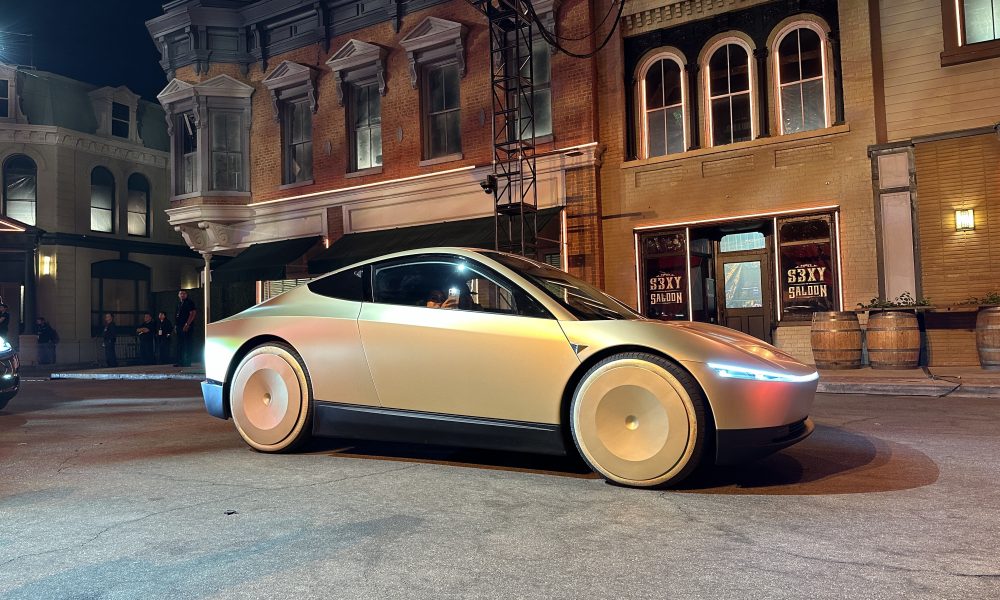
Tesla is bolstering its Cybercab fleet with the State of Texas’s regulatory bodies ahead of the planned launch of the all-electric ride-hailing vehicle this Thursday.
Seven purpose-built Tesla Cybercabs have been added to Texas’s official automated vehicle registry, appearing in the Texas Motor Carrier Credentialing System (TxMCCS) public lookup just three days before Tesla’s invite-only Cybercab launch event in Austin on September 3.
The records, visible through TxDMV’s Motor Carrier and Automated Motor Vehicle Operator Lookup, list seven 2026 Tesla Cybercabs under Tesla Robotaxi, LLC. Their VINs begin with the 5YJA prefix, distinct from the 7SAYG Model Y robotaxis that already dominate Tesla’s Texas fleet.
Community trackers that scrape the same public database recorded the new entries on August 31, bringing Tesla’s authorized Texas robotaxi total to 276 vehicles: 269 Model Ys and the seven Cybercabs:
🚨 There are now SEVEN Tesla Cybercabs registered with the state of Texas
We are just three days from Cybercab! pic.twitter.com/ndwhuFYsep
— TESLARATI (@Teslarati) August 31, 2026
Texas Senate Bill 2807, which took effect in late May 2026, created a self-certification framework for commercial Level 4 operations. Operators file through TxMCCS, attest to SAE Level 4 capability, maintain insurance, and keep an active vehicle list.
Tesla completed that process months earlier for its existing Model Y Robotaxi service, which has carried paying passengers in Austin, Dallas, Houston and other markets. Adding the Cybercabs to the same authorization means the new two-seat, steering-wheel-free vehicles are now legally recognized for commercial use on Texas roads.
The timing is deliberate as Tesla scheduled the September 3 event at its Austin campus after sending invitations to selected Robotaxi riders and other guests. The company has described the evening as a chance to “experience the future of full autonomy” and plans to livestream it.
Production Cybercabs, which lack pedals and a steering wheel, have been rolling off the Giga Texas line for months; some earlier examples still carried temporary driver controls for data collection. Registering a small fleet of the finished design immediately before the public event signals that Tesla intends to move the purpose-built vehicle from factory and test tracks into the same Robotaxi app already used by Model Y passengers.
The seven units remain a tiny fraction of Tesla’s overall Texas authorization and far smaller than competing fleets. Registration does not automatically equal unsupervised public rides; it is the legal prerequisite.
Still, the sudden appearance of Cybercab VINs in the state’s lookup system, after a year of Model Y-only listings, is the clearest official confirmation yet that Tesla’s dedicated robotaxi hardware is entering the regulatory pipeline at the same moment the company is preparing to show it to invited guests and a global livestream audience.
Whether those seven vehicles appear at the September 3 event or begin carrying passengers shortly afterward, their presence in TxMCCS marks a concrete regulatory step that has been anticipated since the Cybercab concept was first revealed.
