


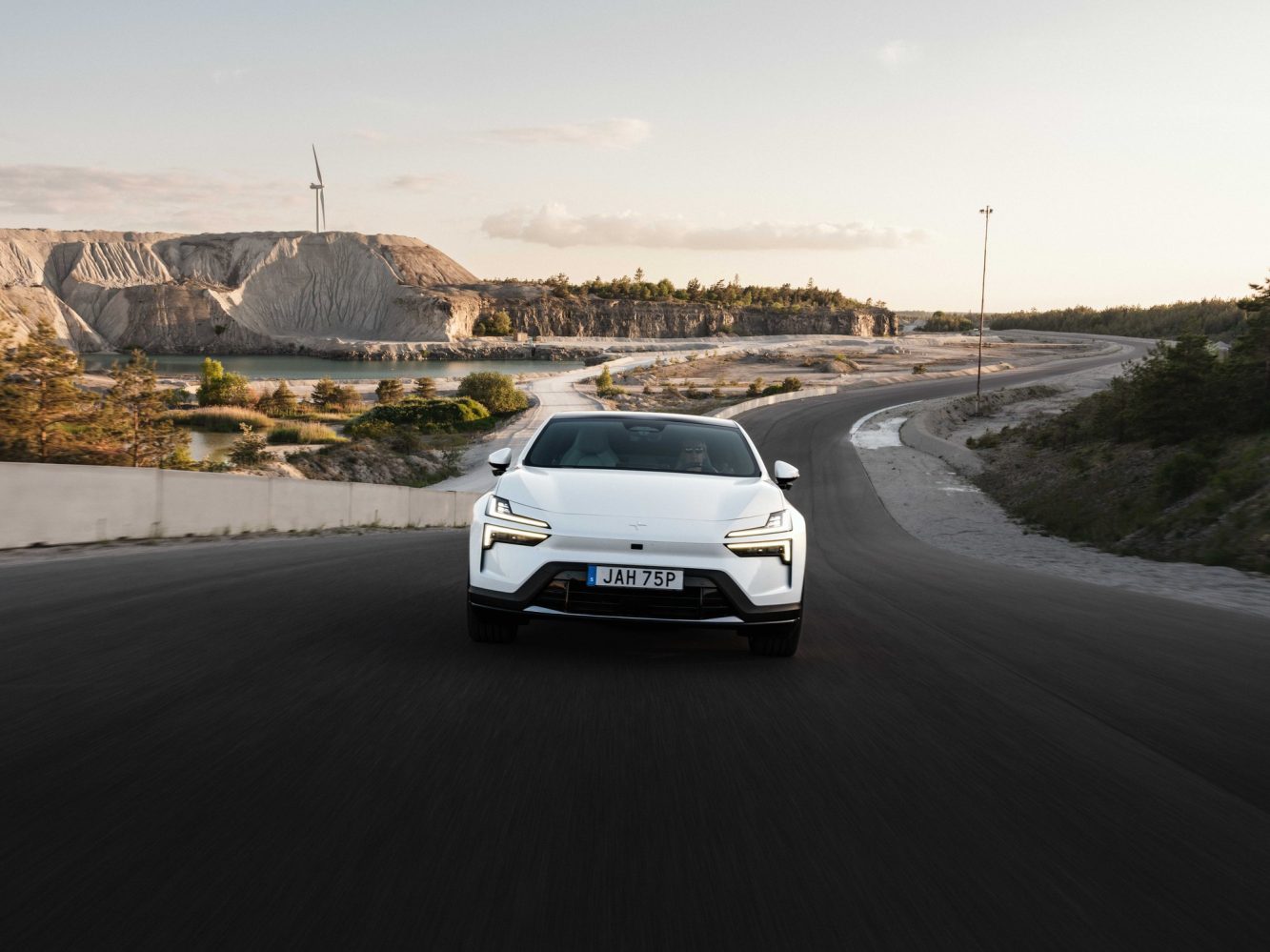
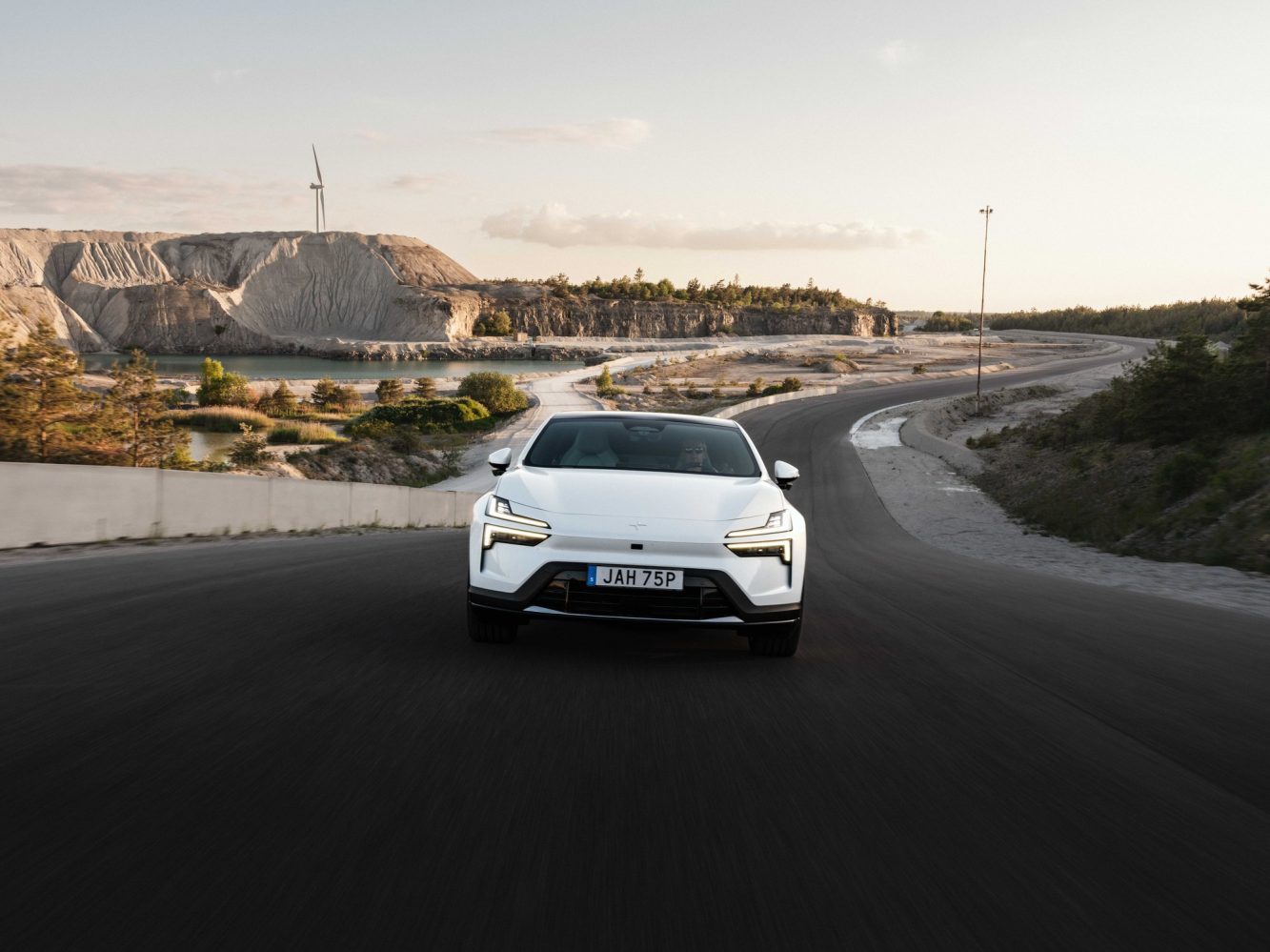
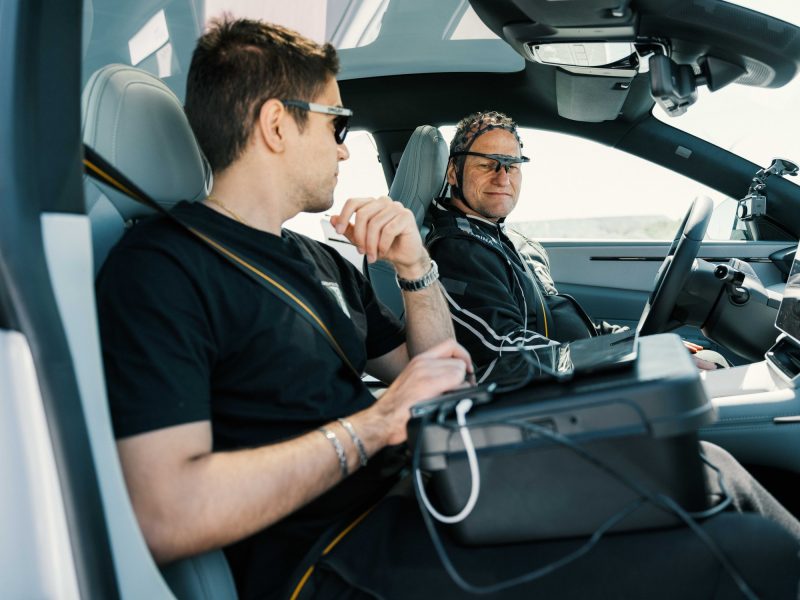
Polestar and the University of Oxford put 12 drivers in eye trackers and heart-rate monitors and sent them around a Swedish racetrack in two versions of the Polestar 4. The goal was to put numbers on something no spec sheet captures: how performance feels to the person driving.
The 544 hp Polestar 4 Dual motor with Performance pack delivered 32% higher peak acceleration than the 268 hp Rear motor version on matched laps, and it needed 15% less steering effort to do it. Drivers also rated it far higher on the experience.
How Oxford and Polestar tried to measure the “feel” of performance
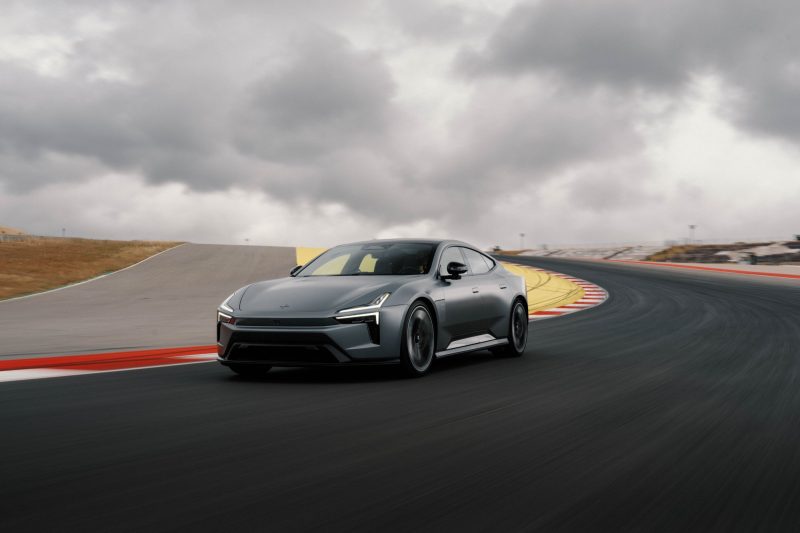
The pilot study comes from researchers at the University of Oxford’s SDG Impact Lab, working with Polestar. It took place at the Gotland Ring, a track built inside an old limestone quarry on the Swedish island of Gotland.
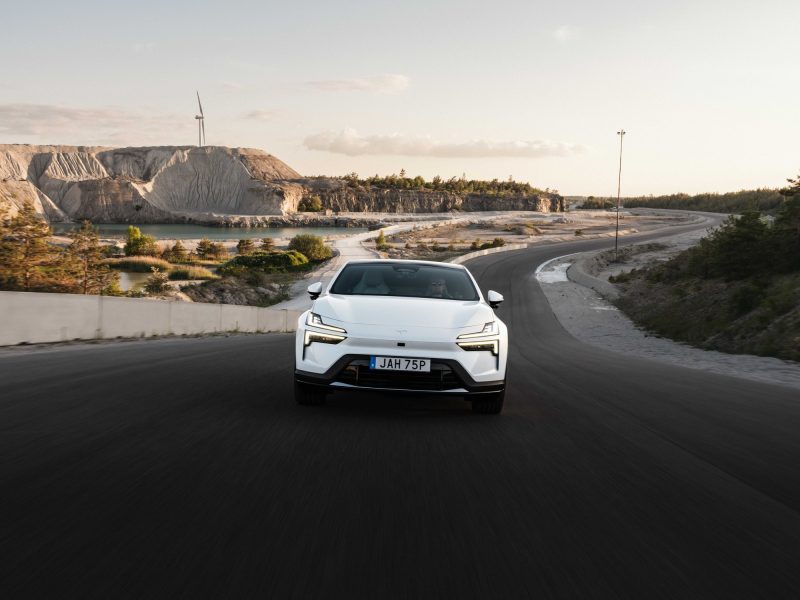
Each participant drove both cars in calm and dynamic conditions:
- Polestar 4 Rear motor: 200 kW (268 hp)
- Polestar 4 Dual motor with Performance pack: 400 kW (544 hp)
The researchers logged vehicle telemetry alongside heart-rate data, eye tracking and psychological assessments, then interviewed the drivers afterward. The idea is to line up what the car was doing at a given moment with what was happening to the human inside it.
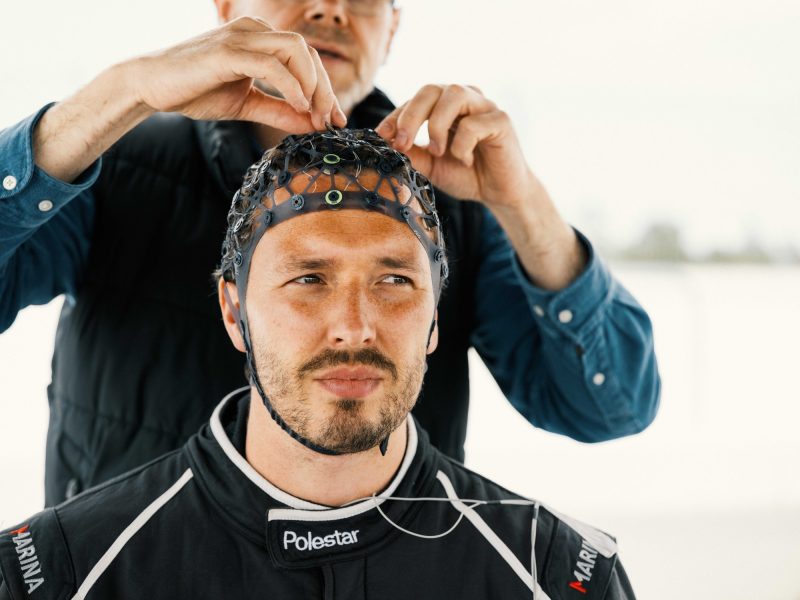
Photos from the test also show drivers wearing electrode caps, though brain activity isn’t among the measures Polestar published results for.
Several of those measures reacted when the driving got more intense. In dynamic driving, participants blinked less, their pupils got bigger, and they held their gaze longer on a given point. Researchers read that as deeper attention. They could also tie moments in the telemetry to changes in the drivers’ physiological activation.
32% more acceleration, 15% less steering effort
The car-to-car comparison is the most concrete part of the study. On matched fast laps, where both versions were driven at virtually the same pace, the Performance pack car hit 32% higher peak acceleration while requiring 15% less steering effort. It also pulled bigger cornering loads and logged more hard-acceleration events.
That steering figure is the one I’d focus on. You’d expect twice the power to mean more work for the driver at the same lap time. Instead, the dual-motor car asked less of them.
The drivers’ own scores moved in the same direction. On the study’s Performance/Dynamics scale, the Performance version scored 89.2 out of 100, versus 67.7 for the Rear motor. Overall experiential quality came in at 93.0 versus 77.9, with most drivers rating the Performance version higher on both.
“A controlled roller coaster”
The interviews are where it gets more human. Drivers didn’t describe performance as pure adrenaline. They talked about a mix of physical arousal, trust in the car, a sense of control, and intense focus. Several of them, independently, landed on the same image: a “controlled roller coaster.”
One participant said the car “makes you feel like a better driver than you are.” Researchers found drivers linked that combination of thrill, trust and control more consistently to the Performance version.
Max Klapow, a doctoral researcher at the Oxford SDG Impact Lab, framed it this way:
“Performance is not simply about going faster. It is about giving the driver a sense of confidence and control through predictable vehicle responses.”
Christian Samson, Polestar’s head of product attributes, said the company wanted to understand “something that can’t be captured by a specification sheet alone.”
Now, the caveats. The researchers themselves call this a feasibility pilot and say a larger study is needed to establish whether the findings are reliable and valid. It’s 12 people, Polestar’s own cars, and Polestar is attaching a documentary series to it.
There’s also an awkward backdrop for US readers. As we reported in June, Polestar was barred from selling new cars in the US starting with the 2027 model year under the connected vehicle rule, even though the Polestar 4 is built in South Korea. The brand is now centering its plans on Europe, with the Formula 2030 concept previewing its next models.
Electrek’s Take
This is a topic that has fascinated me for years. I’ve driven a lot of EVs, and the spec sheet tells me very little about whether I’ll enjoy one. Two cars with the same 0-60 mph time can feel completely different. One makes you grin. The other pins you to the seat and leaves you oddly numb.
The problem is that it’s genuinely hard to discuss. What feels like confidence to one driver feels like an overassisted steering rack to another. It’s different for everyone, and there’s basically no quantitative data on it, so the conversation ends up being reviewers, me included, trading adjectives.
So kudos to Polestar and Oxford for trying. Matching blink rate, pupil size and heart rate against steering effort and telemetry is a real attempt to connect the engineering to the experience, and I haven’t seen an automaker publish anything like it.
And it matters more now than ever. EVs turned acceleration into a commodity. Family crossovers do 0-60 mph in under 5 seconds. If everyone has the straight-line numbers, the difference comes down to how the car makes you feel, and right now most automakers are tuning that by gut.
I wouldn’t take 89.2 versus 67.7 to the bank. Twelve drivers isn’t a big sample, and nobody needed a study to tell them a 544 hp car is on average more fun than a 268 hp one. But the steering result and that “better driver than you are” quote get at what I think separates great performance cars from fast ones: they make you feel in control while you go faster.
What I’d love to see next is the bigger version with cars from different brands. Would a Model 3 Performance, an Ioniq 5 N and a Polestar 4 produce measurably different responses at the same lap times? That’s the study I want to read.
If you love driving your EV, powering it with home solar makes every one of those fun miles nearly free. With electricity rates up almost 10% last year and expected to keep climbing, going solar is one of the best ways to protect yourself against rising costs. And with lease and PPA options, you can do it with zero upfront cost and start saving immediately. If you want to find the best deal, check out EnergySage. It’s a free service with hundreds of pre-vetted installers competing for your business, so you save 20 to 30% compared to going it alone. No sales calls until you pick an installer. Get your free quotes here.


FTC: We use income earning auto affiliate links. More.
