


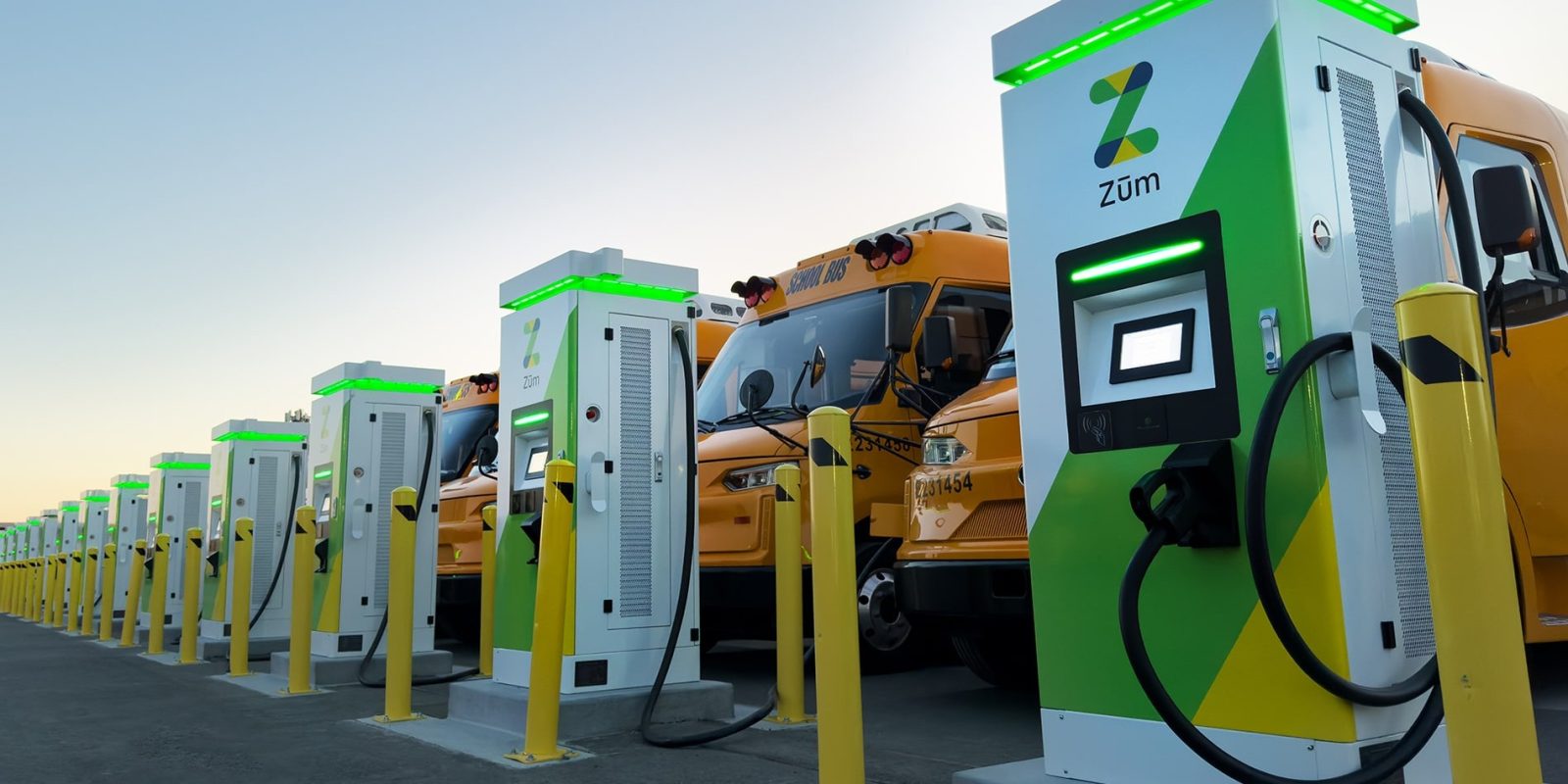

A fleet of 74 school buses have spent the last two years powering about a thousand homes, taking stress off the grid, thanks to V2G chargers built in America.
If you’ve spent much time around the electric vehicle space, you may have heard about vehicle-to-grid, perhaps by the acronym V2G (or its cousins, V2H/V2L/V2X, etc).
The basic idea is: if we’re looking to add batteries to the grid or to homes to increase stability and smooth out demand, why don’t we use the massive amounts of batteries available inside electric vehicles for that purpose?
The idea has been talked about for years, but for the most part has not reached wide adoption. The California Energy Commission estimates that V2H could save homeowners a few hundred dollars per summer, and cut peak demand by up to 5GW statewide if it was broadly implemented. But to do this with consumer EVs, homes would mostly need some sort of costly equipment added, and most EVs aren’t V2G-enabled (though that may be changing).
But for fleet EVs, installation can be a lot easier. Putting V2G in homes requires a lot of small scale projects, distributed across a region. But putting V2G in a fleet location lets you access a lot of batteries in one big project, and lets you aggregate those batteries more easily.
So that’s exactly what Tellus Power, a charging equipment manufacturer in Irvine, CA, is doing. We took a tour of its facility and met with CEO Mike Calise and CTO Srikanth Kanaparthi.
The company has been building AC and DC chargers (up to 480kW) since 2010, but its newest push is into V2G chargers, particularly for fleets. It assembles them in America, and they’re “Build America Buy America” compliant.
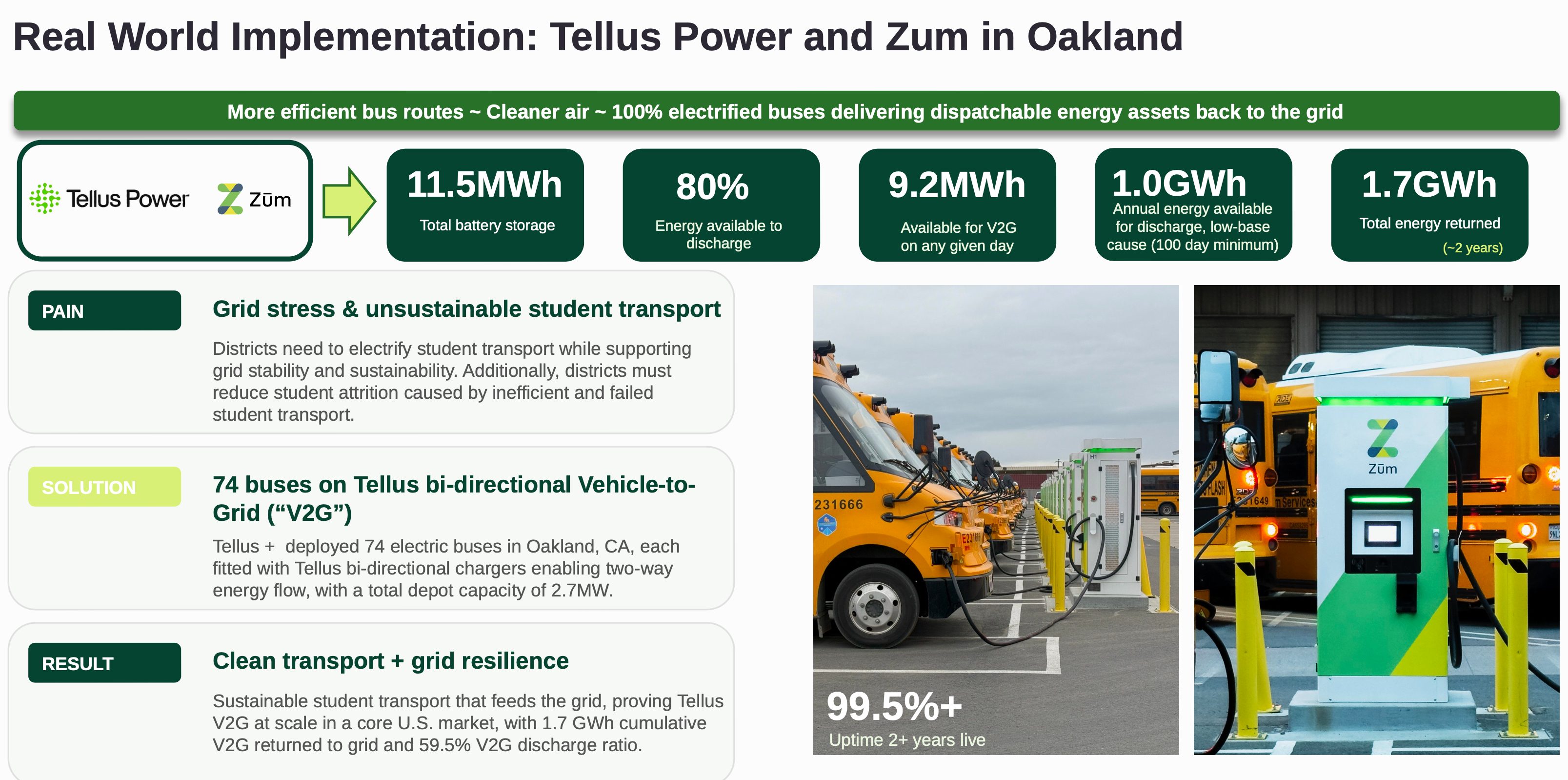
Its first project in this push was an installation of V2G chargers for Oakland, CA’s school district, covering 74 school buses. The chargers were built by Tellus, and the project is operated by Zum. We first wrote about the Oakland project in 2024, but now we have a couple years of data to show how it’s going.
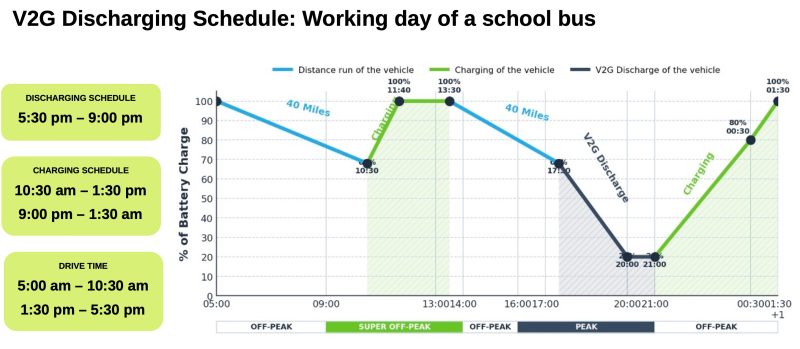
Collectively, the buses have a total of 11.5MWh of energy storage. Buses fill up overnight, use about 20-40% of their charge during the day, then plug in to V2G chargers after the school day and discharge to feed the grid, just in time for the late afternoon rush on electricity, when people get home and turn on air conditioning, start cooking, turn on the lights and so on.
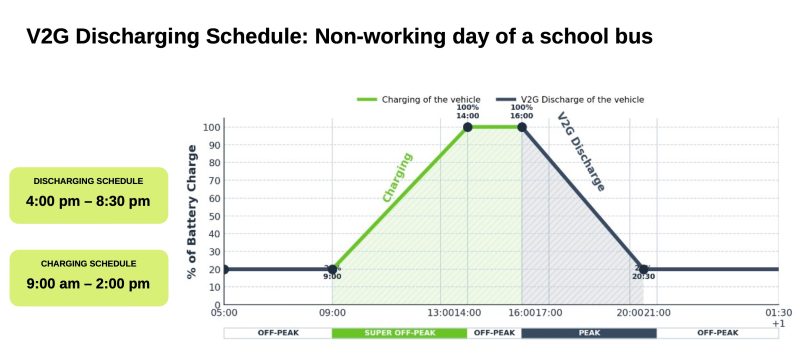
Or on holidays and summertime (when the grid is the most stressed in California), they can be a grid resource all day long.
74 buses may not sound like much, but with the amount of energy available on board and the total power output of the chargers, it can fuel a lot of houses. The fleet can discharge at about 2 Megawatts at once, and each house uses about 2 kilowatts on average in the evening (though that can spike higher due to HVAC/EV use). That means, altogether, this fleet of 74 buses can power around a thousand homes.
Over the course of the last two years, the bus fleet has returned a total of 1.7GWh of energy to the grid, and has had over 99.5% uptime. This basically turns the fleet into a small and reliable peaker plant, which has delivered on the order of hundreds of thousands of dollars worth of electricity to the grid over the last couple years.
Tellus says V2G capacity can get onto the grid faster than any other kind of power plant. A fleet V2G depot can take months to deploy, compared to a timeline of years to build and attach other power plants to the grid. And Tellus says that its chargers differ from others on the market in that they don’t require large transformers on-site, which makes deployment faster and less expensive.
V2G isn’t strictly a “power plant,” since it’s not generating electricity. But it does shift supply to when it’s needed most, which is also when it’s most expensive. This “energy arbitrage” lets Oakland school district buy power when it’s cheap and sell it when it’s expensive, which makes money.
That’s Tellus’ oldest project, but there are others in place and being built – 4 school buses in Burlington, VT; 2 city bus chargers for Lynch Bus Lines in Burnaby, British Columbia, Canada; a pilot program at 3 school district sites for ComEd in Illinois; and a fleet of 104 school buses (scaling to 238) in San Francisco, CA.
But even though buses are a popular choice for V2G, there are plenty of other municipal vehicles that are ripe for electrification, which have similar duty cycles and could be used for grid services.
Trash trucks are an obvious one, and they’re the next direction Tellus would like to go in. There are a number of electric garbage trucks out there, and they could generate revenue to offset costs in the same way that school buses can.
All of this together offers a large revenue opportunity for fleets, whether those fleets be private or public. If you have a bunch of vehicles, running those vehicles off of batteries can both save you money on fuel (especially with oil prices being at all-time highs) and generate revenue with grid services, if you install V2G chargers.
Charge your electric vehicle at home using rooftop solar panels. Find a reliable and competitively priced solar installer near you on EnergySage, for free. They have pre-vetted installers competing for your business, ensuring high-quality solutions and 20-30% savings. It’s free, with no sales calls until you choose an installer. Compare personalized solar quotes online and receive guidance from unbiased Energy Advisers. Get started here. – ad*


FTC: We use income earning auto affiliate links. More.
