


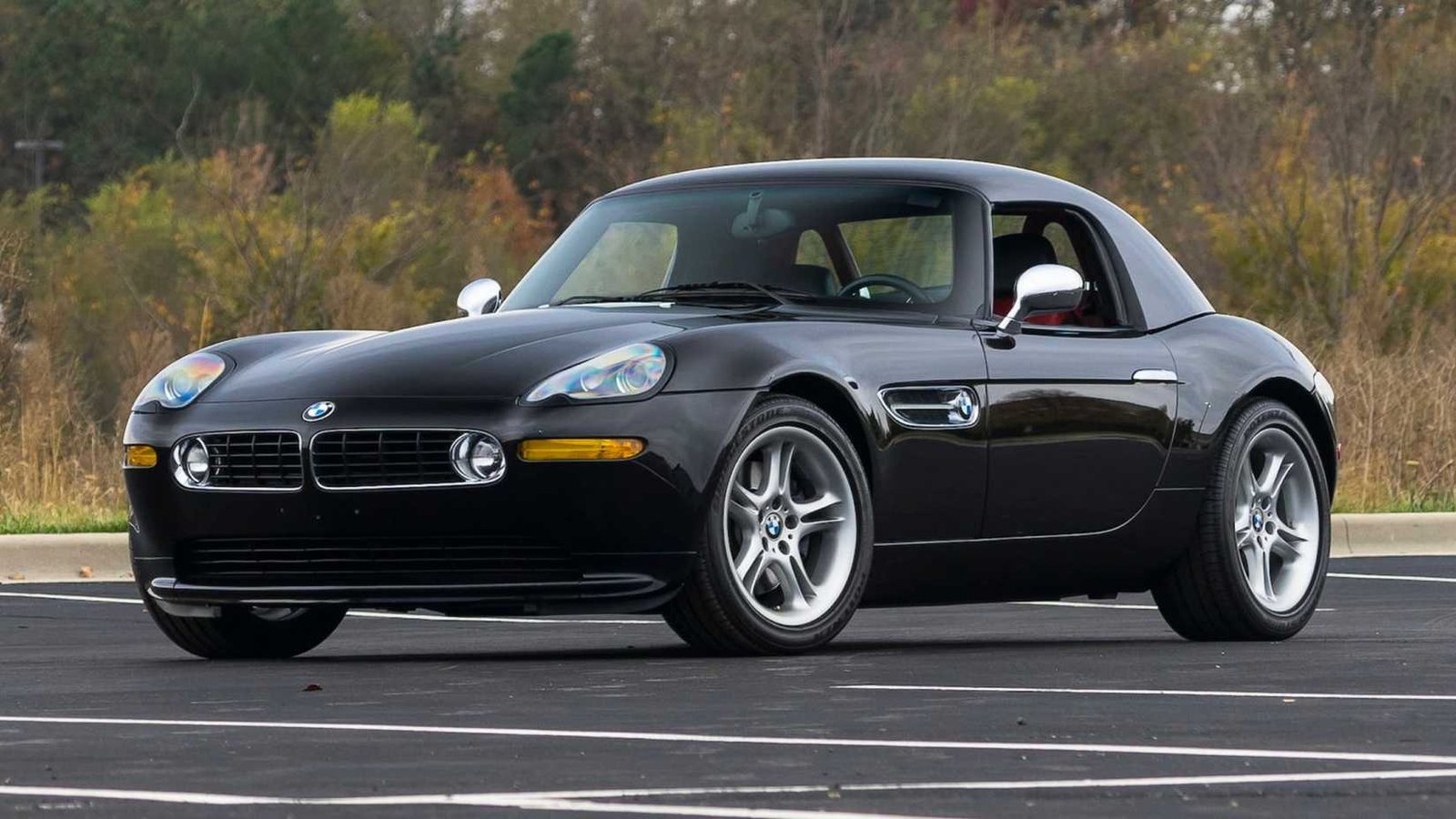
Back in the early 2000s, if you were spending over $100,000 on a two-seater roadster, you expected just about the best driving experience money could buy. Nowadays, many of those same cars have depreciated considerably, with some becoming expensive headaches to maintain. Yet, there was one BMW roadster from this era that, instead of following the typical depreciation curve, has become an undeniable collector’s item. Recent auction data puts its average market value close to $200,000, with certain examples selling for considerably more. The reason this BMW became so desirable among collectors is a combination of rarity, distinctive styling, and a timeless driving experience.
The BMW Z8 Has Nearly Doubled Its Original Price On The Collector Market

This modern classic is none other than the BMW Z8, the limited-production roadster that now commands impressive premiums on the used market.
The BMW Z8 Now Commands Around $200,000 Despite Its $128,000 Original MSRP
When BMW introduced the BMW Z8 Roadster in 2000, it carried a price tag of approximately $128,000 to $131,000. Why so expensive? The Z8 was the German luxury brand’s flagship sports car, with a price point befitting its exclusive positioning. According to Classic.com data, the one-year average sale price of a BMW Z8 is $199,635, based on 44 confirmed sales.
The lowest sale was $126,500, the highest was $393,500, and the most recent was $186,000. That means this BMW roadster has appreciated by roughly 50 percent over its original sticker price. While these figures only represent nominal appreciation, the Z8 has defied the conventional depreciation trajectory of its contemporaries.
BMW Built Just 5,703 Z8s, Making It An Exceptionally Rare Modern Collectible

As with most desirable collector cars, rarity is a major selling point, and the BMW Z8 is exceptionally scarce, with only 5,703 units produced worldwide. According to relevant sources, North America received 2,543 examples, with the rest distributed across international markets. The Z8’s intentionally limited production distinguishes it from higher-volume performance roadsters.
Even its color options contribute to its collectibility, as more than 3,200 examples were painted Titanium Silver, while Topaz Blue, Bright Red, and Stratus Grey were limited to just 319, 291, and 192 examples, respectively. With such limited production, finding a particularly rare color combination can make an already desirable Z8 even more special.
The Z8 Combined Classic BMW Styling With M5 Performance

While many other retro-inspired cars focused more on aesthetics than performance, the Z8 was not one of them.
Henrik Fisker Designed The Z8 As A Modern Interpretation Of The BMW 507
The BMW Z8 was designed by Henrik Fisker, who used the iconic 1956–1959 BMW 507 roadster as his primary source of inspiration. The 507’s visual identity is evident throughout the Z8’s design, from its horizontal kidney grille to its characteristic side-fender vents. However, the Z8 didn’t simply copy the 507; it offered a modern interpretation of the 1950s aesthetic, emphasizing clean lines and simplicity.
Underneath its retro-inspired bodywork, the Z8 was remarkably modern, featuring a bespoke aluminum spaceframe, a first for a production BMW. This unique construction provided a rigid foundation while reducing weight and offering the corrosion resistance associated with aluminum.
The Z8 Borrowed Its Naturally Aspirated V-8 From The E39 M5

While the Z8’s cutting-edge aluminum spaceframe was unique to the roadster, its engine came directly from the BMW E39 M5: the naturally aspirated 4.9-liter S62 V-8. Producing 394 horsepower and 368 pound-feet of torque, the engine paired nicely with the Z8’s relatively low curb weight of approximately 3,494 pounds.
For the ultimate sense of driver engagement, every standard Z8 came exclusively with a six-speed manual transmission. While the Z8 was by no means the fastest roadster on the market when new, its naturally aspirated V-8, manual gearbox, and rear-wheel-drive layout gave it a distinctive mechanical character that many electronically assisted contemporaries couldn’t replicate.
The Z8’s Limited Production Gives It An Advantage Over Contemporary Roadsters

The reason the Z8 has appreciated so considerably becomes clearer when you compare its production strategy with those of other luxury roadsters that shared its price bracket when new.
The Mercedes-Benz SL55 AMG Followed A Much More Conventional Production Strategy

Perhaps the Z8’s most direct competitor at the turn of the millennium was the Mercedes-Benz SL55 AMG. The AMG roadster featured a supercharged 5.4-liter V-8 producing 493 horsepower, giving it a considerable performance advantage over the Z8. However, unlike the BMW, it was exclusively available with a five-speed automatic transmission, sacrificing some of the traditional driver engagement that makes the Z8 so appealing today.
The SL55 AMG also belonged to an established SL-Class lineage, rather than being a bespoke flagship built as an homage to a classic legend. It is that irreplaceable identity and limited production that gave the Z8 a collector appeal its AMG rival couldn’t quite match.
The Z8 Represents An Increasingly Rare Analog Driving Experience
The early 2000s marked a major turning point in electronic integration and technological complexity among luxury performance cars. The Z8 stood apart from this shift, embracing simplicity and emphasizing the purity of its driving experience. The Z8’s distinctive appearance was one thing, but delivering an equally memorable driving experience was just as important to BMW. That rare combination is what truly made it timeless.
BMW’s Long-Term Ownership Support Makes The Z8 Easier To Collect


BMW took an impressively proactive approach to ensuring its limited-production flagship could remain in excellent condition, even decades after leaving the factory.
BMW Committed To Maintaining A 50-Year Supply Of Z8 Replacement Parts
BMW famously committed to maintaining a 50-year supply of Z8 replacement parts, a significant benefit that few collector cars can boast. This commitment addresses one of the biggest concerns associated with limited-production and classic vehicles: sourcing replacement components.
Given the Z8’s unique construction and bespoke body panels, BMW’s long-term support of its 2000s flagship is particularly valuable. Most Z8s will likely spend much of their time tucked away in climate-controlled garages, but owners can take comfort in knowing that BMW has made provisions for those who actually want to drive their cars.
The Alpina Roadster V8 Offers Another Collectible Z8 Variation

If the standard Z8 isn’t quite exclusive enough, there is an even rarer alternative. Available only in 2003, the Alpina Roadster V8 was a grand-touring-focused interpretation of the Z8, with just 555 examples produced. Instead of the standard car’s 4.9-liter S62 V-8 and six-speed manual, Alpina fitted a 4.8-liter V-8 producing 375 horsepower, paired with a five-speed automatic transmission.
While that combination sacrificed some outright performance and driver engagement, it suited the Alpina’s more comfort-oriented character. Its rarity is reflected in its market value, with Classic.com reporting a one-year average sale price of $320,978 across 10 confirmed sales.
Sources: BMW, Mercedes-AMG, Oldcarsdata, Classic.com, Bring A Trailer, Robb Report
