


Take a look at the middleweight motorcycle market today, and you will notice something missing: the affordable V-twin is almost completely gone. Most manufacturers have settled on parallel twins because they are much cheaper to build, use a single cylinder head, and fit neatly onto shared production lines. Trying to engineer a proper V-twin into an everyday bike today is a headache, mostly because meeting modern emissions drives up factory costs. Or, as one manufacturer did, you could just get the engineering right the first time, over twenty years ago, stick with the design, and let good mechanicals outlive every passing trend.
The Honda Shadow Phantom Defies Disposable Modern Trends

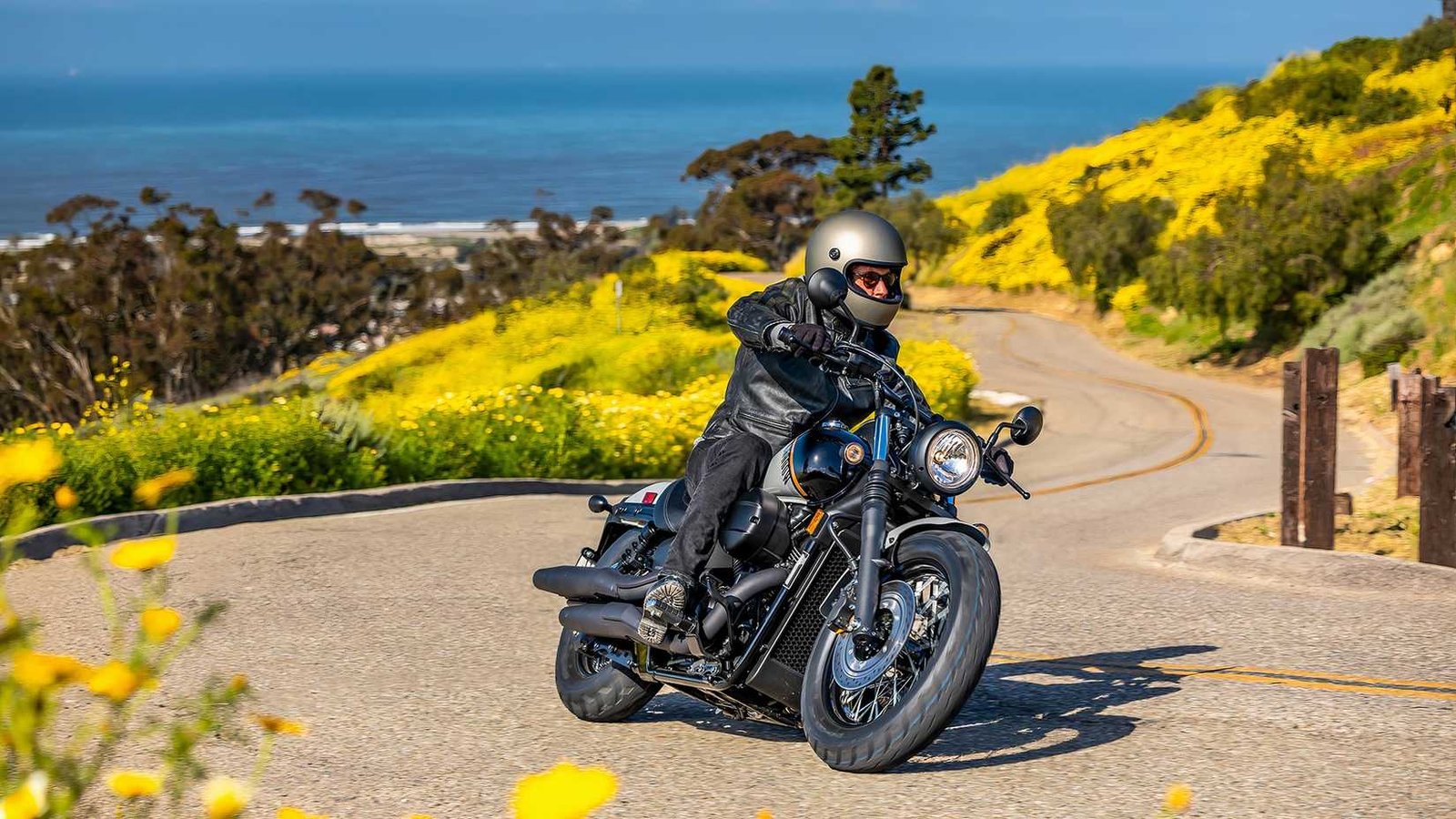
The $8,699 Honda Shadow Phantom is one of the few budget machines carrying this proven mechanical layout into the modern era. Powered by a 745cc, 52-degree liquid-cooled V-twin, it gives riders an authentic cruiser experience without the punishing weight or delicate maintenance of bigger machinery.
Honda kept the formula refreshingly simple: an under-stressed valvetrain, clean shaft final drive, and a chassis balanced for everyday streets. It gives new riders total confidence right away, yet packs enough charm and rock-solid dependability to keep seasoned owners satisfied for decades. In a market dominated by disposable trends, the Phantom proves why this under-stressed Japanese V-twin outlasts nearly everything else on the road.
A Bulletproof 745cc Liquid-Cooled V-Twin Is Paired With Shaft-Drive Simplicity

The Shadow’s 52-degree V-twin is a throwback engine in some ways—two intake valves but only a single exhaust valve, and two spark plugs per cylinder—but in others it is completely modern with its fuel injection and liquid cooling. The result is an engine that is engineered to outlast its owner. It displaces 745 cc, has one of the most relaxed compression ratios of 9.6:1, and generates 45 horsepower at 5,500 RPM and 48 pound-feet at 3,500 RPM. A five-speed wide-ratio gearbox feeds the power via a driveshaft to the wheel.
Low 25.6-Inch Saddle And New Rear Disc Brake Anchor A Classic Chassis

The Shadow has a double downtube cradle frame fitted with 41 mm forks and twin rear shocks with five-step preload adjustment. There is 5.5 inches of travel available at the front, and 3.5 inches at the rear. The 296 mm front disc is now joined by a 276 mm rear disc – both are gripped by a two-piston floating caliper. The 17/15-inch spoke wheel design is appropriately retro but really needs to be updated to a tubeless design. The quality of components is so high that it defies wear and tear.
The V-twin engine gives the Shadow a narrow waist, which enhances the feeling of the low 25.6-inch seat height. It is fairly long, however, at 94.7 inches, with a 64.5-inch wheelbase. It has a 3.9-gallon fuel tank and weighs 553 pounds with all its fluids onboard. The weight is carried low, and coupled with the long wheelbase, this inspires a great deal of confidence in new riders due to its stability.
Pure Analog Simplicity Keeps Electronic Failures Out Of The Picture

The Shadow with the 745cc V-twin engine was launched nearly 20 years ago, and the only updates since then have been the rear disc brake and the non-switchable dual-channel ABS, which help explain why it still sets the reliability benchmark. It sports a tank-mounted instrument cluster that is mostly used up by the analog speedometer. A small LCD screen at the bottom offers the odometer, dual tripmeters, and a clock. There is no fuel gauge, just a low fuel warning lamp.
How Proven V-Twins From Yamaha, Suzuki, And Kawasaki Match Up Against The Honda

We’re aiming for variety here, which is why we won’t select the Boulevard C50 and Bolt R-Spec this time, even though they qualify with flying colors. Instead, we begin with the Yamaha V-Star 250. Its tiny V-twin is the ultimate expression of longevity – it is air-cooled, carburetted, and nobody can claim it has changed since 1988.
A little further up, the Suzuki SV650 proves that a high-revving Japanese V-twin can couple longevity with power and excitement better than anyone. This is a flexible engine that also does duty in one of the most popular adventure bikes, the V-Strom 650, and has gotten a new lease on life with comprehensive updates in the SV-7GX sport tourer.
Finally, there is the Kawasaki Vulcan 900, whose V-twin is more refined than expected. The four-valve-per-cylinder layout and final belt drive distinguish it from the Honda. It, too, has been around for two decades without needing any updates, proving that most budget and midweight Japanese V-twins can be trusted to last decades—because they already have!
Parallel Twins Are Becoming More Common, Though

Building an affordable middleweight cruiser with a traditional engine has become almost impossible. Splitting cylinders into separate banks adds extra metal and valvetrain parts, driving up curb weight compared to a slim parallel twin. That layout also hits owners directly in the pocket when maintenance time rolls around. So rather than forcing middleweight buyers to shoulder that extra weight and regular maintenance expense, most motorcycle brands took the easy route.
They filled the middleweight cruiser category with lighter, cheaper parallel twins borrowed straight from their existing commuter lineups. Kawasaki’s Vulcan 650 is a prime example, and so is the Royal Enfield Super Meteor 650. Heck, even Honda has joined the party with its Rebel 500 and Rebel 1100. Thus, the Shadow’s rivals aren’t limited to just V-twins today.
Source: Honda PowerSports
