


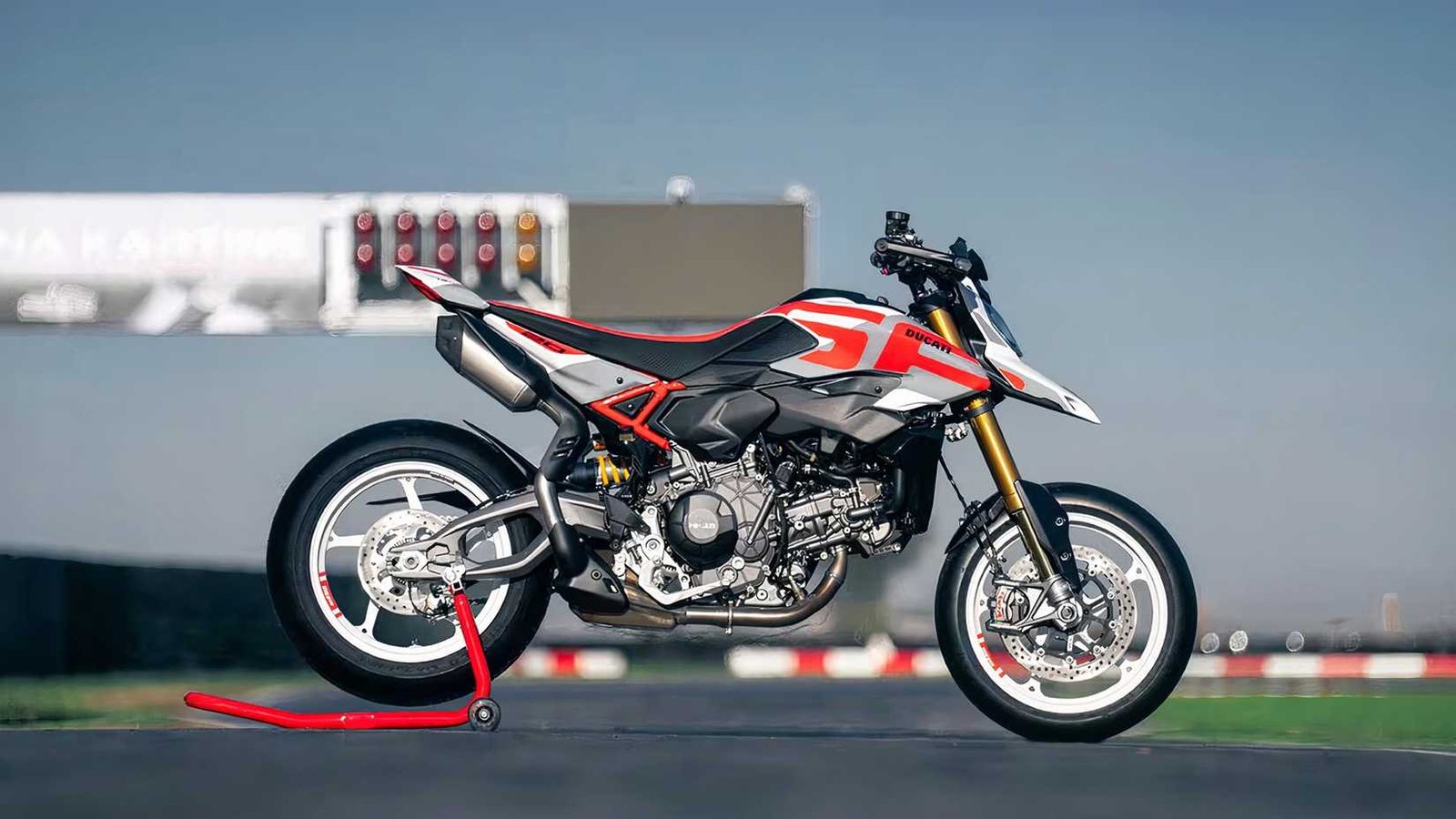
Seat height is overrated. There, I said it. Of course, you want to know how tall your next motorcycle’s seat will be, but many new (and some old) motorcyclists dismiss a motorcycle based on that number alone. Do that often, and you’ll miss out on some of the best motorcycles out there. Remember, you spend way more time riding your motorcycle than at a standstill with your foot down.
So if you’re wondering whether you can ride a tall motorcycle, this guide is here to help. Spoiler alert: you can, just like I can. My ‘23 KTM 390 Adventure’s 33.7-inch seat height is tall for my 5’7” build and 31-inch inseam. Yet, after riding this motorcycle for over 3 years through some very questionable terrain, sometimes with over 70 liters of luggage strapped to the back, I’ve learned a few things.
Start With The Mindset

There are plenty of motorcycles with tall seats. On one hand, we have road motorcycles like the supermoto-inspired Ducati Hypermotard V2 with lofty seat measurements. Meanwhile, we also have the KTM 690 Enduro R dual-sport with its tall saddle. Don’t even get us started on pure off-road motorcycles, either, since long travel suspension and lots of ground clearance means the seat is going to have to go in one particular direction: up.
If you want to ride bikes like these, you need to start with the right mindset: everyone can ride tall motorcycles. Sometimes, a tall seat height is more of a psychological barrier than a physical one. Look at Jocelin Snow, who, despite her short 5’1” stature, maneuvers the full-size BMW R 1250 GS with expertise.

Sure, changing this mindset is easier said than done, because the first time on a tall motorcycle will be intimidating. Instead, you need to build your skill set with patience and practice. Just like how you learned clutch control as an absolute beginner, riding a tall bike is just another skill you need to hone.
This also takes into account that you’re already proficient on smaller motorcycles. And yes, you might still tip the bike over during training, and that’s completely fine. Now, onto the equipment.
Pick The Right Motorcycle And Gear For Practice

For most motorcyclists, anything over 32-33 inches will be tall, but it also depends entirely on your height and inseam. So you need a motorcycle that’s only a bit taller than you. So, consider training on more manageable options like small, lightweight dual sports, supermotos, or ADVs. If you’re still not confident riding tall motorcycles or don’t have access to one, you can still practice the techniques on smaller motorcycles.
“Tall” is subjective, and dependent on your height as well as your inseam measurement. We also need to consider that a narrow single-cylinder-powered dirt bike, enduro, or dual-sport will allow riders to reach the ground easier. By the same logic, a multi-cylinder ADV motorcycle will be far wider and make reaching the deck a struggle, not to mention the additional weight.

Some excellent examples include Japanese dual-sport models, such as the Kawasaki KLX300 (35.2 inches) and Suzuki DRZ4S (36.2 inches), as well as their supermoto counterparts, the KLX300SM (33.9 inches) and DR-Z4SM (35 inches). KTM’s 390 models are also great lightweight picks, like the 390 Enduro R (35 inches), SMC R (33.85 inches), and Adventure R (34.25 inches).
Use Proper Riding Boots

It goes without saying that you also need good, CE-certified riding boots appropriate for your riding conditions. Ideally, the boots should have a steel shank in the sole and ankle protection. Reach for beefier, off-road-oriented boots, such as ADV, enduro, or even MX boots. A side effect of protective riding boots is that they can add an inch or so to your height, making it easier to get your foot on the ground.

Regardless of how heavy a motorcycle is, it’s nearly weightless at the balance point. Find that spot, and your legs won’t be lifting the bike but holding the balance in place. Then, you can move on to the trick that helps even the shortest riders ride the tallest motorcycles: using only one foot at a stop.
Ideally, you’d want to get your left foot down at stops, with your right foot engaging the rear brake. At longer stops, you can switch your feet, so you don’t have to keep the clutch engaged and use the front brake to hold the bike. Rehearse this maneuver with both legs. Knowing how to come to a stop on either leg helps, especially while off-roading or stopping on uneven terrain.
Scooting And Shuffling On The Seat Helps

To avoid tip-toeing when getting the foot down, slide your butt to the same side to increase your reach. And train this move repeatedly and learn how to scoot more or switch sides quickly. You have no idea how many times I’ve gone to put the foot down only to realize the bike’s leaning the other way or the ground is lower than I anticipated. In such cases, scooting and shuffling will come in handy.
Plan Ahead When Coming To A Stop

Planning also helps, and with time, it becomes second nature. So, plan the stops ahead of time. Instead of coming to the stop wherever, find spots where it’ll be easier to get the foot down: higher ground, curb, or rocks, while avoiding dips and potholes in the road. Don’t worry if you miss the right spot; all the scooting and shuffling will help you here.
The same strategy applies when riding off-road. Take your time, pick your lines, and be strategic with how you negotiate slower, technical terrain. If you need to put your foot down, revert to the side-saddle method. Get balanced, then reassess your situation.
Learn To Use Brakes For Stability

The most underrated thing I’ve learned is to use brakes strategically. At low speeds, slightly dragging the rear brake adds stability, helping you crawl without putting your foot down. This will minimize the number of times you have to come to a complete stop. When coming to a stop, combine gradual braking with countersteering to lean the motorcycle toward your preferred side just before you stop. This lets you control where your bike pitches, avoiding any surprises.
Other Tips For Riding Tall Bikes

Be careful when parking. Backing up a tall motorcycle is challenging on flat ground, but if you’ve parked on an incline: good luck! Always try to back your motorcycle into a parking space to make leaving easier, which comes in handy on slopes. If that’s out of the cards, hop off and simply push your bike onto flatter ground, then carry on.
Next up, be careful on slopes. Always try to lean the bike against the slope, not with the slope. It’ll make mounting your motorcycle far easier, and you’ll reduce the risk of tipping over.
And finally, learn from ADV bros on how to mount the bike if it’s too tall for you: step on the left peg and swing your leg over. Then, let your weight sag the suspension, and with your foot firmly on the ground, take the motorcycle off the stand.
Lower Seat Option Is Always Available

You can avoid all this hassle and get a lower seat, which is a perfectly good option if you want to ride a bike comfortably without having to think about it. However, we’d be skeptical of any other advice on lowering the seat height.
For instance, scooping out the seat foam makes it thinner, which can be uncomfortable for longer rides as less foam flattens quickly. Other lowering techniques, like lowering kits or dropping the forks are also not recommended as they can change the bike’s geometry, affecting its stability, ground clearance, and wheel travel.
The Right Skill Will Help You Ride Every Tall Bike

Modifications that lower the seat height only go this far because they help you ride one tall motorcycle. Instead, spending a few days learning the right skills, like side-saddling, planning ahead, and using the brakes strategically, can help you ride any tall motorcycle. We’d always pick the latter.
What are some tips you’ve learned riding tall bikes over the years?
