


Quick Facts About Driving in Snow, Ice, and Other Winter Weather
- Prepare your vehicle before winter and clear all snow and ice before you drive.
- Slow down, leave extra space, and avoid sudden steering or braking on slippery roads.
- Know how to respond if your vehicle skids, gets stuck, or becomes stranded during a winter storm.
Winter driving can be dangerous, even for experienced drivers. Snow, ice, and slush reduce tire traction, increase stopping distances, and make it harder to control your vehicle.
Knowing how to prepare and adjusting your driving can help you avoid trouble. These 20 tips cover what to do before hitting the road, how to handle slippery conditions, and what to do if something goes wrong.
RELATED: Best Cars and SUVs for Snow: Features You Need
Prepare Your Car for Winter Driving
Before winter weather arrives, make sure your vehicle is ready. Check your battery, tires, brakes, windshield wipers, lights, and heating and defrosting systems. Address any maintenance problems before temperatures drop. Check out our maintenance and repair pricing tool and Service and Repair Guide to help determine the cost.
Keep a winter emergency kit in your vehicle with blankets, warm clothing, a flashlight, phone charger, first-aid supplies, water, nonperishable snacks, an ice scraper, and a small shovel. Sand or non-clumping cat litter can help if your tires become stuck in snow.
Consider winter tires if you regularly drive in freezing temperatures or snowy conditions. Check tire pressure frequently because cold weather lowers inflation pressure.
PRO TIP: Visit the Kelley Blue Book’s maintenance and repair pricing tool and Service and Repair Guide for maintenance advice and repair cost estimates. Visit Vehicle Maintenance and Repair Information Cetner for info and articles that will help you keep your car running in tip-top shape, in any season.
20 Snow Driving Tips for Safe Winter Driving
Before Your Drive
Stay Home When Possible
The safest way to avoid a winter driving accident is to stay off the roads when conditions are hazardous. If travel is necessary, check weather forecasts, road conditions, and closures before leaving.
Plan Your Route and Allow Extra Time
Choose well-traveled roads that are more likely to be plowed and treated. Avoid steep hills and remote shortcuts when possible. Let someone know where you’re going and when you expect to arrive, especially if you’re traveling through areas with limited cell service.
Remove Snow and Ice From Your Vehicle
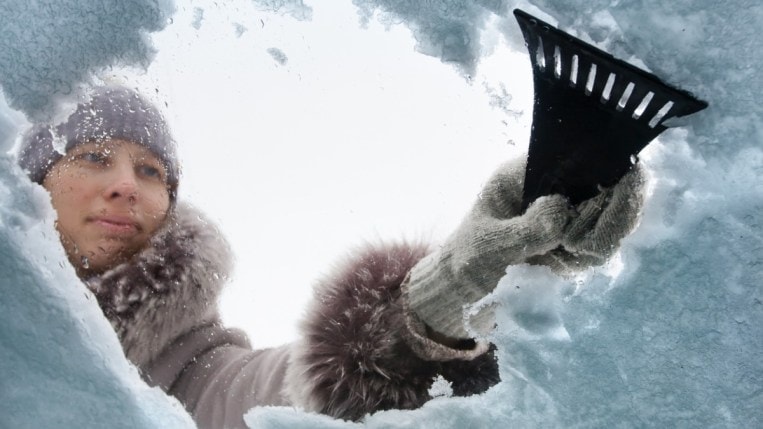
Clear your windshield, windows, mirrors, roof, hood, headlights, and taillights. Snow that blows off of your vehicle while driving can obstruct your view or endanger other drivers. Remove packed snow from wheel wells if it interferes with steering. Never pour hot water on frozen glass because the sudden temperature change can crack it.
MORE: Think driving in the snow is rough now? Imagine driving before the closed-body design was introduced in the 1920s!
Make Sure Your Tires Match the Conditions
Tires are critical to traction on snow and ice. Check tread depth and inflation pressure before traveling. Winter tires provide better traction in cold, snowy conditions than typical all-season tires. Summer tires are especially unsuitable for freezing temperatures.
RELATED: Are Winter Tires Worth the Cost?
Keep Your Gas Tank Full or EV Battery Charged
Winter storms can cause lengthy traffic delays or leave drivers stranded. Keep your gas tank at least half-full and maintain an adequate charge in an electric vehicle. Remember that cold temperatures can reduce EV driving range and slow battery charging.
RELATED: Winter Electric Car Charging
How to Drive in Snow: The Basics
Driving on Snow and Ice
Slow Down
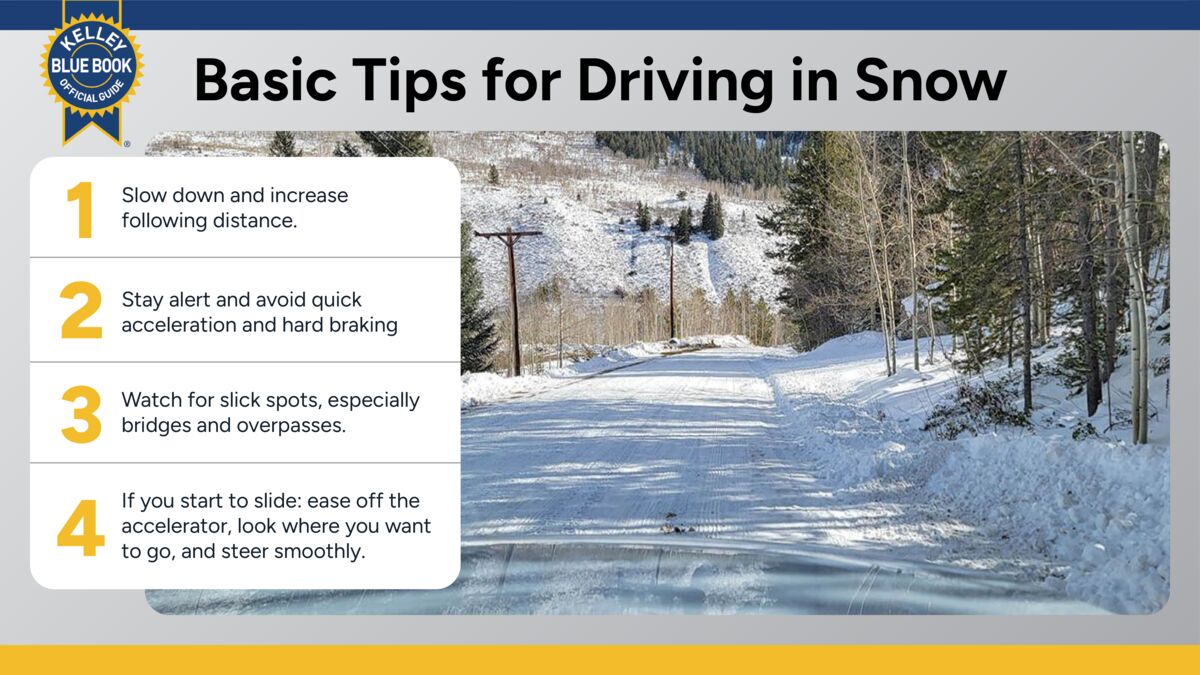
Posted speed limits assume favorable driving conditions. Snow and ice reduce traction, so travel more slowly than you would on dry pavement. Reduce speed before approaching intersections, curves, and downhill stretches.
Increase Your Following Distance
Stopping takes longer on slippery roads. AAA recommends leaving at least five to six seconds between your vehicle and the one ahead of you while driving in winter conditions. Increase that distance further when traction or visibility is especially poor.
Accelerate, Brake, and Steer Smoothly
Sudden movements can cause your tires to lose traction. Apply the accelerator gently, begin braking earlier than usual, and make gradual steering corrections. Avoid unnecessary lane changes and sharp turns.
Understand Antilock Brakes and Traction Control
Antilock braking systems (ABS) help prevent wheel lockup during hard braking, allowing you to maintain steering control. If ABS activates, keep firm, steady pressure on the brake pedal. Pulsing and noise are normal. Traction control helps limit wheelspin during acceleration, but neither system can overcome a lack of tire grip.
Remember That AWD Helps You Go – Not Stop
All-wheel drive (AWD) and four-wheel drive (4WD) can help you accelerate on slippery surfaces. However, they don’t provide a comparable advantage when braking. Every vehicle relies on tire traction to stop and turn, regardless of how many wheels receive engine power.
MORE: AWD vs. 4WD: Which Is Better?
Watch for Black Ice
Black ice is difficult to see and can make pavement appear merely wet. Be especially cautious on bridges, overpasses, shaded roads, and areas where melting snow can refreeze. Reduce your speed when temperatures approach freezing, even if the road looks clear.
Use Extra Caution on Hills
Build enough momentum to climb a snowy hill without excessive acceleration. Avoid stopping midway up an incline if possible. When descending, reduce speed before reaching the slope and use gentle braking. Never accelerate aggressively to climb a slippery hill.
MORE: How to Winterize Your Vehicle: A Checklist for Success
Avoid Using Cruise Control
Don’t use cruise control, including adaptive cruise control, on snowy, icy, or slushy roads. Maintaining direct control of acceleration makes it easier to respond when traction changes unexpectedly.
Give Snowplows Plenty of Room
Snowplows may move slowly, make wide turns, or create clouds of blowing snow that reduce visibility. Stay well behind them and avoid passing unless you can do so safely. Never crowd a snowplow or drive alongside one unnecessarily.
Keep Your Lights Clean and Stay Visible
Snow, slush, and road grime can quickly cover headlights and taillights. Check them during stops and clean them as needed. Turn on your headlights when visibility is reduced rather than relying solely on daytime running lights, which may not illuminate your taillights.
If You Lose Traction
Know What to Do if Your Car Skids
If your vehicle begins sliding, ease off the accelerator, look where you want to go, and steer smoothly in that direction. Avoid jerking the steering wheel or slamming on the brakes. If the rear of the vehicle slides sideways, gently steer to correct its path. Be ready to straighten the wheels as traction returns.
RELATED: Best Cars for Teens
Know How to Stop on Slippery Roads
Begin slowing down well before reaching an intersection or turn. Brake smoothly whenever possible. If you need to stop suddenly and your vehicle has ABS, press the brake pedal firmly and maintain pressure while steering toward a safe path. Don’t pump ABS brakes. Remember that ABS helps maintain steering control but cannot guarantee a short stopping distance on ice.
Use Traction Aids if Your Vehicle Gets Stuck
If your tires spin without moving the vehicle, stop accelerating. Clear snow from around the tires and place sand or another suitable traction aid beneath the drive wheels. Straighten the wheels and accelerate gently. Carefully rocking the vehicle may help, but follow your owner’s manual and avoid excessive wheelspin or abrupt gear changes.
If You’re Stranded
Stay With Your Vehicle if You’re Stranded in a Storm
If your vehicle becomes stranded in dangerous winter weather, contact emergency services or roadside assistance and share your location. Unless remaining in the vehicle is unsafe, stay inside where rescuers can find you. Turn on your hazard lights when appropriate, make your vehicle visible, and conserve your phone battery.
Avoid trying to walk for help through heavy snow or extreme cold unless there’s an immediate danger or a clearly accessible safe shelter.
Stay Warm Without Risking Carbon Monoxide Poisoning
If you’re stranded in a gasoline-powered vehicle, make sure the exhaust pipe is free of snow before running the engine. Run the heater only periodically, open a window slightly for ventilation, and check that drifting snow hasn’t blocked the exhaust again. Never run the engine in an enclosed space.
Use blankets and warm clothing to conserve body heat, and avoid exhausting yourself by trying to dig out of deep snow during severe weather.
Winter driving demands patience and preparation. Slowing down, maintaining your vehicle, and knowing how to respond to emergencies can help you reach your destination safely.
Visit Kelley Blue Book’s Car Safety Information Center to learn more about vehicle safety features.
Editor’s note: We have updated this article since its initial publication.
@import url(‘https://fonts.googleapis.com/css2?family=Figtree:wght@900&display=swap’);
.traction-row {
display: flex;
align-items: center;
gap: 1.2em;
}
.traction-number-circle {
display: flex;
align-items: center;
justify-content: center;
width: 3.5em;
height: 3.5em;
background: #FFC94A;
color: #343482;
border-radius: 50%;
font-size: 1.5em;
font-family: ‘Figtree’, Arial, sans-serif;
font-weight: 900;
box-shadow: 0 1px 4px rgba(52,52,130,0.10);
flex-shrink: 0;
border: 3px solid #fff;
}
.traction-text-group {
display: flex;
align-items: center;
gap: 0.2em;
}
.traction-text {
font-family: ‘Figtree’, Arial, sans-serif;
font-weight: 900;
font-size: 1.7em;
color: #006DBF;
letter-spacing: 0.02em;
line-height: 1.2;
}
