


- Winter tires go beyond traction in snow.
- Benefits include better braking.
- Snow tires offer superior performance in cold weather.
- Snow tires last two seasons.
- They cost about the same as standard rubber tires.
Are Winter Tires Worth It?
If you live in a region where winter weather is common and temperatures consistently drop below 45 degrees Fahrenheit, winter tires may be worth the investment. They help keep you safe by providing better traction, cornering, and braking performance in cold-weather driving conditions.
Winter tires aren’t just for driving on snow and ice. They also improve traction on cold, wet, and dry roads. Their specialized rubber compounds and tread patterns help maintain grip when temperatures fall.
READ MORE: Snow Tires Guide: Everything You Need to Know
Benefits of Winter Tires
Many drivers believe a winter tire’s only advantage over an all-season tire is better traction in the snow. However, winter tires offer three important benefits in cold weather:
- Increased traction
- Enhanced cornering
- Shortened braking distance
Experts at Canada’s Traffic Injury Research Foundation report winter tires provide superior traction, braking, and cornering in all cold-weather driving conditions compared to all-season tires. Those advantages extend to snow-covered, icy, wet, and dry roads.
Winter Tires Shorten Braking Distances
Research found braking distances can be up to 30% shorter for vehicles with winter tires compared with those equipped with all-season tires.
Winter tires also delivered better traction on ice- and snow-covered roads at minus 22-degrees Fahrenheit than all-season tires did at 39 degrees. The findings appeared in the 2025 Canadian Consumer Winter Tire Study released by the Tire and Rubber Association of Canada.
The benefits are familiar to Canadian drivers. The association’s 2025 winter tire report found that 80% of Canadian motorists use winter tires. Additionally, 84% of winter tire owners surveyed believe their tires saved them from losing control of their vehicle or colliding with another vehicle.
How Are Winter Tires Different From All-Season Tires?
The three main differences between all-season, summer, and winter tires are rubber compounds, tread patterns, and construction.
Winter Tires Stay Flexible in Cold Weather
When temperatures drop to around 45 degrees Fahrenheit, the rubber compounds commonly used in all-season and summer tires begin to lose flexibility. As temperatures fall further, the tires can progressively lose traction.
Winter tires use specialized rubber compounds designed to remain flexible at low temperatures. This flexibility helps maintain grip on cold pavement, even when roads are dry.
Winter Tires Have Specialized Tread Patterns
Winter tires also feature tread patterns designed for snow, ice, and slush.
Their tread blocks contain numerous small grooves called sipes. These create additional biting edges that improve traction and braking. The tread pattern also helps channel slush and shed snow as the tire rolls.
Some winter tires are optimized for snow, while others emphasize ice traction. Tire experts recommend choosing tires that match the driving conditions in your region.
RELATED: AWD vs. 4WD: Which is Better?
When Should You Put on Winter Tires?
You don’t need to wait for the first snowfall. Winter tires provide better cold-weather performance even on roads without snow or ice.
Many tire experts recommend switching to winter tires when temperatures consistently fall below 45 degrees Fahrenheit.
Similarly, switch back to all-season or summer tires when temperatures routinely rise above 45 degrees.
RELATED: Car Tires Guide: Everything You Need to Know
Can You Use Winter Tires Year-Round?
Winter tires are designed for use in temperatures less than 45 degrees Fahrenheit. Replace them with all-season tires or summer tires for driving in warmer weather.
Proper storage in the offseason helps maximize their lifespan. Keep the clean tires wrapped in sealed plastic bags in a cool, dry place. Stand them upright, and do not store anything on top of them. Some tire shops provide fee-based storage to drivers who don’t have space to keep the extra set of tires at home.
How to Identify Winter Tires
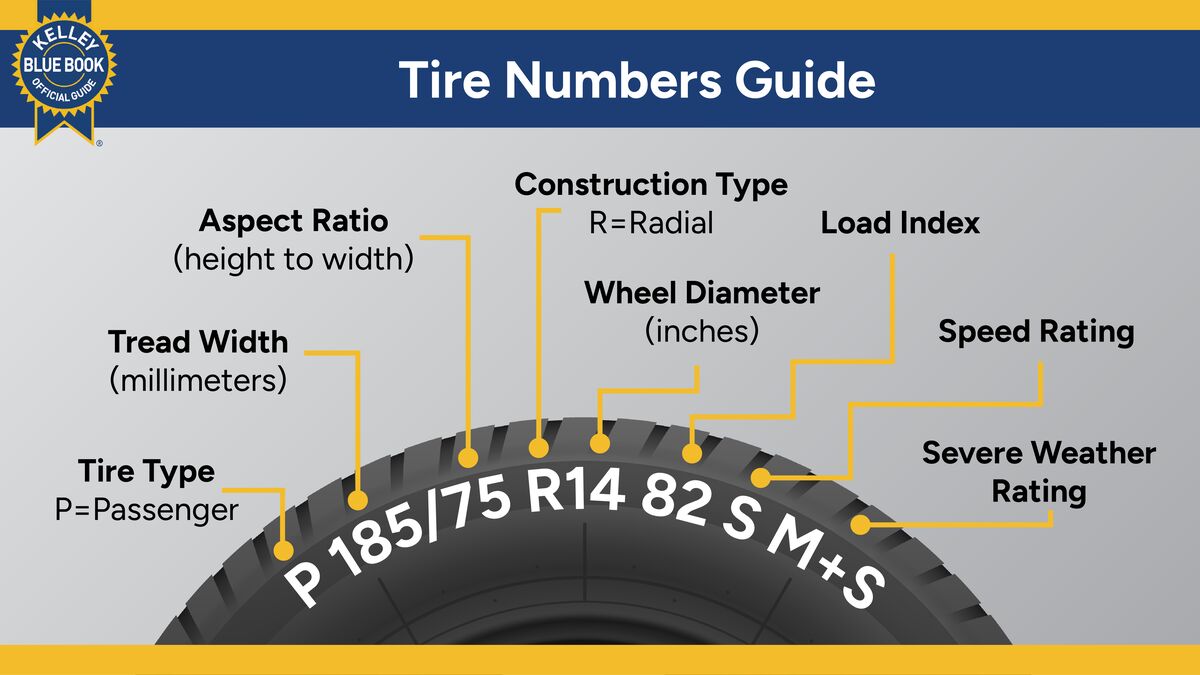
Check the tire’s sidewall for markings that indicate winter-weather capability.
Read the sidewall
How to Spot a True Winter Tire
Three-Peak Mountain Snowflake (3PMSF)
This symbol means the tire passed a standardized snow-traction test on medium-packed snow. It’s the industry’s mark for a winter-rated tire.
3PMSF
Winter-rated
Tested for traction on packed snow. Found on dedicated winter tires and on some all-season or all-terrain tires. It does not rate braking, cornering, or ice grip.
M+S (Mud and Snow)
Not winter-rated
Based on tread design, not a snow performance test. Common on all-season tires and suited to mud and light winter conditions only.
Ice Grip Symbol
Ice-tested (newer)
Introduced in 2022. Shows a tire also passed an ISO ice-traction test. A tire that earns it also carries the 3PMSF symbol.
Shopping tip: For the best cold-weather grip, look for the 3PMSF symbol on a dedicated winter tire, not just an M+S marking.
Source: Tire and Rubber Association of Canada, 2025 Winter Tire Report.
RELATED: Driving in Snow: Top Tips You Need
How Much Do Winter Tires Cost?
Expect to pay $1,000 or more for a set of four winter tires from a major manufacturer, although prices vary depending on tire size, brand, and performance characteristics.
Avoid choosing tires solely because of a low price. Compare their performance on snow, ice, slush, wet pavement, and dry roads before buying.
Research prices and available tire options through tire service centers and dealerships.
Do I Need Winter Wheels for Winter Tires?
We recommend getting a separate set of wheels for your winter tires.
- Repeated mounting and dismounting strains the tire, and the stretching can potentially damage its structure and shorten its lifespan.
- Keeping winter tires on separate wheels makes it easier to swap them onto your vehicle when the seasons change.
Some tire shops offer winter tire-and-wheel packages. Although a second set of wheels increases the upfront expense, it may reduce seasonal installation costs over time.
How Long Do Winter Tires Last?
Winter tire life depends on driving habits, mileage, road conditions, and maintenance. With proper care, a set can last multiple winter seasons.
Check the tire manufacturer’s warranty and recommendations for guidance.
Rotate winter tires approximately every 5,000 miles, or according to the tire and vehicle manufacturers’ instructions.
For winter driving, consider replacing tires when tread depth reaches 6/32 of an inch. Reduced tread depth can substantially affect snow traction, even before the tire reaches the legal minimum tread depth.
Tire age also matters. Inspect older tires carefully and follow manufacturer recommendations for replacement, even if adequate tread remains.
Because winter tires are used only part of the year, buying them doesn’t necessarily double your long-term tire expenses. You’re dividing your annual driving between two sets of tires.
How Should You Store Winter Tires?
Proper offseason storage helps extend tire life.
Clean the tires before storing them and keep them in a cool, dry location away from direct sunlight. Use protective bags to help shield them from the elements.
Store unmounted tires upright without stacking heavy objects on them. Tires mounted on wheels can be stacked or hung using appropriate storage equipment.
Some tire shops offer seasonal storage for a fee.
Check Winter Tire Pressure Regularly
Proper tire pressure is crucial for winter tire maintenance. Correct tire inflation is especially important in winter because air pressure drops as temperatures fall.
For every 10-degree Fahrenheit decrease in outside temperature, tire pressure can drop approximately up to 2 pounds per square inch (psi).
Underinflation can compromise braking, steering, and vehicle stability. Overinflation can also reduce tire performance.
Find the manufacturer’s recommended tire pressure on the vehicle’s tire-information placard, usually located on the driver’s doorjamb, or in the owner’s manual.
Check tire pressure at least once a month and before long trips. Measure pressure when tires are cold.
Editor’s Note: This article has been updated since its initial publication. Renee Valdes contributed to the report.
.cai-graphic-kbb-3pmsf-symbol {
–kbb-blue: #1D3E74; –kbb-gold: #F3BC2A; –kbb-wet-pavement: #131F2B;
–kbb-white: #FFFFFF; –kbb-blue-wash: #EEF1F6; –kbb-blue-light: #A5B2C7;
–kbb-n600: #4E5760; –kbb-n200: #C4C7CA;
–brand-font: ‘Figtree’, ‘Segoe UI’, -apple-system, Helvetica, Arial, sans-serif;
box-sizing: border-box; max-width: 100%; margin: 1.5rem 0; padding: 1.5rem;
font-family: var(–brand-font); font-size: 16px; line-height: 1.6;
color: var(–kbb-wet-pavement); background: var(–kbb-white);
border: 1px solid var(–kbb-n200); border-radius: 8px;
}
.cai-graphic-kbb-3pmsf-symbol .hero, .cai-graphic-kbb-3pmsf-symbol .card, .cai-graphic-kbb-3pmsf-symbol .tip, .cai-graphic-kbb-3pmsf-symbol .mplus { box-sizing: border-box; }
.cai-graphic-kbb-3pmsf-symbol .eyebrow { margin: 0 0 .25rem; font-size: .8rem; font-weight: 700; text-transform: uppercase; letter-spacing: .06em; color: var(–kbb-n600); }
.cai-graphic-kbb-3pmsf-symbol .headline { margin: 0 0 .5rem; font-size: 1.5rem; font-weight: 700; line-height: 1.2; color: var(–kbb-blue); }
.cai-graphic-kbb-3pmsf-symbol .accent-bar { width: 64px; height: 4px; border-radius: 2px; background: var(–kbb-gold); margin: 0 0 1rem; }
.cai-graphic-kbb-3pmsf-symbol .hero { display: flex; flex-wrap: wrap; gap: 1.25rem; align-items: center; background: var(–kbb-wet-pavement); color: var(–kbb-white); border-radius: 6px; padding: 1.25rem; margin: 0 0 1.25rem; }
.cai-graphic-kbb-3pmsf-symbol .hero-art { flex: 0 0 140px; max-width: 100%; }
.cai-graphic-kbb-3pmsf-symbol .hero-art svg { display: block; width: 140px; max-width: 100%; height: auto; }
.cai-graphic-kbb-3pmsf-symbol .hero-text { flex: 1 1 240px; }
.cai-graphic-kbb-3pmsf-symbol .hero-title { margin: 0 0 .35rem; font-size: 1.2rem; font-weight: 700; color: var(–kbb-gold); }
.cai-graphic-kbb-3pmsf-symbol .hero-copy { margin: 0; }
.cai-graphic-kbb-3pmsf-symbol .cards { display: flex; flex-wrap: wrap; gap: 1rem; }
.cai-graphic-kbb-3pmsf-symbol .card { flex: 1 1 200px; min-width: 0; background: var(–kbb-blue-wash); border-top: 4px solid var(–kbb-blue-light); border-radius: 4px; padding: 1rem; }
.cai-graphic-kbb-3pmsf-symbol .card.is-best { border-top-color: var(–kbb-gold); }
.cai-graphic-kbb-3pmsf-symbol .card-icon { display: block; height: 56px; margin: 0 0 .5rem; }
.cai-graphic-kbb-3pmsf-symbol .card-icon svg { height: 56px; width: auto; max-width: 100%; }
.cai-graphic-kbb-3pmsf-symbol .card-title { margin: 0 0 .25rem; font-size: 1.05rem; font-weight: 700; color: var(–kbb-blue); }
.cai-graphic-kbb-3pmsf-symbol .card-tag { margin: 0 0 .5rem; font-size: .8rem; font-weight: 700; text-transform: uppercase; letter-spacing: .06em; color: var(–kbb-n600); }
.cai-graphic-kbb-3pmsf-symbol .card-copy { margin: 0; font-size: .95rem; }
.cai-graphic-kbb-3pmsf-symbol .mplus { display: inline-block; font-size: 1.6rem; font-weight: 800; color: var(–kbb-blue); border: 3px solid var(–kbb-blue); border-radius: 6px; padding: 0 .5rem; line-height: 1.5; }
.cai-graphic-kbb-3pmsf-symbol .tip { margin: 1.25rem 0 0; padding: .9rem 1rem; border-left: 4px solid var(–kbb-gold); background: var(–kbb-blue-wash); font-size: .95rem; }
.cai-graphic-kbb-3pmsf-symbol .source { margin: .9rem 0 0; font-size: .8rem; color: var(–kbb-n600); }
