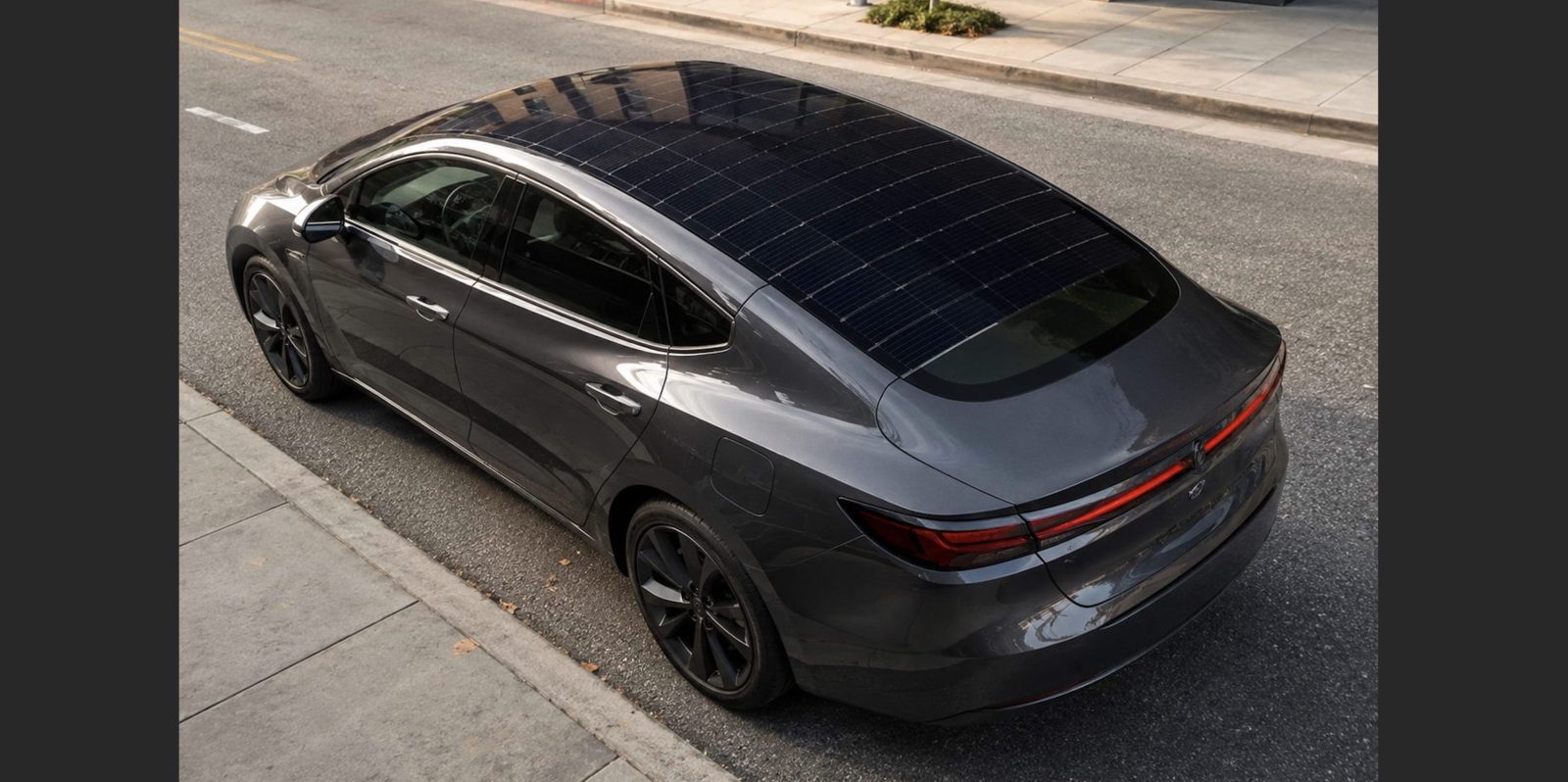
Fuyao Glass, one of the world’s largest suppliers of automotive glass, has listed a new product for sale that it says can generate electricity from a car’s roof glass. But before you get too excited: this doesn’t mean solar-powered electric cars are right around the corner.
Almost as long as electric cars have been a thing, the thought of powering them from the sun has been an attractive idea. Why not greatly reduce the need for a large battery if we can just collect all the power we need from the sun?
The problem is, it doesn’t work quite like that. The amount of sunlight reaching the surface Earth, over the area of a car, is simply not enough to power that car.
It hasn’t stopped people from trying. Student competitions make successful solar cars all the time, like the ones at the Electrek American Solar Challenge and Formula Sun Grand Prix. But those are tiny, ultralight, single-occupancy vehicles that bear little resemblance to what we see on the road.
The trials of Aptera are an indication of this. The company has been developing an electric car with a solar roof for years upon years now, and is finally getting there with driveable prototypes (that we got to take a drive in!). But it’s got a lot of compromises compared to a normal car, and still doesn’t produce enough solar to completely power itself on the road (though thanks to a large battery, many drivers will generate enough solar to power their whole commute, including solar power gained while parked).
But is it possible to make a normal, regular-looking car “solar-powered?” Fuyao Glass now has a product that looks like it can be slotted into any vehicle, at a reasonable price, and function both as a glass roof and a solar power generator.
Fuyao’s solar glass is impressive, but don’t get your hopes up
Fuyao says its new automotive solar glass product can produce around 150W of power per square meter. That’s an impressive number, given standard modern solar panels produce somewhere in the range of ~200W per square meter. (And the Aptera mentioned above can produce 400-500W in the best conditions – notably, not parked under trees or in the shade of buildings, where cars sometimes spend their time).
The difference is that Fuyao’s glass is translucent, whereas standard solar panels are not. Translucent panels obviously won’t work as well as they’re not capturing all the light going through them, but might work well for an automotive glass roof, which is intended to cut out a significant percentage of light passing through it anyway.
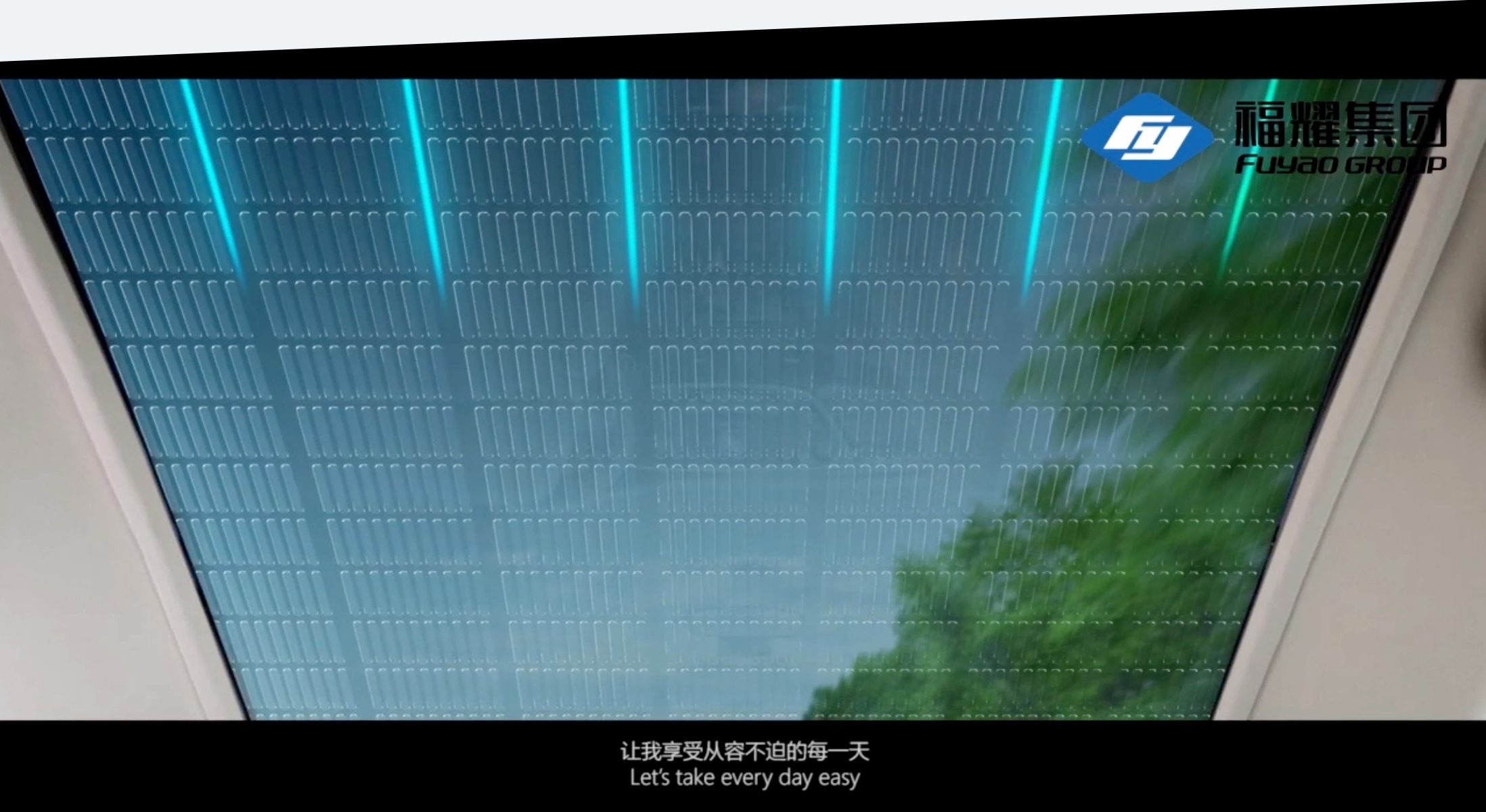
There are not a lot of pictures available of what this might look like in practice, though the company has provided some videos and infographics with renders. One of Fuyao’s videos shows trees visible through the roof as the car drives by, with the pattern of solar cells visible through the roof glass from the inside.
But even if the whole sunroof is made of this glass, that’s just not enough power to move a standard vehicle down the road. Even highly-efficient EVs will use hundreds of times more power to accelerate up to speed.
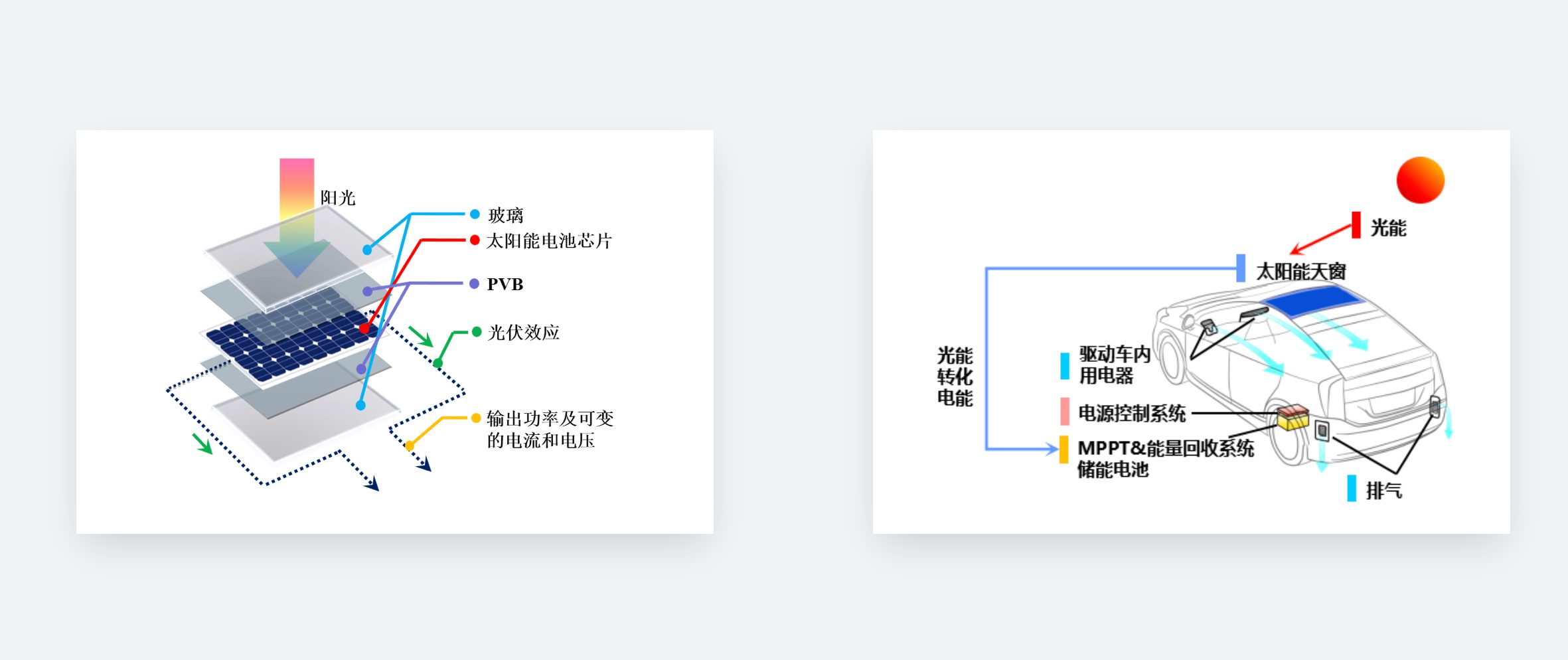
Instead, this power could be used to offset the drain of the myriad electronics in modern vehicles. Fuyao says it could be used to power internet connectivity functions, air conditioning, or an in-car data recorder (like Tesla’s Sentry Mode, which uses a lot of power).
On an EV, you’ve got a big battery to power all of those items, but that drain means you need to plug in more often, and your car will drain battery while it’s parked.
So Fuyao doesn’t market this technology as providing motor power for EVs – or even being EV-targeted at all. The video that the above screenshot came from uses a gas-powered BMW as a demonstration car, for example. On a gas car, a battery would need to be added to store solar power, but it would allow those cars to have some of the capabilities that large traction batteries have afforded EVs.
However, there have been media reports that BYD would offer Fuyao’s glass as an option on its EVs, at a price of 8,000 Yuan ($1,192), with the glass taking up enough area to provide a total of 720W at peak. Those reports have not been confirmed by either company.
With power output like that and ideal sun conditions, it could be enough to power a grocery-getter or a vehicle for a very short commute, in the single-digit mile territory. (But if you’ve got a car for such a short commute, I’d suggest looking into e-bikes…)
As an automotive supplier for vehicles around the world, there’s always potential that this product could make it out of China, too. But so far, we’ve only got unconfirmed reports from BYD, and not other automakers.
Fuyao is not the only solar glass manufacturer in the world, but it’s the first we’re aware of that claims to have a commercialized technology for semitransparent automotive solar glass.
Another potential application for solar glass is in buildings, which do spend a lot of predictable time pointed in the same direction at the sun, and which often have large glass windows that don’t need to articulate. Fuyao, which also supplies glass for building construction, wants to work on getting glass like this into buildings (there are many other companies doing the same).
So it looks like we are inching closer to a solar future… in fits and starts. This might be a nice little boost for either EVs or gas cars, and the price is at a point where it might even be a reasonable addition. But don’t get your hopes up for solar-powered cars, because until we rethink what a car is (and stop heading towards disgusting murderous SUVs), the limits of physics are not going to allow for fully solar cars.
If you *don’t* have a solar car, you can charge your electric vehicle at home using rooftop solar panels. Find a reliable and competitively priced solar installer near you on EnergySage, for free. They have pre-vetted installers competing for your business, ensuring high-quality solutions and 20-30% savings. It’s free, with no sales calls until you choose an installer. Compare personalized solar quotes online and receive guidance from unbiased Energy Advisers. Get started here. – ad*


FTC: We use income earning auto affiliate links. More.