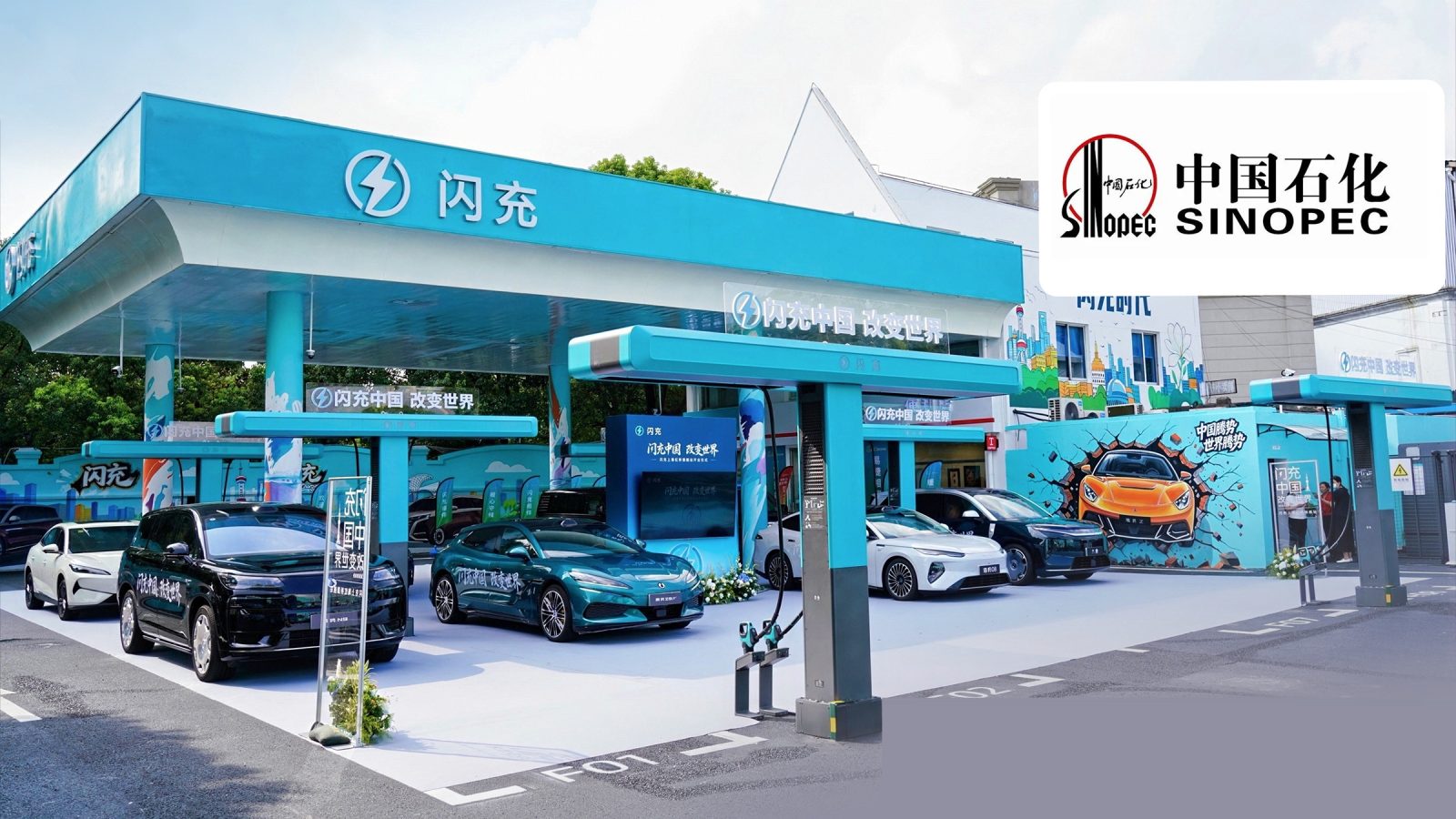
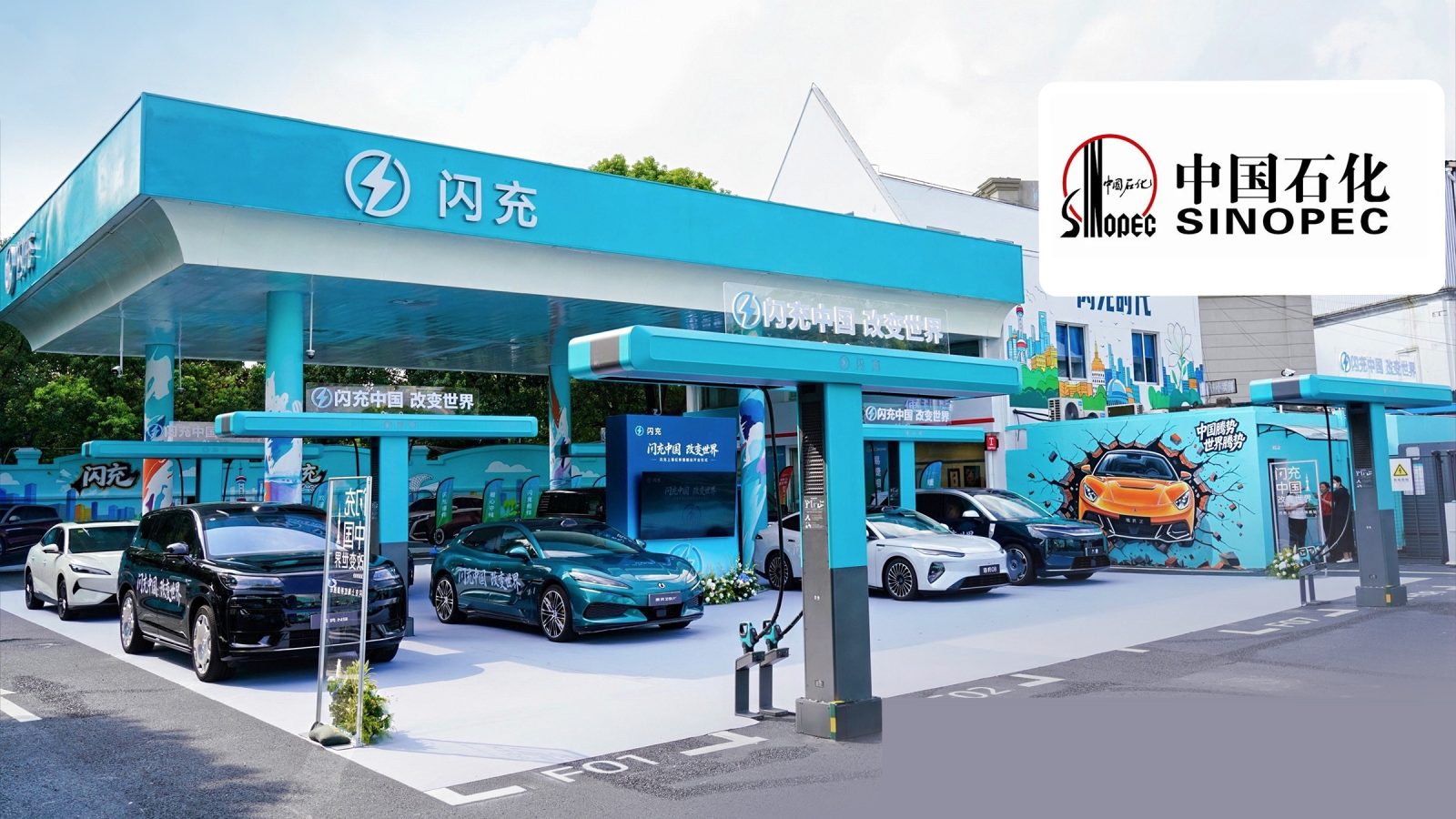
Sinopec, China’s biggest fuel retailer, just gutted one of its Shanghai gas stations and swapped the pumps for BYD’s 1,500 kW flash chargers.
And this wasn’t a case of bolting a couple of chargers onto the edge of the forecourt. Sinopec pulled the underground gasoline tanks out of the ground and turned the whole site into an EV-only charging hub.
An oil retailer tears out its own fuel infrastructure
The station sits at 1209 Huqingping Road in Shanghai, and it’s the first site jointly operated under the BYD-Sinopec partnership. Where the fuel storage tanks used to be, there are now BYD’s second-generation Blade batteries buffering the chargers.
A state oil company dug up its own gasoline tanks to make room for battery packs.
The hub runs six of BYD’s “T”-shaped chargers, each with two cables, for 12 charging spots total. They’re laid out like the pump islands they replaced, which is the point. The muscle memory of pulling in, plugging into an overhead dispenser, and leaving in a few minutes carries straight over.
BYD rates the flash chargers at up to 1,500 kW on a single connector. On a compatible car with a second-gen Blade battery, that’s 10 to 70% in about five minutes, and 10 to 97% in roughly nine. Cold weather stretches it to around 12 minutes at -30°C.
How an old gas station pulls off megawatt charging
A 1,500 kW charger drawing straight from the grid would need a substation-grade connection. No ordinary gas station has that. So BYD doesn’t ask the grid for it. Each charger is backed by four Blade LFP battery packs holding 169-185 kWh, and those buffers deliver the megawatt burst to the car. The site only pulls about 100 kW from the grid to keep the batteries topped up.
So an old fuel station can do megawatt charging without a grid rebuild. The buffers also double as backup power if the grid drops, which keeps the chargers live during a blackout.
It’s the same buffered-battery approach BYD has leaned on since it committed to deploying 15,000 megawatt chargers across China, built around the 1,000V Super E-Platform it confirmed last year. The Sinopec deal is what puts that hardware on real estate that already has cars pulling in and out all day.
The converted station isn’t bare, either. Sinopec kept its 24/7 unmanned “Easy Joy” convenience store and added a rest area with reclining chairs and a health monitoring station while drivers wait out the charge.
Part of a much bigger BYD-Sinopec deal
The two companies signed an industrial and capital cooperation framework on June 3, covering the charging network, integrated services, and supply chain. We covered that agreement when it landed, in BYD is deploying 2.4x more charging power per month than Tesla. The Shanghai station is the first physical result of it.
The scale on Sinopec’s side is the whole story. It runs more than 30,000 service stations, over 14,000 charging and battery-swap stations, and serves roughly 20 million customers a day. Every one of those forecourts is a candidate for the same treatment.
BYD, for its part, had built over 6,100 flash charging stations as of late May and is targeting 20,000 in China by the end of 2026. Sinopec’s footprint and its ability to deploy them without a grid upgrade is how it gets there faster.
Sinopec chairman Hou Qijun framed the deal as a push to “jointly promote the green transformation and upgrading of China’s transportation network.” BYD chairman Wang Chuanfu has been pitching a “Flash Charging China” strategy built on the second-gen Blade battery, and BYD executive Li Yunfei has been posting the Shanghai rollout on Weibo. Sinopec says similar conversions are coming to other stations.
Electrek’s Take
This is the image the oil industry has spent billions trying to delay: a state petroleum company digging its own gasoline tanks out of the ground and dropping battery packs in the hole.
Read it as a hedge, not a conversion of faith. Sinopec sells fuel to 20 million people a day, and it can see China’s passenger market going majority-electric. It would rather cannibalize its own forecourts than watch BYD, or anyone else, build a rival network on new land and take the traffic with it. Owning the real estate is the moat, and Sinopec already owns 30,000 of the best-located pieces of it.
To be fair, the deal is not unique. We have seen petroleum companies and gas stations invest in EV charging before, but the scale here is on another level. The scale and the speed of deployment.
The buffered-battery design is the part US and European charging companies should study. The reason megawatt charging feels impossibly expensive here is that everyone assumes you have to rebuild the grid connection to deliver it. BYD’s answer is that you don’t. Put a battery between the grid and the car, pull 100 kW in, push 1,500 kW out. That turns a gas station lot into a megawatt hub without waiting years for a utility upgrade.
The catch is the same one it’s always been: this only hits 1,500 kW on cars engineered for it, and outside China that’s nobody right now. But the infrastructure playbook here, cheap to deploy, grid-friendly, sited where drivers already stop, is one the rest of the world doesn’t have an answer to yet.
If you’re charging an EV at home instead of a megawatt hub, powering it with your own solar can cut your fuel costs to nearly zero. With electricity rates up almost 10% last year and expected to keep climbing, going solar is one of the best ways to protect yourself against rising costs. And with lease and PPA options, you can do it with zero upfront cost and start saving immediately. If you want to find the best deal, check out EnergySage. It’s a free service with hundreds of pre-vetted installers competing for your business, so you save 20 to 30% compared to going it alone. No sales calls until you pick an installer. Get your free quotes here.


FTC: We use income earning auto affiliate links. More.