


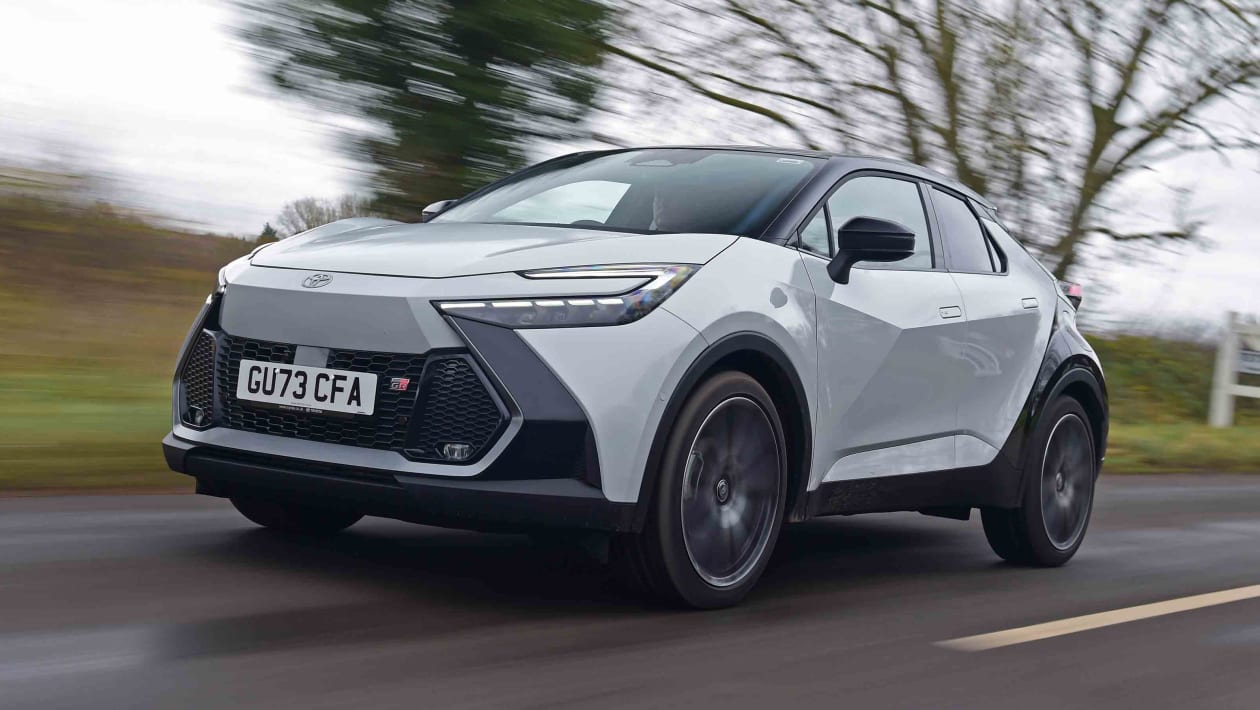
Toyota has a pretty robust reputation for quality, and the C-HR feels as well screwed together as we’d expect. A Toyota C-HR in Excel trim spent six months on our long-term test fleet, and we didn’t encounter any interior foibles during this time.
Infotainment, sat-nav and stereo
The entry-level Icon C-HR has a smaller 8.0-inch screen, while everything from Design trim and above gets the larger 12.3-inch screen we’ve tried in other Toyota cars, including the Toyota bZ4X.
The previous C-HR had an outdated-looking infotainment setup. The latest screen is much improved, not just in terms of layout but also in terms of the speed of its responses. However, it still can’t quite match the highly impressive infotainment system featured in the Hyundai Kona, which is faster still.
A wireless charging pad comes as standard on mid-range Design trim cars, as well as sat-nav. All versions come with Android Auto or Apple CarPlay if you want to bypass the built-in apps and infotainment system in favour of your phone.
All cars have a six-speaker sound system, which can be upgraded to a nine-speaker JBL system on Excel trim. The top-of-the-range GR Sport gets this stereo upgrade as standard.
“The C-HR is one of those cars you can just jump in and drive; little touches such as the wireless phone charging pad and a memory function for the driver’s seat position make for a quick getaway with the minimum of fuss, while the premium sports seats offer decent support and are comfortable.” – Paul Adam, former executive editor.
While there have been some improvements, the C-HR continues to pose difficulties for those looking for a practical SUV
Pros |
|
Cons |
|
The sleek roofline of the Toyota C-HR can fool you into thinking it’s a much smaller car than it actually is. In terms of length, it’s a little bit longer than a Hyundai Kona, and just shy of the latest Volkswagen T-Roc. The C-HR is also taller than a Kia Niro, but doesn’t quite reach the ‘lofty’ heights of the Renault Symbioz.
