


If your credit score looks less than stellar, you may have a harder time getting approved for a car loan. Buyers with poor credit often end up with high-interest loans that cost more in the long run, or may find themselves making short-term decisions that can hurt their credit further.
While having bad credit doesn’t mean you can’t buy a car, it can limit your financing options. Understanding where your credit stands is a good start toward finding a solution.
Understanding Credit Scores
What is a good or bad credit score? Well, it depends on the scoring model. The most commonly used models are VantageScore and FICO, which both track your spending and paying habits to rate your credit. These scoring models are used by the big three credit reporting agencies: Equifax, TransUnion, and Experian. You can check your credit score by making an account with any of these agencies or through your bank.
| VantageScore | FICO | |
| Notes | VantageScore is a joint venture of Equifax, TransUnion, and Experian. | FICO is an acronym for Fair Isaac Corporation, a California-based credit analytics firm. |
| Poor | 300 to 559 | 300 to 579 |
| Fair | 600 to 660 | 580 to 669 |
| Good | 661 to 715 | 670 to 739 |
| Very Good | 716 to 747 | 740 to 799 |
| Excellent | 748 to 850 | 800 to 850 |
Determining What You Can Afford
There may be some impossibilities in life, but getting a car loan if you have bad credit doesn’t have to be one of them. Car buyers with bad credit scores can still get approved for car purchases. It just takes some thoughtful planning to get the loan you want and the car you need. Here are some things to keep in mind while calculating your budget:
- Higher interest rates: Lower credit scores mean higher interest rates.
- Time commitment: Bad credit didn’t happen overnight; repairing it will take time and dedication.
- Keep expectations in check: Match your expectations with your credit history.
This last point bears repeating: Keep your expectations in check with your credit history. In other words, it’s not wise to buy a high-end luxury cruiser when your budget and credit rating align more with a pre-owned budget model.
How to Buy a Car With Bad Credit
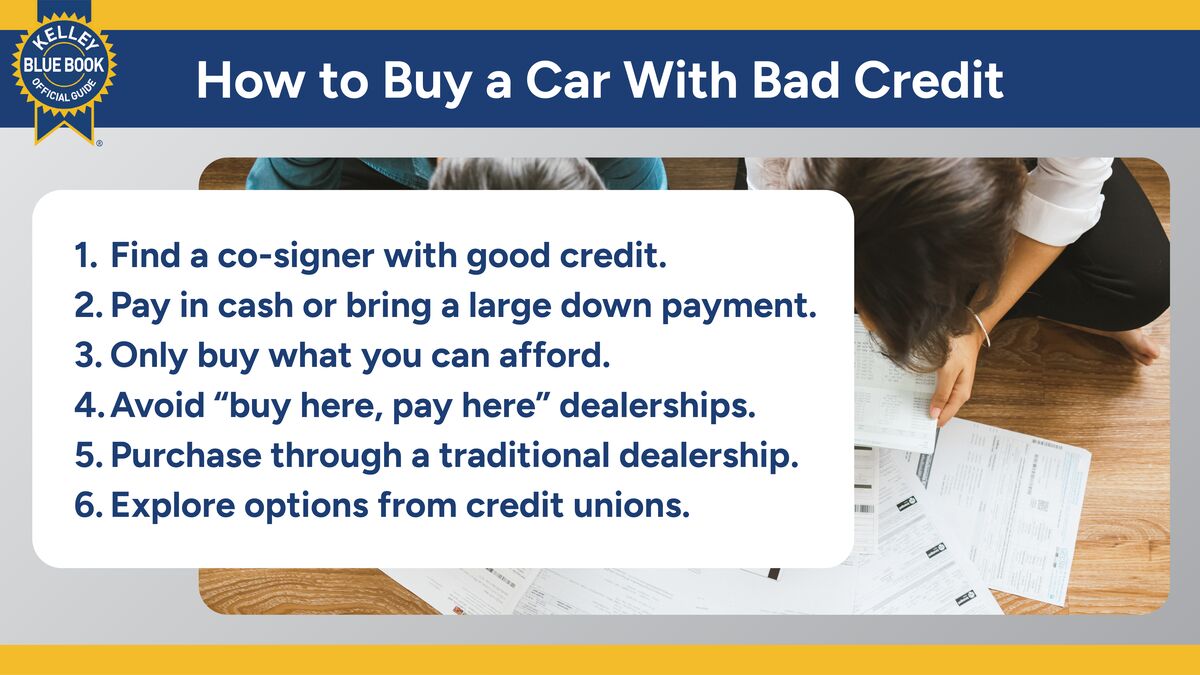
Besides buying a car that fits your needs and means, other factors can help you, especially when comparing offers for car loans. Try these tips:
- Find a co-signer with good credit. A co-signer with good credit on your loan shows that others believe in you, so perhaps the lender should, too. If possible, check with a relative, friend, mentor, or someone else who will stand by you in this time of need. Read our article: Can Two People Put Money Down on a Car?
- Pay in cash or bring a larger down payment. If your credit rating isn’t good, save up for the car and pay for it in cash. This will protect you from high interest rates. If you can’t pay in cash, try to provide the dealership with as large a down payment as possible. The more you pay up front, the less you spend on the back end, hopefully at a more favorable interest rate.
- Buy what you can afford. Buy a less expensive vehicle so your bank account provides enough reserves for other bills and expenses.
- Avoid “buy here, pay here” dealerships that are in the business of selling you credit rather than a reliable car. They can have interest rates as high as 30%, so you could be digging yourself into a hole. On top of that, these lots rarely report your payment history, which means your credit score won’t benefit from any on-time payments.
- Purchase your vehicle through a traditional dealership. Traditional dealerships use various lenders, which can offer you more reasonable interest rates. While these interest rates may be higher than what someone with exceptional credit would pay, they still help you build your credit.
- Explore options from credit unions. If you enter a dealership with a pre-approved credit union car loan, the dealership will be motivated to beat that interest rate.
Consider Free Credit Counseling
Take steps and consider seeking assistance from nonprofit credit counseling agencies such as Take Charge America (TCA) or Consumer Credit Counseling Services. These agencies offer free and paid services that can help consumers with poor credit by consolidating payments at reduced interest rates.
How Can I Repair My Credit?
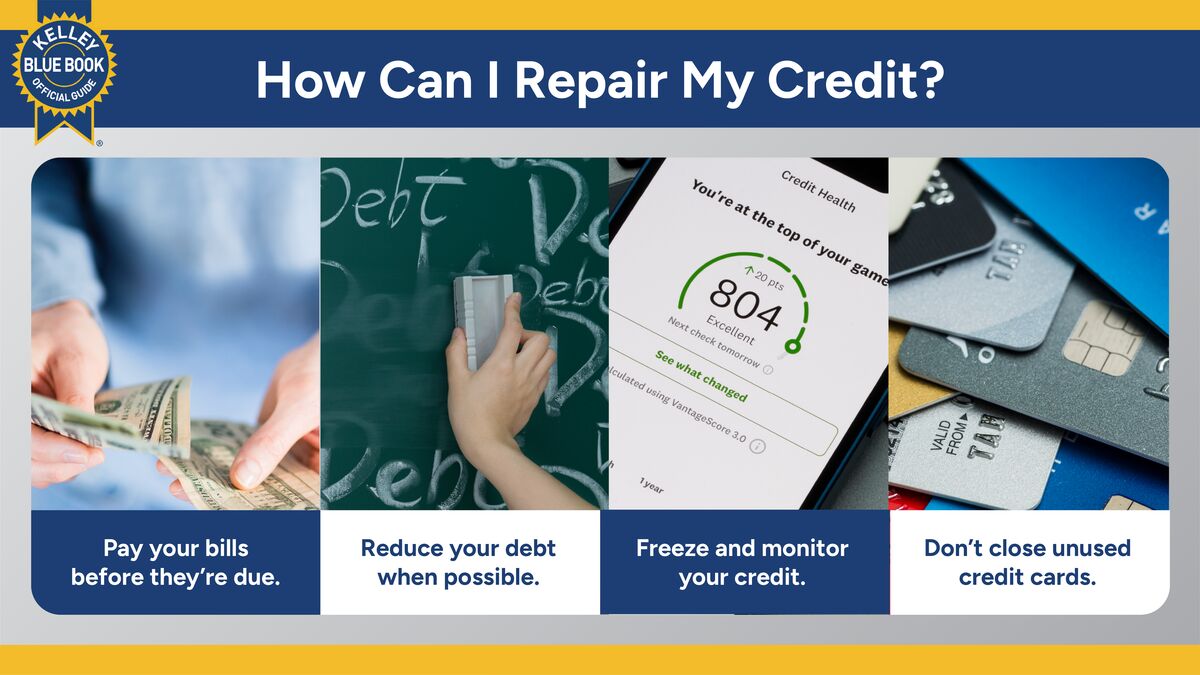
Just as your credit history didn’t head south overnight, improving your score will take time. How long it takes will depend on the severity of the delinquencies and your level of dedication. If you’ve run into major fallbacks like defaulted loans and repossessed cars, it may take longer.
According to Experian, credit score dings can take anywhere from several months to years to be removed from your credit report. Collections and late payments stay on your credit report for seven years, while Chapter 7 bankruptcies remain on it for up to 10 years.
- Pay all your bills before they are due. Payment history is a critical factor in maintaining a good credit score.
- Reduce your debt when possible. Not only does reducing your debt make it more manageable, it can also improve your credit utilization. Try to keep your credit-to-debt ratio below 30% of your available credit.
- Freeze and monitor your credit. It’s a good idea to freeze your credit at all three agencies to protect against credit fraud or errors. If you suspect fraud, immediately contact your lender.
- Don’t close credit card accounts. Keep your credit card accounts open even if you don’t use them. It looks better to lenders when you have unused credit rather than a bunch of credit cards with maxed-out balances. It also shows that you have discipline.
Related Car Buying Articles:
- How to Buy a Car Online
- How to Buy a Used Car in 10 Steps
- Top 5 Ways to Improve Your Credit Score
- Bad Credit Car Loans: Everything You Need To Know
Editor’s Note: We have updated this article for accuracy since its original publication. Writer Mark Elias contributed to this report.
