


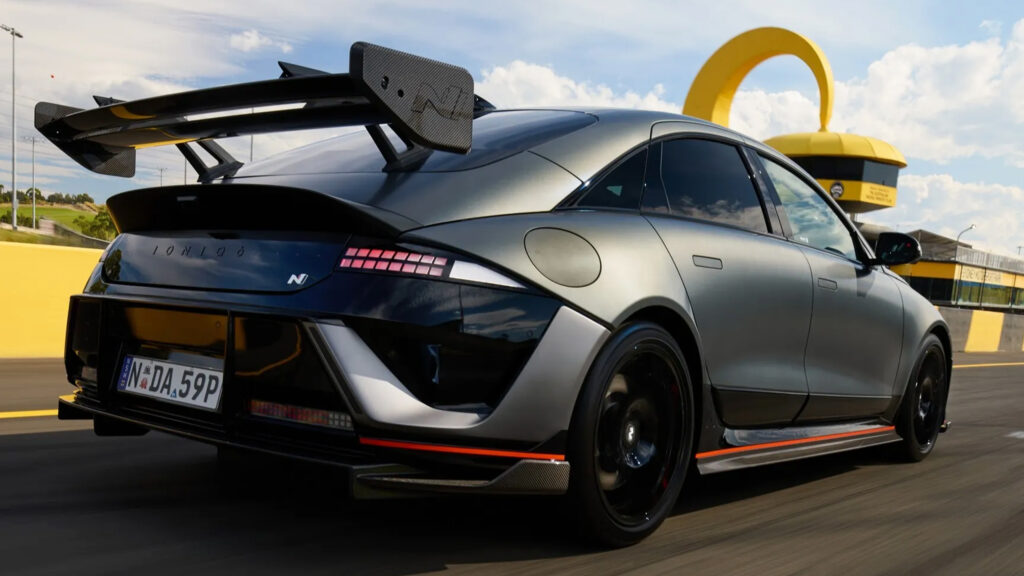
- Hyundai may tune its simulated gears to provide realistic engine braking.
- Models like the Hyundai Ioniq 5 N and Genesis GV60 Magma prove EVs can be fun.
- There’s no word on which EV from Hyundai could be the first with this tech.
After Hyundai pioneered the use of a simulated transmission in its high-performance EVs, and has nearly perfected an ICE-inspired soundtrack in them, too, one may have expected engineers at the brand to kick up their feet and let the rest of the industry play catch-up. As it turns out, they’re looking to make driving an EV even more exhilarating.
var adpushup = window.adpushup = window.adpushup || {que:[]};
adpushup.que.push(function() {
if (adpushup.config.platform !== “DESKTOP”){
adpushup.triggerAd(“0f7e3106-c4d6-4db4-8135-c508879a76f8”);
} else {
adpushup.triggerAd(“82503191-e1d1-435a-874f-9c78a2a54a2f”);
}
});
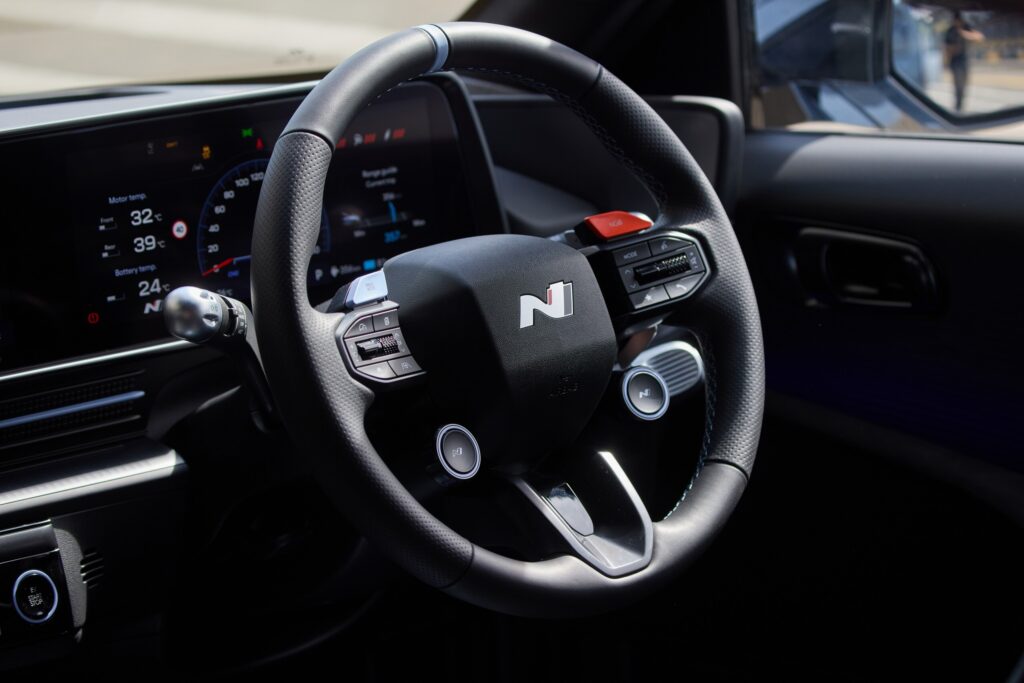
A patent recently filed in the U.S. reveals the South Korean brand is attempting to make the virtual gear shifter found in models like the Ioniq 5 N, Ioniq 6 N, Kia EV6 GT, and Genesis GV60 Magma even more engaging. To do so, Hyundai may be developing a way to replicate the engine braking found in combustion-powered cars.
Review: Genesis’s New GV60 Magma Keeps The N Car Madness Without The Boy-Racer Baggage
Building upon the current setup, which imposes torque limitations and a rev limiter, this new system would tweak the amount of “engine” braking the driver experiences depending on what gear is selected and the revs. As in a gas car, if the revs are high and the driver is in a low gear, the amount of off-throttle engine braking would increase.
var adpushup = window.adpushup = window.adpushup || {que:[]};
adpushup.que.push(function() {
if (adpushup.config.platform !== “DESKTOP”){
adpushup.triggerAd(“89c65a14-4682-4807-a4bb-5436c5361bee”);
} else{
adpushup.triggerAd(“f25825bd-1260-4574-84ce-2b26e315fad8”);
}
});
Fun-Focused Software
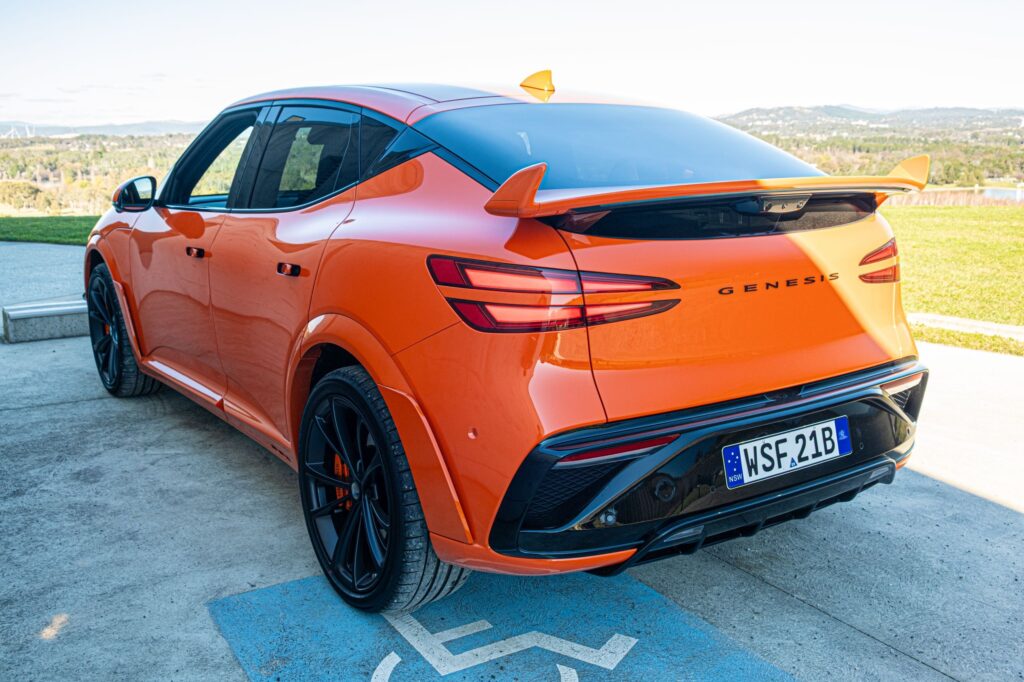
Obviously, given that Hyundai, Kia, and Genesis EVs use electric motors, rather than engines, all of this would be controlled by advanced software. It would use on-the-fly tweaks to the regenerative braking, CarBuzz reports, and certainly sounds like an intriguing way to make driving one of the brand’s electric motors that much more engaging. As it stands in current electric Hyundai N, Kia GT, and Genesis Magma models, the level of “engine” braking present is the same, regardless of what gear is selected and what the revs are.
It remains to be seen if a system like this would be introduced in updated versions of the current Ioniq 5 N and Ioniq 6 N, or if we’ll have to wait for an all-new model before this system becomes a reality. A high-performance N version of the small Ioniq 3 is in the works and could be a great candidate for such a system.
var adpushup = window.adpushup = window.adpushup || {que:[]};
adpushup.que.push(function() {
if (adpushup.config.platform !== “DESKTOP”){
adpushup.triggerAd(“bb7964e9-07de-4b06-a83e-ead35079d53c”);
} else {
adpushup.triggerAd(“9b1169d9-7a89-4971-a77f-1397f7588751”);
}
});
var adpushup = window.adpushup = window.adpushup || {que:[]};
adpushup.que.push(function() {
if (adpushup.config.platform !== “DESKTOP”){
adpushup.triggerAd(“bb7964e9-07de-4b06-a83e-ead35079d53c”);
} else {
adpushup.triggerAd(“9b1169d9-7a89-4971-a77f-1397f7588751”);
}
});
