


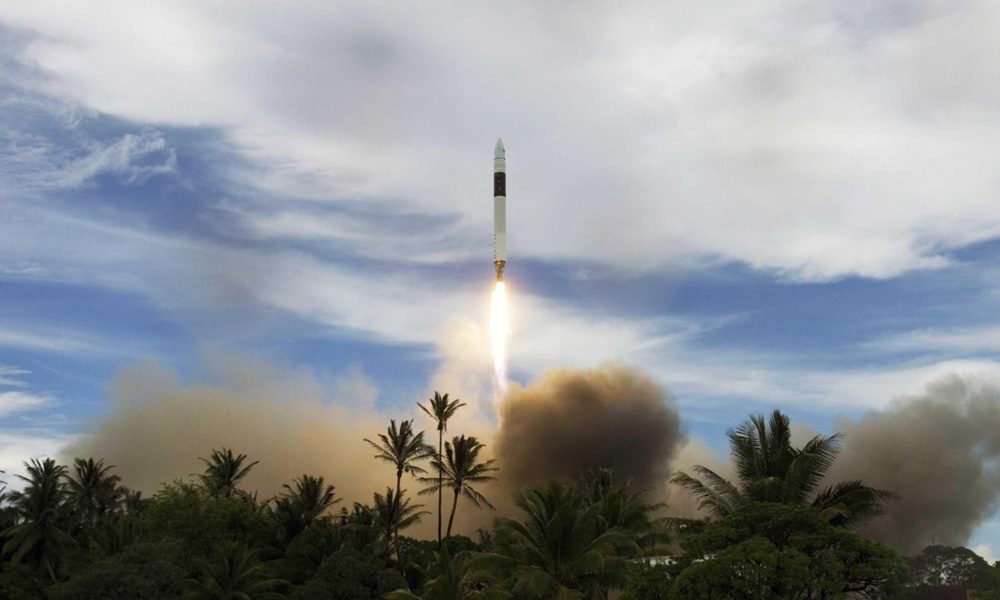
Elon Musk recently restated a fact that still defines SpaceX’s origin story: if Falcon 1’s fourth launch had failed, the company would not exist. The comment answered a reminder that after three consecutive losses, SpaceX had money for only one more attempt.
On X, Peter Diamandis said that the present-day acknowledgement of SpaceX’s success does not discount the rough start the company had. “Almost nobody remembers that Elon’s first rocket failed three times, and there was money for exactly only one more attempt.”
Musk said, “If the 4th launch had failed, SpaceX would not exist.”
If the 4th launch had failed, SpaceX would not exist
— Elon Musk (@elonmusk) August 30, 2026
In late 2008, the firm was nearly out of cash. Another failure would have ended payroll, closed the Hawthorne factory, and left the Falcon 9 and Dragon programs as unfinished drawings.
The first flight lifted off from Omelek Island on 24 March 2006. Thirty-three seconds later, a corroded aluminum fitting on a fuel line leaked. Kerosene ignited around the Merlin engine, control was lost, and the vehicle came apart. The small DARPA payload, FalconSAT-2, survived the short flight only to land on a storage shed near the pad. Investigators later traced the fitting to a materials mix-up that should never have reached the rocket.
Flight 2, on 21 March 2007, looked far better at first. The first stage burned cleanly and handed off to the Kestrel-powered upper stage. The vehicle crossed 100 kilometers and reached a peak of about 289 kilometers. Then propellant slosh in the second-stage tank started a circular coning motion that grew until the engine shut down. Telemetry faded as the stage tumbled, and SpaceX had reached space but not orbit. Over the next year, the team redesigned everything from the ground up, including tanks, baffles, and the new regeneratively cooled Merlin 1C.
That engine flew on Flight 3 on 2 August 2008. The first stage performed almost perfectly and reached 217 kilometers. After main-engine cutoff, leftover fuel in the cooling channels produced a faint residual thrust, roughly 10 pounds per square inch of chamber pressure. On a Texas test stand, the effect was invisible beneath ambient air pressure. In vacuum it was enough to push the spent first stage back into the second stage after separation. The stages collided, the upper stage spun, and the mission was lost. Musk later said a slightly longer delay before staging would have saved the flight.
Six weeks later, the team assembled Flight 4 from remaining parts and flew it on 28 September 2008 at 23:15 UTC. The payload was Ratsat, a 165-kilogram aluminum mass simulator built in-house. Staging was delayed so residual thrust could decay. The Kestrel ignited, the fairing split away, and nine and a half minutes after liftoff the vehicle was in orbit. After a coast, the second stage restarted, settling into a 621-by-643-kilometer path at 9.35 degrees inclination. Falcon 1 became the first privately developed liquid-fueled rocket to reach Earth orbit. Musk called the insertion “middle of the bull’s-eye.”
SpaceX restores a Falcon 1 rocket for 10th anniversary of first launch success
That success unlocked NASA’s Commercial Resupply Services award later that year. Without it, there would have been no Falcon 9, no reusable first stages, and no Dragon cargo or crew flights to the International Space Station. Launch prices would have remained far higher. Starlink’s constellation would not exist; broadband from low Earth orbit would still be a paper concept.
Ride-share markets, high launch cadence, and the current pace of lunar and Mars hardware would be years behind. Communications, Earth observation, and the cost of putting anything into space would look more like the 2000s than the 2020s.
One extra second of residual thrust in August 2008 would have written a different decade.
