


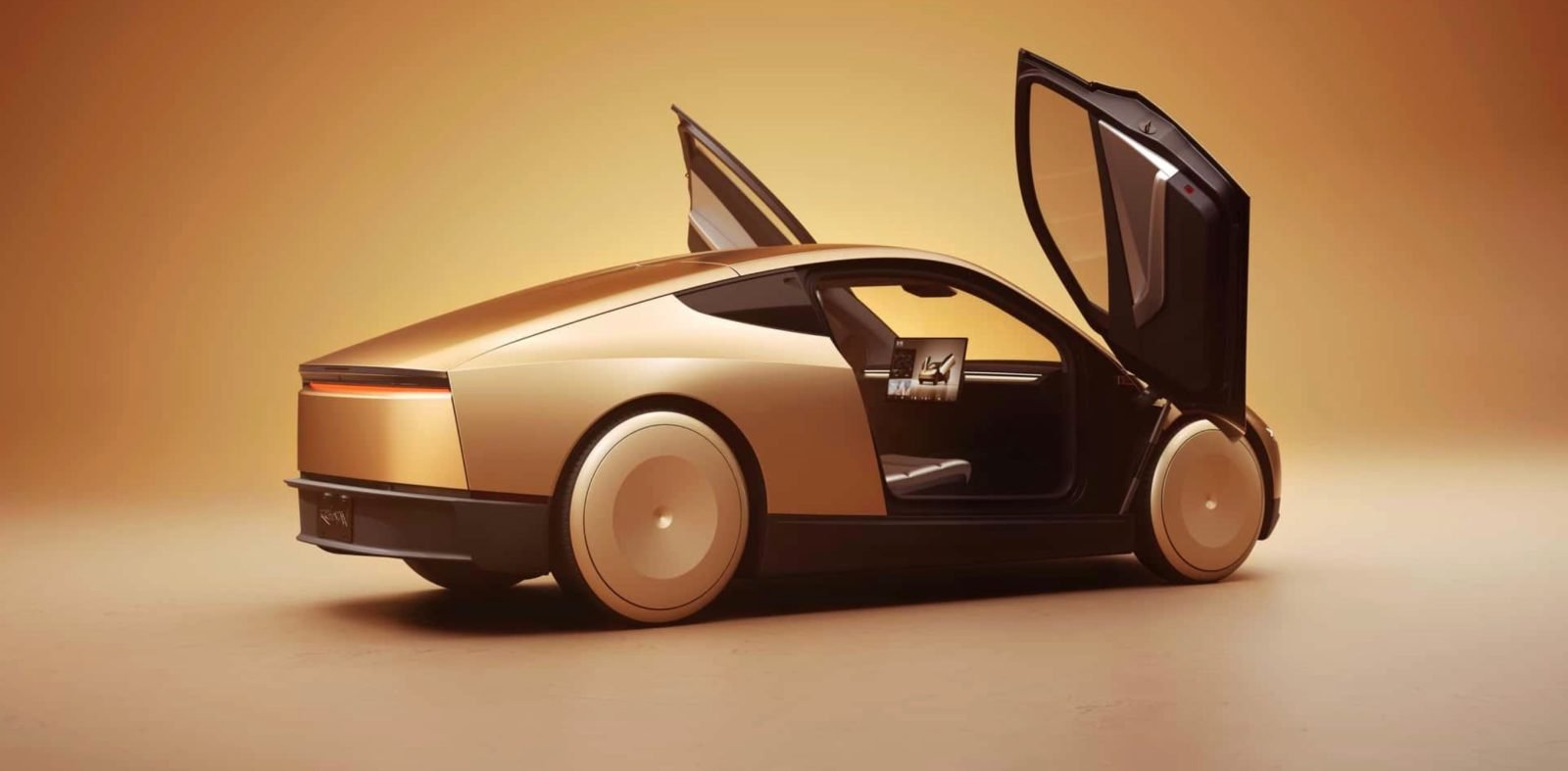
Tesla has answered NHTSA’s Special Order demanding it prove, under oath, that the Cybercab meets federal safety standards. The response landed on the October 30 deadline, and Tesla asked the agency to keep all of it confidential.
The only part of the filing the public can read is a 30-page guide for firefighters. Everything about how a car with no steering wheel, pedals, or mirrors was certified as compliant is blacked out.
We reported in September that NHTSA had ordered Tesla to show its work on the Cybercab’s certification. The order came one week after the company started charging for Cybercab rides in Austin on September 3 and put 21 questions to the company, with civil penalties of up to $139 million for an incomplete answer and criminal exposure for a false one.
Tesla first tried to buy time. On September 18, it asked for eight more weeks, until November 20, citing “the voluminous nature of the request” and the work of searching its records and writing “thorough narrative formats in response to each question.” NHTSA gave it 30 days instead. The new deadline was October 30, and Tesla met it.
What’s in the public docket
Three Tesla documents now sit in the AQ26002 docket, and two of them are empty.
The first is Tesla’s response letter, dated October 30 and addressed from 1 Tesla Road in Austin. It is one page long. The only text is: “The entirety of this file is confidential business information.”
The second is a placeholder for Tesla’s answer to Request 8, which asked the company to explain, standard by standard, how it determined the Cybercab complies: which subpart it certified to, and whether it ran physical tests, simulations, or engineering analyses. Per NHTSA’s note, the responsive documents carry a confidentiality request “for the entirety of each document.”
The third is the only substantive document: Tesla’s Cybercab First Responder Interaction Plan, version 1.2, dated September 3. It’s a real document with useful information in it. It’s also something Tesla has had on its website since July, aimed at police and fire crews, not regulators.
So the public gets a tow-truck manual, and the certification argument stays sealed.
The questions Tesla isn’t answering in public
The Special Order wasn’t a fishing expedition. It named the rules the Cybercab doesn’t obviously meet, and it seeks to understand how Tesla believes it can get around it.
FMVSS 135 says “the service brakes shall be activated by means of a foot control.” NHTSA has stated in public that a manufacturer of a vehicle with no foot brake can’t certify to it, then asked Tesla how it did. FMVSS 108 requires a turn-signal control that cancels itself when the steering wheel turns. FMVSS 111 requires mirrors. And the agency wanted to know whether Tesla certified the car with temporary driver controls bolted in and then removed them, which would run into the Safety Act’s “make inoperative” prohibition.
It also asked how the Cybercab is legal without a Part 555 exemption, the route Amazon’s Zoox took for its own steering-wheel-less robotaxi in July. Zoox applied, made its case, and got an exemption capped at 2,500 vehicles a year. Tesla self-certified and started charging for rides.
Every one of those answers is now under a confidentiality claim.
The firefighter guide does answer a few things
The first-responder plan was written for a different audience, but it brushes against several of NHTSA’s questions.
It says the Cybercab is “not typically equipped with a steering wheel or acceleration and brake pedals.” The word “typically” is doing work there. The same document notes that a Cybercab with a steering wheel and pedals “is typically an engineering or test vehicle, and operates at SAE Level 2 autonomy,” and includes instructions for driving one. That’s relevant to Requests 5 through 7, which asked whether the subject vehicles can be driven with temporarily attached controls.
It describes an operational design domain covering “all public roadways, such as freeways, highways, city streets, and rural roads,” at all hours, in light and moderate rain, fog, and snow. That is a far wider envelope than the Austin geofence the cars run in today, and it references an “Arizona Areas of Operation Appendix.” Request 1 asked for the ODD and Request 2 for scaling plans.
And it confirms that first responders can be granted access to on-board touchscreen controls to move the car, after showing a badge to the B-pillar camera (that’s interesting). Request 20 asked whether the touchscreen can move the vehicle and under what restrictions.
Nothing in it touches brakes, mirrors, telltales, or the certification itself.
What happens now
Confidentiality requests go to NHTSA’s Chief Counsel under Part 512. The agency decides whether Tesla’s claim holds, and it can order a public version released if it doesn’t. NHTSA hasn’t said anything about the request, and it hasn’t found the Cybercab noncompliant with any standard.
This is familiar. In June 2025, Tesla asked NHTSA to hide its answers about the original Robotaxi launch in Austin, a service running on supervised FSD while FSD was under investigation. Those answers never surfaced.
NHTSA’s opening resume for the audit put the affected population at about 1,000 vehicles. The Cybercab is still carrying passengers in Austin while the agency reads a filing nobody else can.
Electrek’s Take
Tesla’s position in September was that the Cybercab complies with every applicable federal standard, including the one that requires a brake pedal. If that’s true, the argument for it is the most interesting document in the autonomous vehicle industry right now, and Tesla just asked the government to make sure nobody reads it.
We get why a company redacts test data and supplier details. But the legal theory for how a car with no foot brake meets a foot-brake rule doesn’t sound like a trade secret to me. Zoox’s exemption petition is public. Waymo’s safety framework is public. Tesla’s case for why it didn’t need to ask is sealed, cover letter included.
NHTSA now has to decide whether “the entirety of this file” is really confidential business information. If it says no, we’ll finally see how Tesla certified this car. If it says yes, about 1,000 Cybercabs keep driving on a certification the public isn’t allowed to check.
A robotaxi that only runs when the grid is up is a reminder that electricity is the one fuel cost you can actually control at home. With electricity rates up almost 10% last year and expected to keep climbing, going solar is one of the best ways to protect yourself against rising costs. And with lease and PPA options, you can do it with zero upfront cost and start saving immediately. If you want to find the best deal, check out EnergySage. It’s a free service with hundreds of pre-vetted installers competing for your business, so you save 20 to 30% compared to going it alone. No sales calls until you pick an installer. Get your free quotes here.

FTC: We use income earning auto affiliate links. More.
