


We’ve spent time with the 92kWh Plus version of the ES90, and in chilly conditions with a number of motorway miles factored in, we saw a return of 3.3 miles per kWh, which is only 0.1mi/kWh less than the lowest official figure quoted by Volvo. Match our return, and you’re looking at 290 miles of range, which is around 120 miles short of the official quote. However, if you do more low-speed journeys, we’re confident that the ES90 would be able to match its official figures in the real world.
Another figure we’d like to see the Volvo match in the real world is its maximum charging rate of 310kW. This is possible courtesy of the 800-volt electrical system that’s fitted, although few DC chargepoints will be able to accommodate this maximum rate. Find one, and that 310kW figure is fast enough that a 10-80 per cent top-up can take as little as 22 minutes.
| Model | Battery size | Range | Insurance group |
| ES90 Single Motor Extended Range | 92kWh | 411 miles | 44 |
| ES90 Twin Motor | 106kWh | 426 miles | 47 |
| ES90 Twin Motor Performance | 106kWh | 426 miles | 50 |
Insurance groups
Insurance group ratings for the ES90 are on the high side, starting at 44 and increasing to the highest group 50 rating for the Twin Motor Performance variant. We had a quote of just under £1,500 for 12 months of cover for our sample driver, although that’s in the ballpark for rival executive machines.
Tax
Annual company-car liabilities for the ES90 are far lower than they were for the outgoing S90, although the 2026/27 tax year sees the Benefit-in-Kind (BiK) bracket for electric vehicles increase from three per cent to four. That means the ES90 costs £1,080 for higher-rate taxpayers, whereas in 2025/26 the figure was £810. High list prices mean that ES90 buyers have to stump up for the luxury car road-tax surcharge for years two to six, so it costs £640 on an annual basis.
Depreciation
It’s often the case that new cars start out with strong depreciation figures, only for them to gradually decrease over time. The Volvo’s initial figures aren’t great, with the best-performing model in the line-up being the entry-level Plus, at 45.5 per cent. At the top of the range, the Performance version retains 44 per cent, while the Extended Range Ultra is the poorest of the line-up, at 43 per cent.
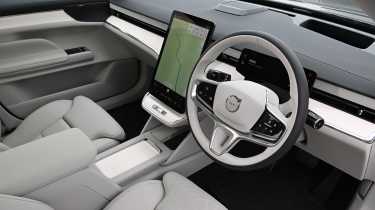
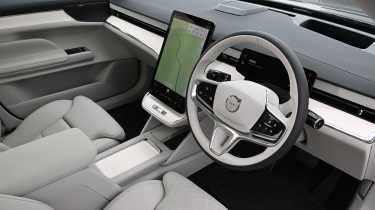
The exec’s cabin draws lots of inspiration from the EX90, so it looks modern and feels upmarket
Pros |
|
Cons |
|
Volvo has always cut a distinctive dash in the executive sector, and the ES90 takes styling cues from the EX90 and blends them into a fastback shape that looks understated when compared with some ostentatious rivals.
Interior and dashboard design
While there are nods to the EX90 on the outside, such as the smooth front end with inset Volvo badge and sharp running lights, the interior features a layout that is all but carried over from the electric SUV. You get a large 14.5-inch portrait touchscreen that takes pride of place on the centre console, while there are wood inserts and silver trim that spreads across the dashboard, with minimalist air vents above. The seats are beautifully sculpted, while Volvo offers a choice of colours for the cabin, with black, cream and beige options on offer, plus a grey colourway for Ultra models.
Materials and build quality
The seats are finished in Volvo’s Nordico artificial leather, and while real Nappa leather is available as an option, we don’t think anyone will feel short-changed by the standard upholstery. Fit and finish inside is first rate, although our test car did seem to have a minor clunk from one of the front seats when driving over harsher bumps.
Infotainment, sat-nav and stereo
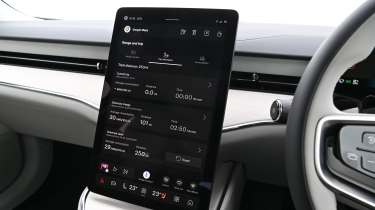
One piece of tech that’s carried over from the EX90 is the central touchscreen. The 14.5-inch portrait display has the same layout as the SUV’s, with the home screen split into three, plus a bank of touch-sensitive climate controls across the bottom. The only physical switches are station skip buttons that sit either side of a crystal glass volume controller that’s inset into the wood veneer beneath the screen.
