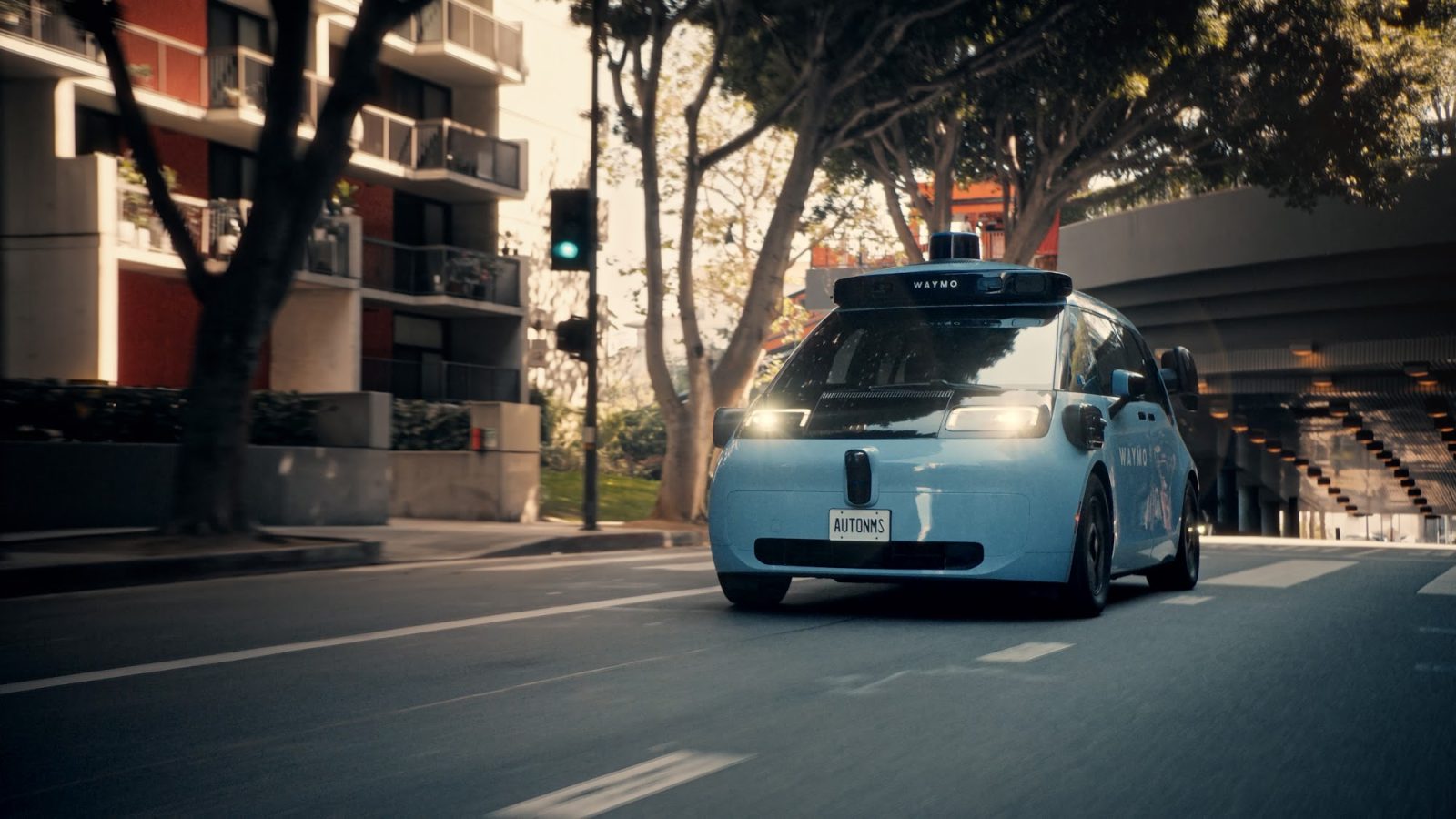
Waymo is now letting all riders in San Francisco, Los Angeles, and Phoenix hail its next-generation Ojai robotaxi — a vehicle built in China by Zeekr.
That makes the Ojai one of the only ways for an American to ride in a Chinese-made EV, a car they still can’t legally buy for themselves.
Waymo announced today that the Ojai, which had been limited to free early-access rides since it started offering trips in the new robotaxi on May 28, is now open to the general public across all three markets as the Alphabet unit begins commercial operations with the platform.
Riders may be matched with an Ojai when one is available nearby. Waymo says it will eventually let passengers choose between the Ojai and its existing Jaguar I-PACE fleet.
A Chinese EV you can’t buy — but can now ride
The Ojai’s base vehicle is manufactured by Zeekr, the premium EV brand owned by China’s Geely Holding Group, on the automaker’s SEA-M architecture, with the body designed in Sweden.

US tariffs and an incoming federal rule have effectively locked Chinese passenger EVs out of the American market, which is why you can’t walk into a dealership and buy a Zeekr, a BYD, or any other Chinese brand. Waymo is importing them by the thousands anyway.
According to Forbes, Waymo has brought more than 3,200 Zeekr vehicles into the US through the Port of Los Angeles since 2024, with more than 2,600 of those arriving in 2026 alone — all while paying a tariff of roughly 127.5% on Chinese EVs.
The math still works for Waymo. The base price is believed to be quite affordable, which limits the impact from the tariffs and the vehicle only truly becomes expensive once Waymo adds its sensor and computing suite to the vehicle. The total is expected to be less than half the reported cost of the Jaguar I-PACE robotaxis it is replacing.
The vehicles also have to clear the US Commerce Department’s connected-vehicle rule, which takes effect for 2027 and bans vehicle-connectivity and driver-assist hardware or software sourced from China or Russia. Waymo’s workaround: the Zeekrs arrive stripped of Chinese connectivity hardware and sensors, and the company installs its own US-designed compute and sensor suite. Final assembly happens at Waymo’s Mesa, Arizona facility with supplier Magna.
In other words, the Chinese “car” you’d be riding in has had its Chinese brains removed and replaced with Waymo’s. But the sheet metal, battery, and cabin you sit in are very much Zeekr’s.
Inside the Ojai
Zeekr designed the Ojai as a purpose-built robotaxi rather than a retrofit, and it shows in the packaging.
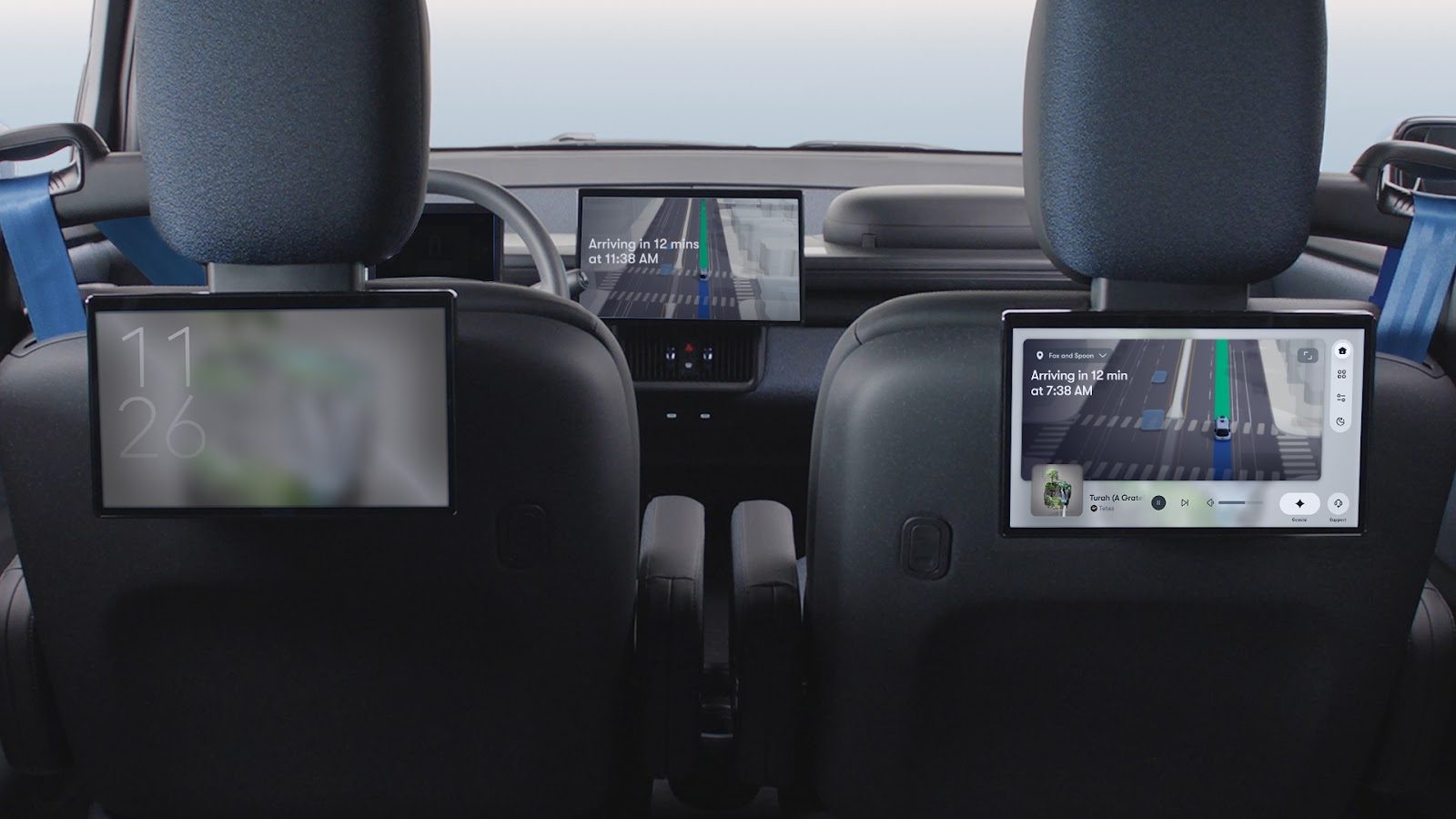
The van-style EV has a flat floor, a low step-in height, and wide “elevator-like” gondola doors on both sides. Inside, Waymo highlights an expansive cabin with extra legroom and headroom, three adaptive screens for route, music, and climate, plus charging ports, cup holders, grab bars, and braille labeling for accessibility.
Riding on top is Waymo’s sixth-generation Driver, which uses 13 cameras, four lidars, and six radar units. That’s a 42% cut in sensor count from the fifth-generation system, and Waymo has said the hardware now runs under $20,000 per vehicle — a key lever for scaling the fleet profitably.
Waymo’s scaling play
The Ojai is central to Waymo’s growth, and the company is stockpiling them fast. As of last week, Waymo had nearly 1,000 Ojai robotaxis staged at its Arizona factory, with hundreds already converted and ready to deploy alongside its roughly 3,700 Jaguar I-PACE vehicles.

Waymo is currently running about 500,000 paid rides per week across roughly a dozen cities and is targeting 1 million weekly rides as it scales. The Ojai isn’t even the only new platform in the pipeline — Waymo is also bringing the Hyundai Ioniq 5 online as a second robotaxi to feed that expansion.
Alongside opening the Ojai to everyone, Waymo also rolled out new features, including Gemini in Waymo and a redesigned rider app. And the company says Ojai rides are coming next to select riders in Denver, San Diego, and Las Vegas, with more cities later this year.
Electrek’s Take
Americans can’t buy a Chinese EV, but they can now ride in one for the price of a robotaxi trip — but the real story is what it says about the economics of autonomy.
Waymo is willing to eat a 127.5% tariff and still come out ahead because the Zeekr Ojai is dramatically cheaper than the Jaguar I-PACEs it’s phasing out. That’s the whole ballgame for scaling a robotaxi service to millions of rides: the per-unit cost of the vehicle plus the sensor stack. Waymo has driven that stack under $20,000 and found a purpose-built body that beats anything it could source domestically. It’s a striking illustration of how far ahead China’s EV supply chain is on cost, even when you strip out the Chinese software and slap 127.5% tariffs on top.
Adding an EV to your driveway means a bigger electricity bill, and charging at home on rooftop solar is the cheapest, cleanest way to feed it. If you want to find out how much you could save by going solar, we recommend EnergySage. It’s a free service that makes it easy for you to compare quotes from vetted, reputable solar installers in your area. EnergySage pre-screens installers so you get competitive pricing without the sales pressure, and if a big upfront cost is what’s holding you back, many offer financing options like leases and power purchase agreements (PPAs) that let you go solar for as little as $0 down. Get your free quotes here.


FTC: We use income earning auto affiliate links. More.